REVIEW · BUDAPEST
Guided Tour of the House of Music, Hungary
Book on Viator →Operated by Liget Budapest · Bookable on Viator
A music building that behaves like sculpture. This guided stop at Budapest’s House of Music lets you read the building like an artwork, with design roots in the former Hungexpo offices and the vision of architect Sou Fujimoto. I also love how the guide connects the dots between the structure and the role of music, both inside and outside the building. One thing to plan around: the guided tour does not include entry to the Sound Dome or the exhibitions, so you’ll want to decide if you’re buying those separately.
For the price, this is a tidy, high-value outing. You get an hour on-site with a small group (up to 15), and the tour is offered in English with a focus on clear explanation. If you’re hoping for more than the architecture talk—like hands-on listening or exhibition time—this won’t feel long enough, since the visit is mainly about the building itself.
In This Review
- Key points to know before you go
- House of Music’s Sou Fujimoto design on the old Hungexpo site
- What you actually do in the 1-hour guided tour
- Music isn’t just the theme, it’s part of the building’s story
- Price and value for architecture lovers (and casual sightseers)
- Meeting point at Olof Palme stny. 3: how to plan your timing
- Group size and English guiding: why it changes the experience
- What to do after: park time and the venue vibe
- Accessibility and who this works best for
- Should you book this House of Music guided tour?
- FAQ
- How long is the Guided Tour of the House of Music?
- Is the tour available in English?
- Does the guided tour include entry to the exhibitions?
- Does it include the Sound Dome?
- Where do I meet for the tour?
- Is a mobile ticket used?
- What group size should I expect?
- Is the meeting point near public transportation?
- Are service animals allowed?
- Will I receive confirmation after booking?
- Is there free cancellation?
Key points to know before you go
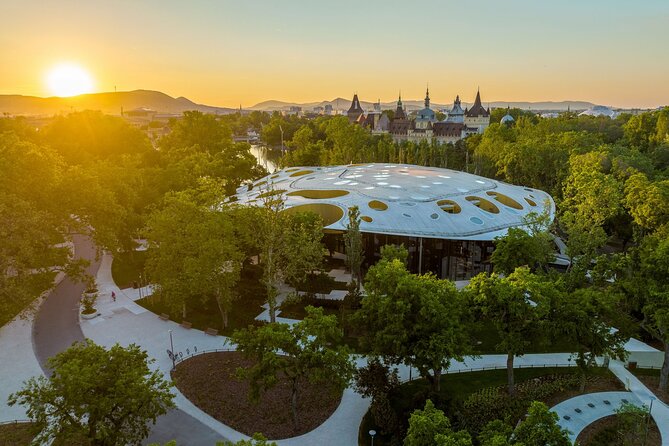
- Sou Fujimoto’s design on a former Hungexpo site gives you a strong sense of how the building fits its setting.
- Music is treated as part of the architecture, not just something happening inside.
- Fluent English guiding makes the ideas easy to follow and fun to listen to.
- Small group size (max 15) keeps questions possible and the pace comfortable.
- No exhibition or Sound Dome entry is included, so check what you want to do after.
- You can pair it with time in the nearby park since the building sits in a pleasant outdoor area.
House of Music’s Sou Fujimoto design on the old Hungexpo site
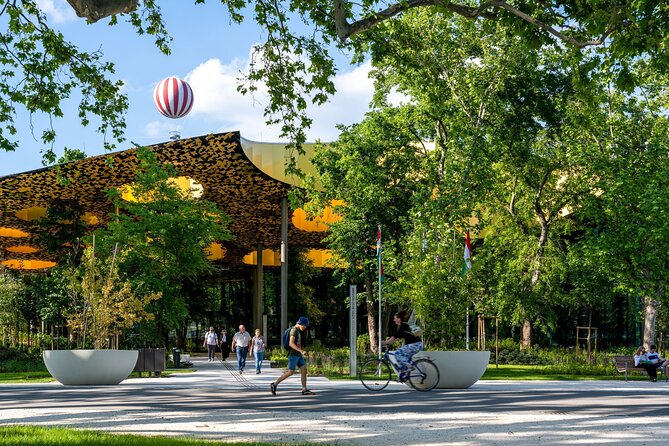
Budapest has no shortage of impressive buildings, but the House of Music grabs you because it doesn’t behave like a classic concert hall. It feels more like a piece of architecture that learned how to breathe with its surroundings. The guide starts by explaining that it was built on the former site of the Hungexpo Offices, which matters because it turns an earlier industrial/office area into a cultural landmark.
Then comes the design idea you’ll keep noticing during the walk-around: the architect, Sou Fujimoto, envisioned the building blending into nature. Even if you’re not an architecture nerd, you can see what the guide means. The place doesn’t just sit next to the outdoors—it seems to create a transition between inside and outside. I like that the tour doesn’t hand-wave this as a marketing line. You get a plain explanation of how the building’s concept connects to what you see on-site.
And since this is the House of Music, the talk isn’t only about form. The guide highlights how music is intrinsic to the building both on the inside and the outside. That one sentence changes how you look at everything afterward. You stop thinking only about walls, and you start thinking about the building as an instrument—at least conceptually.
You can also read our reviews of more guided tours in Budapest



What you actually do in the 1-hour guided tour
This experience is short by design: about 1 hour focused on a guided visit of the House of Music building. There’s one main stop, so you’re not hopping across town and losing time to transit. The rhythm is simple: you arrive at the House of Music, listen to the guide’s explanation, and you come back to the meeting point when it ends.
The guide’s main angle is architecture plus meaning. Expect discussion of:
- the innovative design concept and how it’s tied to the surrounding area
- how music is woven into the building’s identity, inside and outside
- what exhibitions and events are accommodated at the venue
A key consideration: the guided tour of the building does not include entry to the exhibition spaces or the Sound Dome. In other words, the tour gives context, but it doesn’t substitute for spending time with the displays or any sound-based attraction. If your ideal Budapest day includes audio experiences or museum-style exploration, plan on doing that separately.
I also appreciate that the group size stays limited, with a maximum of 15 people. That tends to make the talk more conversational. When a guide is prepared and speaks clear English, you get a better match between what they say and what you can actually take in.
Music isn’t just the theme, it’s part of the building’s story
When a venue is called the House of Music, it can be easy to assume you’re just walking into a standard cultural complex. This tour pushes back against that idea by focusing on the building itself. The guide explains that music is intrinsic to the House of Music on both sides of the walls—inside and outside.
That matters because it gives you a framework for looking. You’re not just admiring curves and lines for the sake of it. You’re trying to understand why the architects and venue planners shaped the space the way they did. Even if you only catch a few of the concepts, you’ll likely still benefit because the tour is built around concrete observations you can see.
Another value point: the guide also touches on the kinds of exhibitions and events housed here. You don’t have to know the venue calendar in advance to get something out of the visit, but the talk can help you decide whether it’s worth returning later for a specific event or exhibition. This is one of those experiences where the context can change your follow-up plans.
Price and value for architecture lovers (and casual sightseers)
At $14.20 per person for about an hour, this is priced like an intentional guided experience, not like a long museum ticket. The real question is whether you’re paying for content you’ll care about. For people who enjoy architectural design, concept, and interpretation, the answer is usually yes.
Here’s what you’re getting for the money:
- a focused, guided look at the building’s design concept
- clear English explanation
- a small group format
- a chance to understand how music connects to the architecture
The trade-off is also part of the value equation. Because entry to the exhibitions and Sound Dome is not included, you’re not buying a full venue day in one ticket. If you want the whole package—displays plus audio attractions—this guide tour is better treated as the front door. You’ll likely want to schedule additional time or tickets after the tour ends.
In plain terms: pay for the guide if you want meaning behind the design. If you only want casual photo time, you might feel the hour is too structured.
Meeting point at Olof Palme stny. 3: how to plan your timing
You meet at Budapest, Olof Palme stny. 3, 1146 Hungary, and the tour ends back at the same meeting point. That makes scheduling easier because you don’t have to figure out where you’ll be dropped off. It also helps you keep your day simple—especially if you’re combining this with other Liget-area walks and parks.
The experience is near public transportation, which is useful in Budapest, where hopping between neighborhoods can eat up time. The listing doesn’t specify which lines you’ll use, so I’d use this as your compass: arrive with enough buffer time to find the meeting spot and settle before the group starts.
Also note the duration is approximate and it’s about an hour. If you’re the type who likes a slow walk, build in a little extra buffer. A concept-focused tour often leaves time for questions and looking at details from different angles.






Group size and English guiding: why it changes the experience
This tour caps at 15 travelers, which is a big deal for an architectural talk. Smaller groups tend to lead to better attention. You can hear the guide, and you’re not stuck in a crowd where you catch only half the explanation.
The feedback you’ll see associated with this tour highlights a couple of consistent strengths: the guide’s English is described as flawless, and the explanations feel enjoyable and prepared. That’s exactly what you want for a “concept meets building design” experience. If the guide is clear, you can connect the design ideas to what you see instead of spending the hour translating in your head.
If you’re traveling solo, a small-group tour like this is also a comfortable entry point. You’re not isolated, but you’re not drowned in a huge group either.
What to do after: park time and the venue vibe
One practical advantage: once the building tour ends, you’re in a setting where you can keep going outside. The guide tour itself is primarily about the structure and its idea, but you’re not finished with the venue experience just because the hour is up.
The building sits in a wider outdoor area, and it’s easy to tack on a walk in the surrounding park. That turns the visit into a longer “feel the place” outing rather than a quick indoor-only stop.
And since the guided tour doesn’t include exhibition and Sound Dome entry, you can treat the rest of your time as a choose-your-own-adventure:
- If you just wanted the architecture story, you can keep it simple with outdoor time.
- If you want the full venue experience, you can buy tickets for the exhibition and Sound Dome and spend the rest of your time there.
Accessibility and who this works best for
This experience says most travelers can participate, and it also allows service animals. That’s a helpful baseline if you’re trying to plan a trip without surprises. Since the duration is about an hour and the format is guided, it’s likely a manageable commitment for many people.
Who this suits best:
- You like architecture and want the meaning behind what you see
- You enjoy an English-led explanation even if you’re not a specialist
- You want a short, structured activity in Budapest that doesn’t eat a whole day
Who might want to reconsider:
- You’re mainly going for exhibitions or sound-based attractions and don’t care about architecture context
- You hoped the ticket would cover everything inside the venue
Should you book this House of Music guided tour?
If you’re deciding between “quick look” and “learn something,” I’d book it. The big win here is the guided architecture focus, tied directly to the building’s concept of blending with nature and the idea that music is part of the structure itself. You also get a small group size and English that’s reported as excellent, which makes the hour feel worth it.
Just go in with the right expectations. This is not a full exhibition day. If you want the Sound Dome or exhibition time, treat this as your pre-game: take the guided building tour, then add whatever inside tickets you want after.
FAQ
How long is the Guided Tour of the House of Music?
It lasts about 1 hour (approx.).
Is the tour available in English?
Yes, the tour is offered in English.
Does the guided tour include entry to the exhibitions?
No. The guided tour of the building does not include entry to the exhibition.
Does it include the Sound Dome?
No. The guided tour does not include entry to the Sound Dome.
Where do I meet for the tour?
The meeting point is Budapest, Olof Palme stny. 3, 1146 Hungary.
Is a mobile ticket used?
Yes, the tour uses a mobile ticket.
What group size should I expect?
The activity has a maximum of 15 travelers.
Is the meeting point near public transportation?
Yes, it is near public transportation.
Are service animals allowed?
Yes, service animals are allowed.
Will I receive confirmation after booking?
Yes, confirmation is received at the time of booking.
Is there free cancellation?
Yes. You can cancel up to 24 hours in advance for a full refund.