REVIEW · BUDAPEST
The beginner’s guide to Budapest – Budapest Sightseeing Tour
Book on Viator →Operated by Budapest Urban Walks · Bookable on Viator
A guided loop makes Budapest feel instantly less confusing. This beginner-friendly walk strings together the city’s biggest symbols in a tight route, with time on major sights like Heroes’ Square, Széchenyi Baths, St. Stephen’s Basilica, Parliament, and the Danube memorial stops.
I especially like the practical extras: public transport tickets are built in, and you also get coffee and cake plus snacks. One more thing I really enjoy is the small group setup (max 15), which makes it easier to ask questions while you move.
The only caution: a few big-ticket interiors are not included (Vajdahunyad Castle, St. Stephen’s Basilica, and the Parliament Building). So if you want full time inside those places, plan on adding separate entry later.
In This Review
- Key points to know before you go
- A 3.5-hour Budapest intro that starts at the Opera House
- Price and value: what $94.63 buys you in real terms
- The route makes sense: Pest landmarks in an easy-to-follow loop
- Heroes’ Square: symbolism up close, and a common confusion cleared
- Széchenyi Baths: the thermal-water fact that makes the stop worthwhile
- Vajdahunyad Castle: a quick look now, entry later if you want it
- Andrássy Avenue: grand façades and a UNESCO boulevard vibe
- Hungarian State Opera House: the façade sets the tone
- St. Stephen’s Basilica and Liberty Square: sacred space plus hard memories
- Parliament and the Danube finale: Chain Bridge, then Shoes on the Bank
- Guides matter: what you can learn from their style
- Logistics that help: transport, group size, and weather reality
- Who should book this Budapest sightseeing tour
- Who might prefer something else
- Should you book? My straightforward take
- FAQ
- FAQ
- How long is the Budapest Sightseeing Tour?
- Is the tour offered in English?
- What’s included in the price besides the guide?
- Are tickets for all attractions included?
- Where does the tour start and where does it end?
- How many people are in a group?
- Does the tour operate in bad weather?
- Can I cancel for a full refund?
Key points to know before you go
- Public transport tickets included so you’re not hunting for fares between stops
- Coffee and cake at a local café plus coffee/tea and snacks during the 3.5-hour flow
- Small group, max 15 travelers means less crowd pressure and more guide Q&A time
- Széchenyi Bath stop with real thermal-water details (two spring sources around 74–77°C)
- Danube memorials included at Shoes on the Danube Bank for a sobering pause
- Some entries aren’t covered (Vajdahunyad Castle, St. Stephen’s Basilica, Parliament)
A 3.5-hour Budapest intro that starts at the Opera House
This tour kicks off at the Hungarian State Opera House on Andrássy út (Andrássy Avenue), then you work your way across the city’s famous sights with a mix of walking and public transport. The timing is tight enough to keep things energetic, but not so rushed that you feel like you’re sprinting from postcard to postcard.
Starting at the Opera House is smart. Even if opera isn’t your thing, you get a strong sense of Budapest’s grand boulevard style right away. And because Andrássy Avenue is a UNESCO World Heritage Site dating to the late 1800s, your first “wow” moment comes with some context built in.
You’ll also end back at the same meeting point. That matters for first-timers: you don’t lose your bearings at the end of the tour, which is a big deal when you’re new to the city.
You can also read our reviews of more guided tours in Budapest



Price and value: what $94.63 buys you in real terms
At $94.63 per person, you’re not just paying for someone to point at buildings. You’re paying for a guided route that also includes several tangible costs:
- Public transport tickets are included, which saves you time (and stress) switching between modes.
- Coffee and cake at a local café is part of the experience, plus snacks and coffee/tea.
- You get a handy souvenir map with recommendations, useful for building the rest of your itinerary after the tour.
You’re also getting a group limited to 15 travelers, in English, with a local guide pace that leaves room for questions. In a city where landmarks are spread out, that mix of guidance + covered basics is where this tour feels like good value.
The route makes sense: Pest landmarks in an easy-to-follow loop
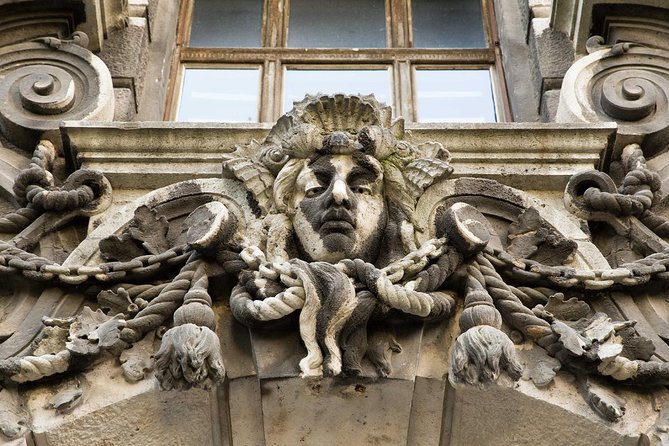
Budapest can feel like two cities wearing one coat. This route focuses heavily on the Pest side—where the river-front, Parliament area, and the grand boulevards live—so you get the famous “first look” pieces together in one go.
You’ll hit classic must-sees on both sides of the Danube too, but you’ll do it without the chaos of trying to stitch the day together yourself. The stops are short at each landmark, but that’s the point: you learn what matters, then you decide what deserves more time later.
Heroes’ Square: symbolism up close, and a common confusion cleared
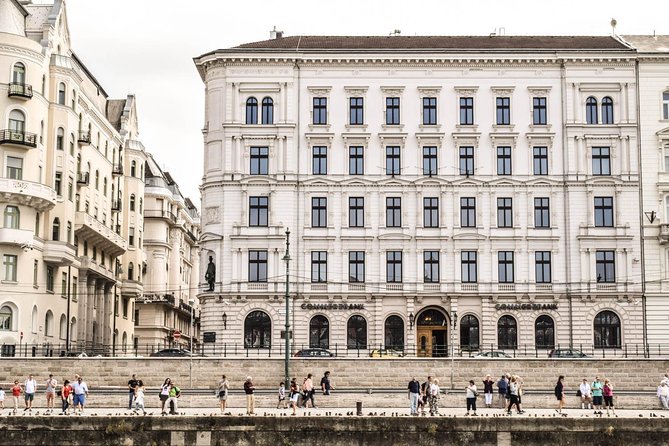
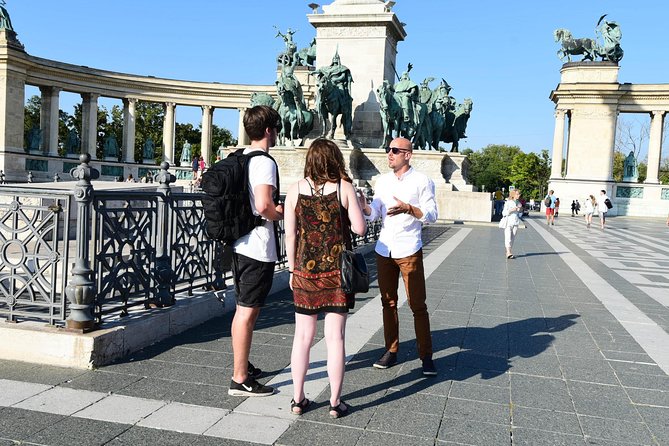
You begin with Heroes’ Square, one of Budapest’s biggest public stages. It’s famous for the statue complex of the Seven chieftains of the Magyars, plus other major Hungarian leaders and the Memorial Stone of Heroes.
Here’s a detail worth catching: the Memorial Stone of Heroes is often wrongly called the Tomb of the Unknown Soldier. Your guide’s explanation helps you connect the square’s meaning to Hungary’s national story, rather than just treating it like a big photo stop.
Even with a brief stop, Heroes’ Square works as an emotional warm-up. It’s the kind of place where the history shows in the layout—so you understand why later landmarks feel connected, not random.
Széchenyi Baths: the thermal-water fact that makes the stop worthwhile
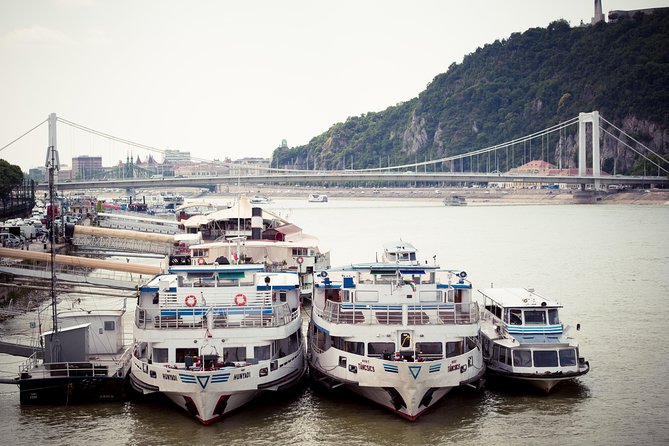
Next comes the Széchenyi Medicinal Bath area, known as the largest medicinal bath in Europe. Even if you don’t go deeper into the complex, you’ll learn what makes this bath different: its water comes from two thermal springs, with temperatures around 74°C and 77°C.
That temperature detail sounds nerdy until you realize it explains the bathing culture here. Budapest’s thermal tradition isn’t just a gimmick—it’s a physical reality. Seeing the baths on your first day is helpful because it gives you a reason to prioritize a soak later, if that’s your style.
Keep in mind the stop is brief (around 15 minutes). So treat it as a “set the hook” moment. If you want the full bath experience, you’ll likely plan that separately when you have more time.






Vajdahunyad Castle: a quick look now, entry later if you want it
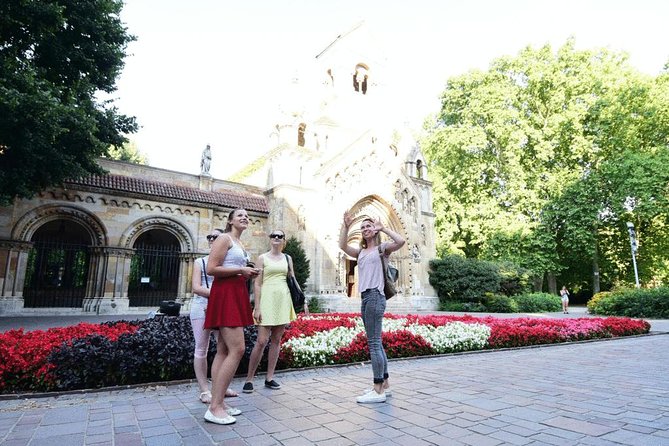
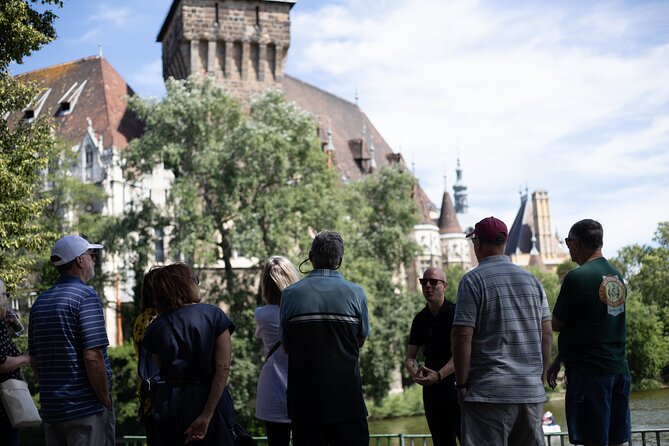
You’ll pause near Vajdahunyad Castle in City Park. The castle’s story is tied to the Millennial Exhibition celebrating 1,000 years of Hungary, and that 1896 origin gives the site a built-for-show feel that’s different from older fortress-style castles.
The entry is noted as not included, so you’ll likely view it from the outside and decide if you want to come back. If you’re the type who likes to walk the park and linger, this is a great target for a slower day.
Andrássy Avenue: grand façades and a UNESCO boulevard vibe
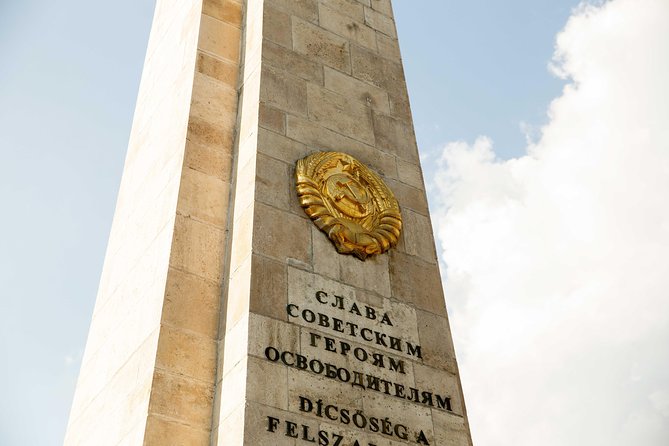
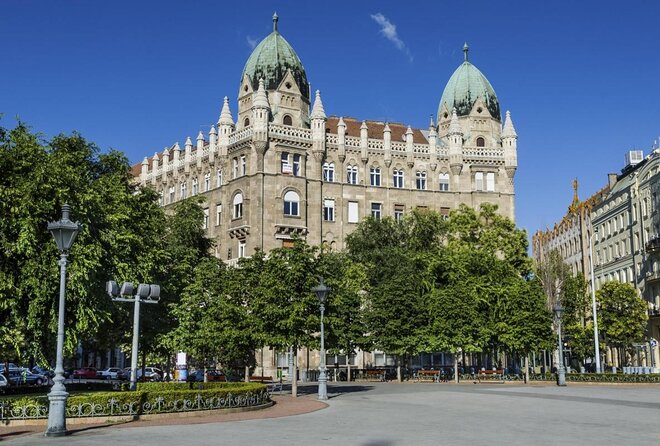
Andrássy Avenue links Erzsébet Square toward Városliget (City Park). Along the route you’ll get the feel of a late-19th-century boulevard: neo-renaissance buildings, long façades, and a city-planning mood that’s unmistakably Budapest.
The best part here is how it changes your understanding of the city. You stop seeing Budapest as only river views and ruin bars. You start recognizing it as an elegant, designed capital, with architecture that guides your movement.
The stop is short (about 10 minutes), but the boulevard itself is the attraction. Even if you don’t go inside anywhere, the setting helps you frame what you’ll see next.
Hungarian State Opera House: the façade sets the tone
After Andrássy Avenue, you hit the Hungarian State Opera House again as part of the loop. It’s a neo-renaissance landmark designed by Miklós Ybl, a major Hungarian architect.
This is one of those stops where the exterior alone can be enough. Even if you’re skipping a performance, you’re learning how the city presents itself: proud, polished, and built to last.
And because this is a free admission stop in the tour structure, you can treat it as part of the walk without worrying about ticket math.
St. Stephen’s Basilica and Liberty Square: sacred space plus hard memories
St. Stephen’s Basilica comes next. The basilica is named for Stephen, the first King of Hungary, and the reliquary is part of what gives the building its religious pull.
A key note for planning: admission is not included here, so your stop is likely focused on the area and viewpoints rather than a guaranteed interior experience.
Then you move to Szabadság tér (Liberty Square). This is a mixed-emotion stop: the square includes memorials connected to Hungarian Jewish victims of the Holocaust and to Soviet soldiers commemorated as liberators from Nazi occupation in 1945. The contrast is intense, but it’s exactly why this stop matters.
If you’re the type who appreciates context, Liberty Square adds weight to your first-day walk. It turns the day from sightseeing into understanding.
Parliament and the Danube finale: Chain Bridge, then Shoes on the Bank
The tour ends at the most famous “Budapest movie scene” duo: the Parliament area and the river.
You’ll pause at the Hungarian Parliament Building (Országház). Admission is not included, so you’ll focus on the landmark presence rather than entering. Still, even a short stop makes it clear why Parliament is one of the city’s defining icons.
Then you cross the Danube by the Széchenyi Chain Bridge, a chain bridge linking Buda and Pest. The bridge is a great transition moment because it forces you to look at the river as a connector, not a boundary.
Finally, you reach Shoes on the Danube Bank—one of the most moving memorials in Budapest. It honors Jews massacred by fascist Hungarian militia during World War II. The stop is brief, but it’s also deeply specific, which is what makes it stick.
Guides matter: what you can learn from their style
The reviews tied to this tour consistently point to guides who keep a good pace while still making space for questions. Names you may see include Ferenc and Fanni, and one guide mentioned as Leslie (László). That matters because the route hits many big landmarks, and you don’t want a guide who rushes you like a human GPS.
A good guide here also helps you avoid the typical first-day trap: seeing the sights without understanding what you’re looking at. With these landmarks, a short explanation can turn a photo stop into something you actually remember.
Logistics that help: transport, group size, and weather reality
A few practical points make this tour smoother:
- Group size is capped at 15, so you won’t feel swallowed.
- You’ll get a mobile ticket, which reduces hassle during the walk and transport segments.
- It runs in all weather conditions, so dress for rain/cold/wind. Budapest weather can shift fast, and your comfort affects how much you enjoy the walk.
- The tour requires moderate physical fitness. You’re not doing a marathon, but there’s still enough walking to matter.
- The route is near public transportation.
- Service animals are allowed.
If you’re traveling solo, this setup is also a win. You can stay social without being stuck in a huge crowd.
Who should book this Budapest sightseeing tour
This one fits best if you’re:
- Visiting Budapest for the first time and want a fast, logical overview
- Hoping to get oriented quickly (and keep planning stress low)
- Interested in landmark context, not just photos
- Short on time but still want a guided route with food included
It’s also a good fit for couples and friends who like a structured day. And if you enjoy having a map afterward, that makes it easier to shape your next day around your favorites.
Who might prefer something else
You might want a different option if:
- Your top priority is entering buildings like Parliament, St. Stephen’s Basilica, or Vajdahunyad Castle, since entry tickets are not included for those
- You like long, slow stops and deep museum time
- You want a bath-focused itinerary rather than a quick Széchenyi Baths introduction
Should you book? My straightforward take
If you want to get your bearings fast and learn what Budapest’s big landmarks mean, this tour is an efficient choice. The built-in public transport tickets, the coffee and cake, and the small-group feel make it more than a generic checklist.
Book it on day one if you can. Then use the souvenir map and what you learned to decide what deserves a second visit—especially if you’re drawn to the places where entry tickets aren’t included.
FAQ
FAQ
How long is the Budapest Sightseeing Tour?
It runs for about 3 hours 30 minutes.
Is the tour offered in English?
Yes, it’s offered in English.
What’s included in the price besides the guide?
The tour includes public transport tickets, coffee and cake at a local café, snacks, coffee and/or tea, and a handy souvenir map plus further recommendations.
Are tickets for all attractions included?
Not all entries are included. Heroes’ Square, Széchenyi Baths and Pool, Andrássy Avenue, the Hungarian State Opera House, Liberty Square, Chain Bridge, and Shoes on the Danube Bank are listed as admission ticket free. Vajdahunyad Castle, St. Stephen’s Basilica, and the Hungarian Parliament Building are listed as not included for admission.
Where does the tour start and where does it end?
It starts at the Hungarian State Opera (Andrássy út 22, 1061 Budapest) and ends back at the same meeting point.
How many people are in a group?
The tour has a maximum of 15 travelers.
Does the tour operate in bad weather?
Yes. It operates in all weather conditions, so you’ll want to dress appropriately.
Can I cancel for a full refund?
You can cancel for free up to 24 hours in advance of the experience for a full refund.