REVIEW · BUDAPEST
A Journey through Jewish Budapest – Private Walking Tour
Book on Viator →Operated by Insight Cities · Bookable on Viator
Budapest’s Jewish sites hit hard, in a good way. This private 3-hour walking tour links synagogues, ghetto streets, and WWII memory with a private historian guide and easy hotel pickup.
I love the sheer wow-factor of the Dohány Street Synagogue complex, including the Temple of Heroes, Jewish Museum, and Memorial Park. I also like how the route shifts from prayer space to street life, then ends at the Shoes on the Danube Bank memorial with clear, respectful context.
The main catch is planning: synagogue admission is not included, and some interiors require a shoulders-and-knees covered dress code.
In This Review
- Key takeaways before you go
- Why This Jewish Budapest Walk Feels Different Than a Checklist
- Getting Oriented: Pickup, Meeting Point, and the 3-Hour Timing
- Entering the Dohány Street Synagogue Complex (Nagy Zsinagoga) Like a Local
- Kazinczy Street: Ghetto Wall Memorial, Mikve, and an Orthodox Synagogue Exterior
- Rumbach Street Synagogue: Status Quo Ante Context Without the Overload
- Pest Ghetto Streets and Castle Hill Ruins: Turning the Map Into a Story
- Shoes on the Danube Bank: The Last Stop That Stays With You
- What You’ll Pay For: Private Tour Value vs. Synagogue Ticket Costs
- Dress Code and Practical Prep (So You Don’t Get Stuck at the Door)
- How the Tour Fits Different Travelers
- Who Should Book This Tour (and Who Might Want Another Option)
- Price and Logistics, Put Simply
- Should You Book This Jewish Budapest Tour?
- FAQ
- How long is the A Journey through Jewish Budapest Private Walking Tour?
- How big is the group for this private tour?
- What language is the tour offered in?
- Is hotel pickup included, and where do we meet if we skip pickup?
- When do morning tours start?
- Which stops are included on the route?
- Are synagogue admission tickets included?
- Is there a dress code for the synagogues?
- Is the tour mostly walking?
- Is cancellation free?
Key takeaways before you go
- Private, historian-led, and flexible so the pace and focus can match your group’s questions
- Dohány Street Synagogue complex for Moorish Revival drama plus museum and memorial spaces
- Ghetto Wall Memorial and ritual-bath stops that explain daily Jewish life, not just big monuments
- Rumbach Street Synagogue interior access when open plus context on a specific stream of Judaism
- Shoes on the Danube Bank is free and makes a powerful final note to the walk
Why This Jewish Budapest Walk Feels Different Than a Checklist
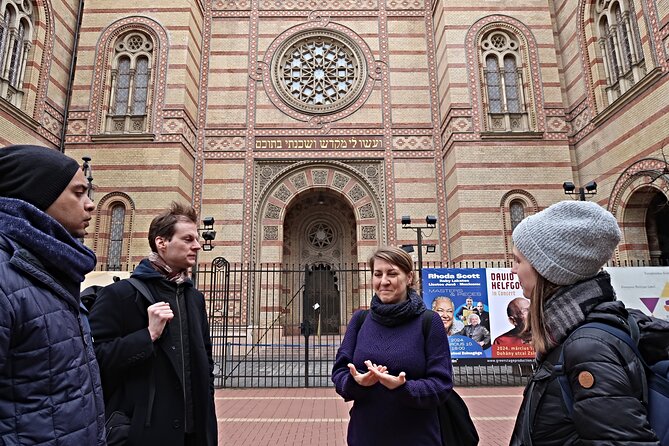
Budapest can do “wow” fast: grand buildings, wide streets, and serious architecture on every corner. This tour earns its impact by pairing those places with names, dates, and lived experiences, not just photos.
You’re with a historian guide, and because it’s private (up to 10 people), you get room for real questions. That matters on a subject like Jewish history, where details can change what a building means.
The route is also built to flow. You start with one of Europe’s biggest synagogues, pass through the neighborhoods that once held a Jewish community concentrated by force, and finish at a WWII memorial right on the riverbank.
You can also read our reviews of more walking tours in Budapest



Getting Oriented: Pickup, Meeting Point, and the 3-Hour Timing
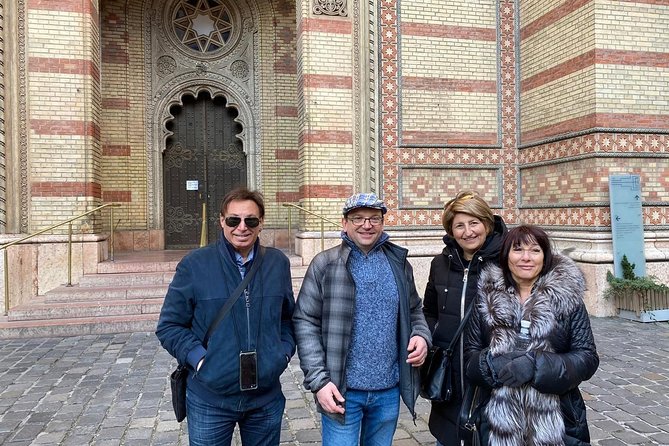
This is a ~3-hour walking tour with morning and (seasonal) afternoon departures. Morning tours run at 10:00am year round, and afternoon options appear in certain seasons, so you can match it to your sightseeing rhythm.
If you choose pickup, your guide meets you at your local accommodations and then leads you by metro, tram, or foot when sites are close. If you don’t want pickup (or if address details aren’t provided), there’s a clear default meeting spot: Cafe Synago Kavehaz (Dohany utca 1/A), previously known as Cafe Zenit.
A quick practical note: moderate walking is involved. Wear comfortable shoes and plan on moving steadily, even though stops include time to look around and listen.
Entering the Dohány Street Synagogue Complex (Nagy Zsinagoga) Like a Local
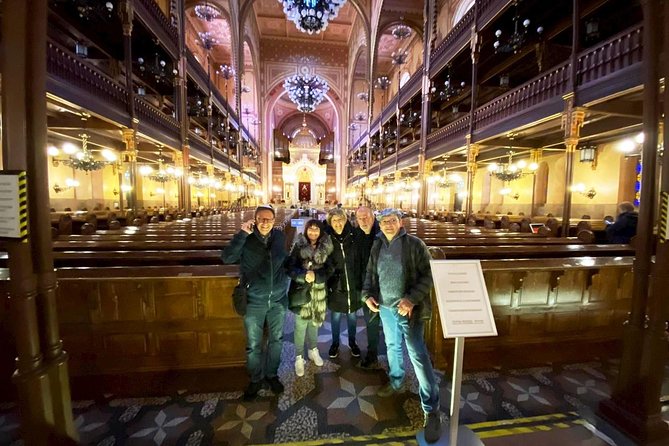
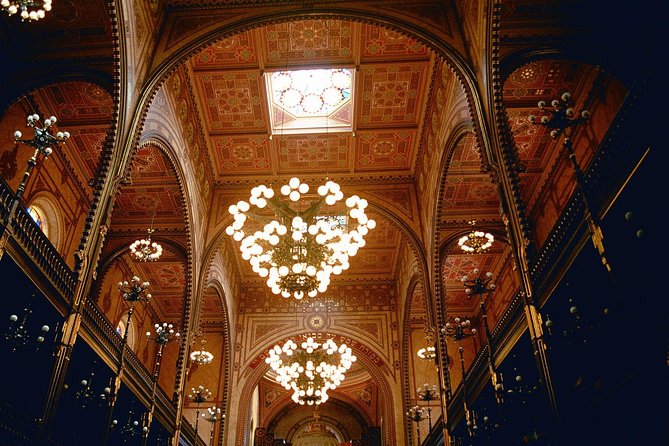
The first stop is the Dohány Street Synagogue (Nagy Zsinagoga), the huge centerpiece of Budapest’s Jewish heritage. This isn’t a quick photo stop. You get time to explore the synagogue with support from a Jewish Studies Scholar, then continue into key parts of the complex.
What you’ll see inside the complex:
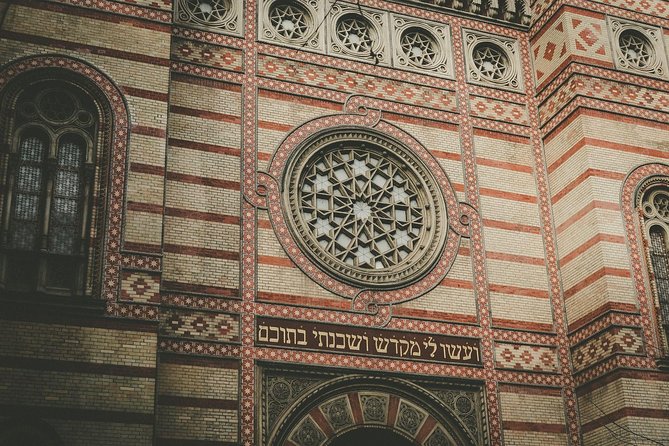
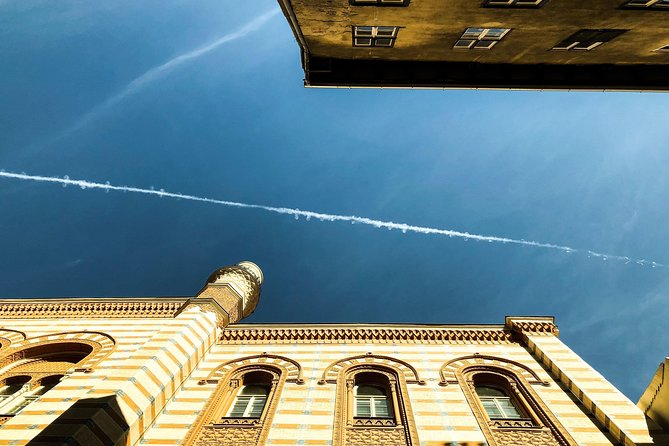
- The Moorish Revival style exterior and interior details that make this one of Europe’s most famous synagogues
- The Temple of Heroes
- The Jewish Museum
- A Memorial Park area within the same site
If you’ve ever wondered why Jewish history in Europe has both community pride and deep loss baked into the landmarks, this stop answers that. The architecture signals significance; the memorial spaces make sure you don’t treat it like just another impressive building.
One practical caution: admission tickets aren’t included for this synagogue complex. You may also be able to get tickets arranged if you don’t already have a pass, but you should still plan to budget for entry.
Kazinczy Street: Ghetto Wall Memorial, Mikve, and an Orthodox Synagogue Exterior
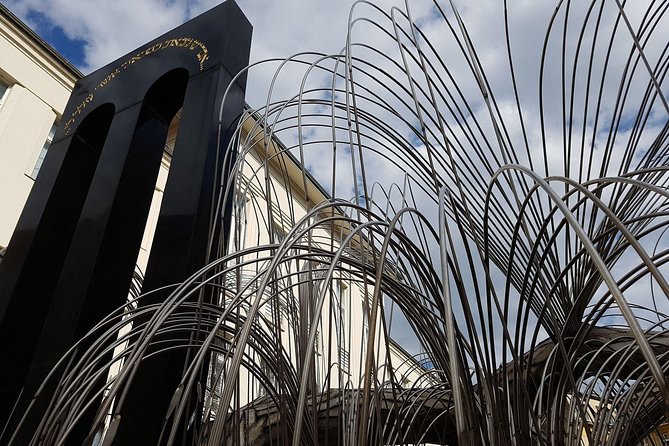
After the big introduction, the tour tightens into the neighborhood story. You walk toward the Ghetto Wall Memorial, erected in 2014, which helps you visualize what confinement and separation looked like in real streets.
From there, you pass a luxurious mikve (a Jewish ritual bath). Even if you don’t go inside every time on every day, this kind of stop matters because it connects religion to daily rhythms—cleanliness, preparation, and community practice.
Then the route continues along Kazinczy Street, including the exteriors of the Art Nouveau orthodox synagogue there. When it’s open to the public, you can also visit the interior.
Dress code matters here. Visitors to the Dohány and Kazinczy Synagogues are requested to have shoulders and knees covered. Bring something simple to cover up if your day outfit is too bare—think a light scarf or layer that won’t overheat you.
Rumbach Street Synagogue: Status Quo Ante Context Without the Overload
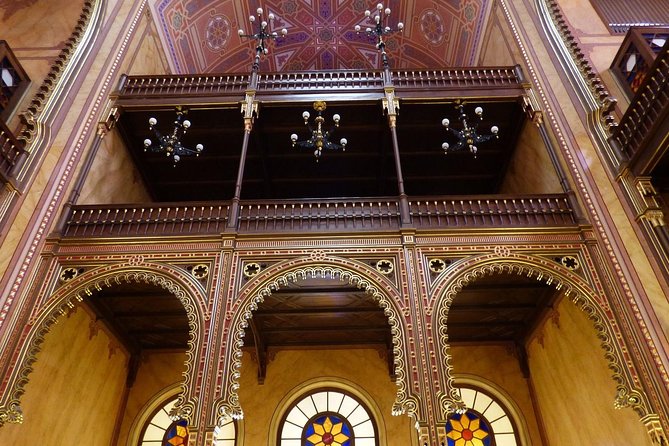
The tour also includes Rumbach Street Synagogue, a stop that helps you understand that Jewish life wasn’t one single uniform practice. Here the guide focuses on the Status Quo Ante stream of Judaism.
You’ll observe the impressive facade, then, when open to the public, you can visit the interior. This stop is often where the tour shifts from “seeing” to “understanding.” The guide’s job is to explain what those differences meant on the ground, not just as academic labels.
If you tend to get information overload on walking tours, this section can still work, because the story is tied to a building you’re actually standing in. That helps your brain store the details with place-based meaning.
You can also read our reviews of more private tours in Budapest






Pest Ghetto Streets and Castle Hill Ruins: Turning the Map Into a Story
Between synagogue stops, you’re not just crossing distance—you’re tracing what used to be a Jewish working-class area. The route covers parts of District VII and District VI (often discussed together as the former Jewish quarter area), and you’ll spend time in and around the former Pest Ghetto.
This is where the tour earns extra value for first-timers. You start to see how the Jewish community wasn’t just a church-and-castle story. It was everyday life—work, neighborhood networks, and community institutions in real streets.
The walk also includes Castle Hill, where you may see ruins of medieval synagogues. Ruins have a special effect: they don’t tell everything, but they remind you that Jewish presence in Budapest has deeper roots than the modern buildings alone.
The flexibility is real here. Because you’re on a private tour, the historian guide can adjust the emphasis depending on whether you want more social history, more religious context, or more WWII focus.
Shoes on the Danube Bank: The Last Stop That Stays With You
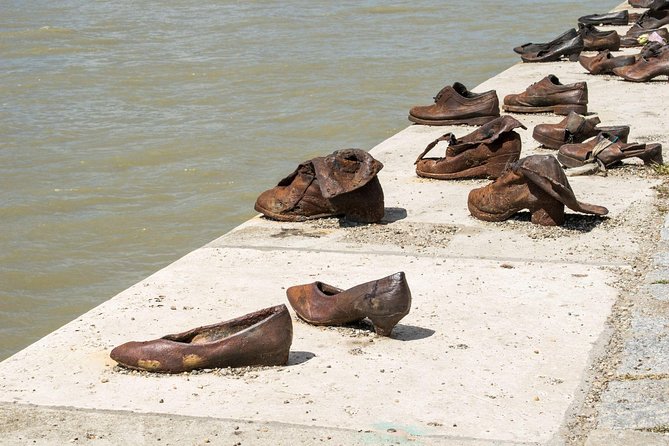
The tour ends at Shoes on the Danube Bank, a memorial erected on April 16, 2005. It honors Jews massacred here during WWII.
The memorial’s idea is simple and brutal: people were ordered to take off their shoes, then were shot at the water’s edge so their bodies fell into the river. The sculpture represents the shoes left behind.
This stop is listed as free, and it’s a good way to close the tour because it puts the day’s history into one concentrated, physical moment. The guide’s commentary is especially helpful here, because the memorial can feel straightforward until you understand what it’s referencing.
Bring a little quiet time for this part. Don’t rush it just to reach your next restaurant. Let it land.
What You’ll Pay For: Private Tour Value vs. Synagogue Ticket Costs
The tour price is $396.52 per group, up to 10 people, and that’s for a private guide with hotel pickup. In other words, the cost isn’t per person. If you’re traveling with family or friends, it often turns into a better deal than piecing together multiple ticketed visits with separate guides.
The tradeoff is that synagogue admission tickets are not included. That means you’ll need to budget for entry to the Dohány Street Synagogue, plus the Kazinczy Street and Rumbach Street synagogues when you visit interiors (they’re timed to when places are open to the public).
If you’re the kind of traveler who hates surprise fees, plan for this upfront. If you like learning with a guide and you’re already paying for quality time, the “private historian” value can outweigh the extra admissions.
Dress Code and Practical Prep (So You Don’t Get Stuck at the Door)
Before you go, keep your outfit simple. The tour notes that visitors to Dohány and Kazinczy Synagogues should have shoulders and knees covered. That’s not a maybe. It’s a request tied to visiting sacred spaces.
If you’re traveling in warm weather, choose breathable layers. A light cardigan, shawl, or scarf is usually the easiest fix. If you’re in cooler months, a longer outer layer can do double duty.
Also, bring comfortable shoes. The tour is moderate walking, and you’ll be moving between several neighborhoods, not sitting in a vehicle for the whole time.
How the Tour Fits Different Travelers
This is a private experience, so it works well for couples, families, and small groups who want real conversation. The walking format also suits travelers who prefer to learn while moving through a place, not only inside a museum room.
It can be especially good for multi-age groups because the guide is there to hold attention and shape the story at your pace. Names from guides you may encounter include Andrew, OSHI, and Kati/Kata, and the common thread is a focus on making Jewish history understandable, not distant.
If you’re in Budapest for the first time, this tour gives you an anchor. It connects architecture to community life, then connects community life to WWII tragedy. If you already know Jewish history broadly, it still helps because you’ll see Budapest’s specific sites and how they link together geographically.
Who Should Book This Tour (and Who Might Want Another Option)
Book this if you want:
- A private historian guide rather than a large group lecture
- The major synagogue and memorial sites in one 3-hour walking route
- A focus on both religious heritage and WWII remembrance
Consider another style of tour if you:
- Hate paying separate admission tickets
- Can’t manage moderate walking
- Are uncomfortable with dress-code requirements for synagogue interiors
Price and Logistics, Put Simply
You’re paying for private access and expert interpretation, not just for walking between stops. At $396.52 per group (up to 10), the price can be a strong value if you’re splitting with family or friends.
The “budget factor” is tickets. Shoes on the Danube Bank is free, but synagogue tickets aren’t included for Dohány and the other synagogue stops, and interiors depend on being open to the public.
If you’re okay handling that mix of guided time plus a bit of on-site admission planning, this tour fits well.
Should You Book This Jewish Budapest Tour?
I think you should book it if you want a guided route through Budapest’s Jewish sites that doesn’t treat the topic like trivia. The combination of the Dohány complex, the ghetto-area context, and the Shoes on the Danube Bank ending gives you a full arc in just a few hours.
It’s also a smart choice when you want flexibility. Private tours work best when you care about details—what a building means, why a memorial is shaped the way it is, and how the neighborhood changed over time.
If you’re the type who appreciates clear structure, respectful pacing, and a guide who can translate history into what you’re seeing right in front of you, this one is worth it.
FAQ
How long is the A Journey through Jewish Budapest Private Walking Tour?
It lasts about 3 hours.
How big is the group for this private tour?
It’s a private tour for your group, with pricing listed per group up to 10 people.
What language is the tour offered in?
The tour is offered in English.
Is hotel pickup included, and where do we meet if we skip pickup?
Hotel pickup is included. If you don’t want pickup or no address is provided, meet at Cafe Synago Kavehaz, previously known as Cafe Zenit, on Dohany utca 1/A, about 10 minutes before the start time.
When do morning tours start?
Morning tours depart at 10am year round. Afternoon departures are available in certain seasons.
Which stops are included on the route?
You’ll visit the Dohány Street Synagogue complex, the Ghetto Wall Memorial area and Kazinczy Street Synagogue area (with exterior views and interior when open), the Rumbach Street Synagogue (interior when open), and the Shoes on the Danube Bank memorial.
Are synagogue admission tickets included?
No. Tickets for the Dohány, Kazinczy, and Rumbach synagogues are not included. The Shoes on the Danube Bank is free. The guide may help with tickets if you don’t have a pass.
Is there a dress code for the synagogues?
Yes. Visitors to the Dohány and Kazinczy Synagogues are requested to have shoulders and knees covered.
Is the tour mostly walking?
Yes. There is moderate walking, and you should wear comfortable shoes and appropriate clothing.
Is cancellation free?
Yes, you can cancel for a full refund up to 24 hours before the experience starts.