REVIEW · BUDAPEST
Budapest Art Nouveau Walking Tour
Book on GetYourGuide →Operated by insightcities.com · Bookable on GetYourGuide
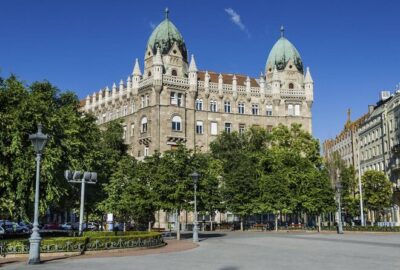
Art Nouveau in Budapest is pure drama. This 3-hour walk turns street corners into an art lesson, with an expert historian guide (I’ve heard Anna described as friendly and very strong on art and Budapest history). I love that you get real visual payoff fast, especially at Ödön Lechner’s grand Postal Palace and through the Zsolnay-inspired ceramics that define Hungarian Secession.
The best part is how much you can actually see up close: the tour is designed around buildings where visitors can enter the entrance hall and catch interior details, not just stare at facades. One thing to consider: access can change by day—on weekends you can’t enter the Hungarian National Bank, and the Orthodox Synagogue is closed on Saturdays—so your route may adapt or include optional paid interiors.
In This Review
- Key things to notice on this Budapest Art Nouveau walk
- Hungarian Secession Art Nouveau: why Budapest looks like it’s from the future
- The two building stars: Lechner’s Postal Palace and Gresham Palace
- Zsolnay porcelain tiles: how Hungarian Art Nouveau gets its signature look
- Asian motifs and Hungarian identity: what to watch for on the street
- Bedö House, Hungarian State Treasury, and the Art Nouveau in everyday spaces
- Kazinczy Street Synagogue finale: worth it when it’s open
- Price and value: what $123 buys in 3 hours
- When this tour is a great fit (and when it may not be)
- Should you book the Budapest Art Nouveau walking tour?
- FAQ
- FAQ
- How long is the Budapest Art Nouveau walking tour?
- What does the tour cost?
- Is the tour guided?
- What language is the tour offered in?
- Where does the tour start?
- Do I need tram or metro tickets?
- Can I enter the buildings on the tour?
- Are there any days when access changes?
- Are there extra entrance fees for certain sites?
- What is the cancellation policy?
Key things to notice on this Budapest Art Nouveau walk
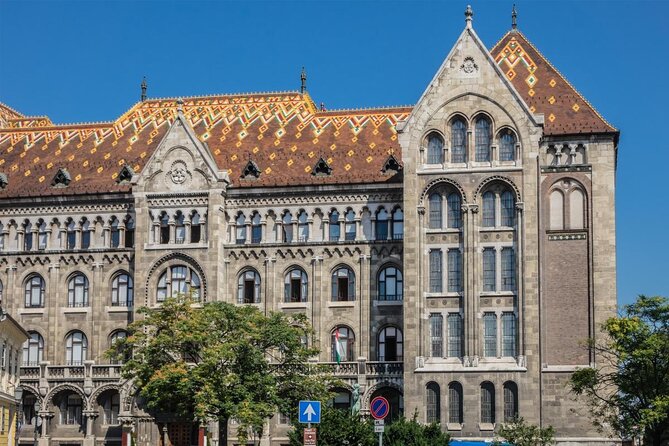
- Hungarian Secession, not copied design: you’ll see how Hungary’s version of Art Nouveau borrowed ideas and made them its own.
- Lechner’s Postal Palace in the spotlight: known as Hungary’s Gaudi, it’s a great anchor stop for the whole style.
- Entrance-hall moments: the tour focuses on places where you can actually get inside for details.
- Zsolnay porcelain tiles: ceramics aren’t just decoration here—they’re part of the look and the story.
- Asian motifs explained in context: you’ll learn why those references show up, and how European Orientalism played a role.
- Kazinczy Street Synagogue finale: when it’s open, the interior leaves a strong impression.
Hungarian Secession Art Nouveau: why Budapest looks like it’s from the future
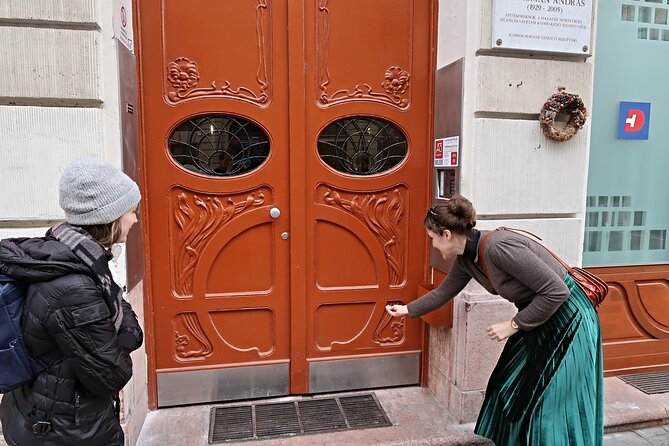
Budapest’s Art Nouveau isn’t decorative fluff. It’s radical, early-20th-century design that mixes architecture with applied arts—metalwork, ceramics, and ornament that work together like a single visual system.
What makes this tour worth your time is the way it frames the style. Hungary developed a cutting-edge take on the movement often called Hungarian Secession, and it’s strongly associated with Ödön Lechner—the founding figure you’ll hear about throughout the walk. If you’ve seen Art Nouveau elsewhere, you’ll still get that “turn-of-the-century Europe” feeling. But Budapest adds its own logic: ceramics, bold surface patterning, and motifs that pull from outside influences and local identity at the same time.
I also like the pacing. You’re not trying to read a museum label on every corner. Instead, you’re taught what to look for—materials first, then pattern, then symbolism—so the buildings start to make sense as you move.
You can also read our reviews of more walking tours in Budapest



The two building stars: Lechner’s Postal Palace and Gresham Palace
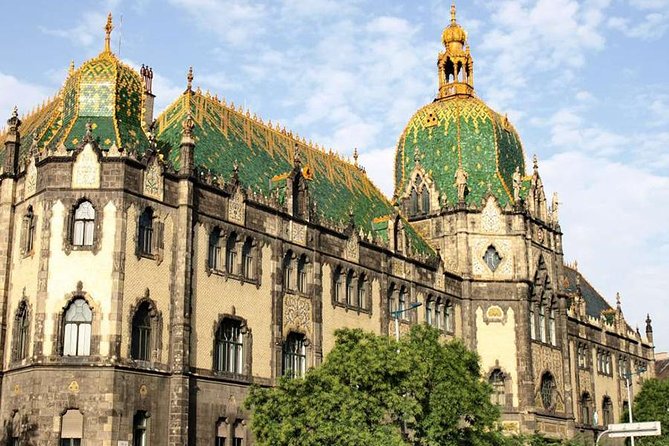
You’ll structure your understanding around two major stops, because both help you see Art Nouveau as a total design idea—not just a face on the street.
First comes the Palace of the Royal Post, tied to Ödön Lechner. The guide helps you read the building like a composition: the exterior flare, then the way the interior relates to it. The payoff here is that the entrance hall is accessible, so you can compare what you noticed outside with details you can see more clearly up close. Think of it like a crash course in Hungarian Secession design, with enough time to actually register the shapes and materials.
Next is Gresham Palace, another highlight stop. This one is famous for its elegance and fine detailing, and the tour leans into that by letting you peek inside the entrance hall as well. I like these interior-hall moments because they change your perspective. A facade can look “busy” from far away. Inside, the same elements start to look intentional—placed for effect, guided by light and scale, and built to impress the person who enters.
A practical tip: both of these are good photo stops, but don’t chase only wide shots. Take a minute to look down low and up high. Art Nouveau loves the whole frame, not one corner.
Zsolnay porcelain tiles: how Hungarian Art Nouveau gets its signature look
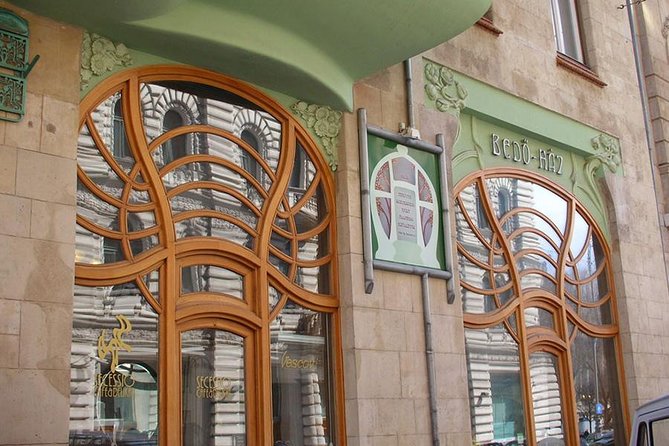
If you remember just one material from this tour, make it Zsolnay porcelain. Hungary used extensive ceramic decoration in many buildings, and the tour uses that as a thread that connects multiple stops.
You’ll learn the ceramics connection through the Zsolnay factory in Pécs, and through examples where porcelain tiles show up on facades. This isn’t an abstract point. You’ll be looking at how the tile surfaces shape the building’s mood—how color and pattern become part of the architecture, not an afterthought.
What I like about this approach is that it gives you a way to keep noticing even when you’re outside the tour. Once you know to scan for ceramic surfaces, you start seeing them across central Budapest: corners, edges, and decorative fields that seem to glow or shift depending on the angle.
Also, ceramics are one of the reasons Hungarian Secession can feel both luxurious and playful. You get grandeur, but you also get a sense that someone with bold taste designed the entire “skin” of the building.
Asian motifs and Hungarian identity: what to watch for on the street
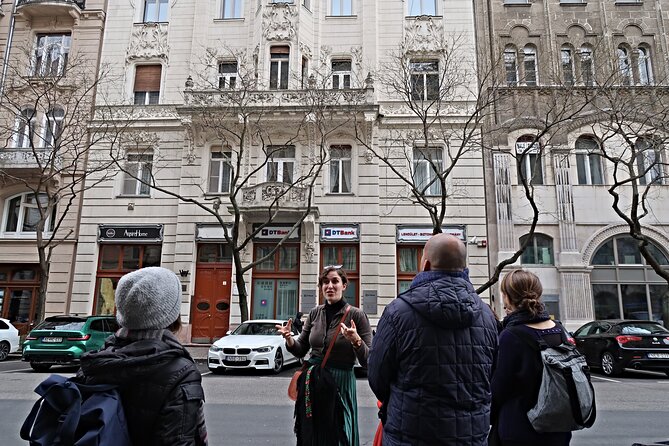
One of the most interesting themes on the walk is the use of Asian motifs and elements. You’ll hear how designers tied these references to the supposed eastern origins of the Hungarian nation. You’ll also get another side of the story: European-wide Orientalism influenced Art Nouveau across the continent.
This matters because it changes how you interpret the ornament. Instead of thinking, “That’s just decorative,” you start asking what the pattern was meant to communicate—identity, connection, and a modern, cosmopolitan ambition.
As you walk, pay attention to recurring cues like stylized forms, flowing linework, and ornamental features that don’t look purely “European academic.” The guide’s explanations help you spot them faster, but you can also teach yourself in real time: if you can name the motif, you’re already learning.
This section is a good reminder that Budapest wasn’t isolated. It was part of a wider Europe looking outward, borrowing ideas, and reshaping them into something new.
Bedö House, Hungarian State Treasury, and the Art Nouveau in everyday spaces
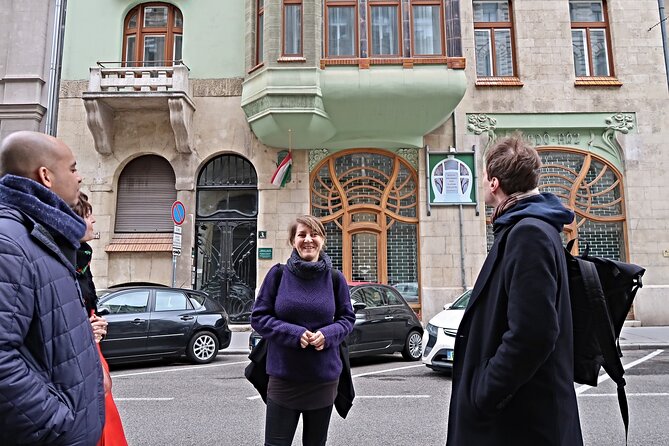
The walk doesn’t only focus on the grand showpieces. You also spend time on smaller-but-still-important Art Nouveau interiors and commercial spaces, where the style shows up in practical settings.
Stops include places like Bedö House and the Hungarian State Treasury area, plus stretches such as Rózsavölgyi utca and the Paris passage. These kinds of stops help you understand that Art Nouveau was about everyday experience. It wasn’t only for palaces or institutions.
The tour also includes interior-rich commercial moments along the way: a flower shop with its original interior, a department store, and several bank offices. You’ll also see a small Art Nouveau museum and a coffee house stop. Even without going deep into every object, these interruptions matter. They keep the style from turning into a “look-only” sightseeing script.
How it helps you as a visitor: you’ll leave with a better sense of what the city felt like during the Belle Époque. Not just grand architecture, but a sense that people interacted with beautiful design while buying flowers, entering offices, and moving through passages.






Kazinczy Street Synagogue finale: worth it when it’s open
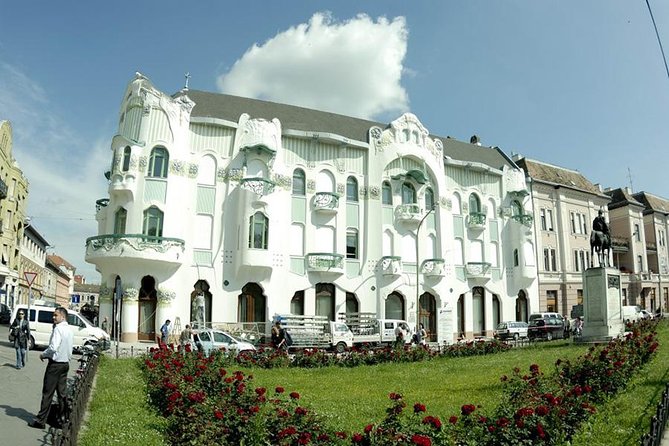
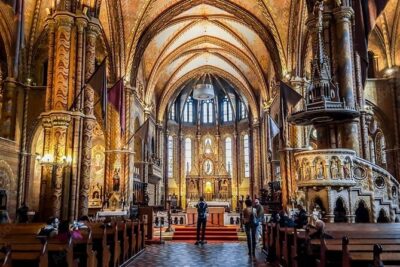
The tour finishes at the Kazinczy Street Synagogue, a fascinating Art Nouveau orthodox synagogue known for its exquisite interior design.
Here’s the key scheduling reality: it’s closed on Saturdays. So if your trip lands on a Saturday, you won’t get the full final impact unless the tour adapts.
When it is open, the synagogue works as a strong emotional punctuation mark. You’ve spent hours learning how Hungarian Secession and European Art Nouveau thinking use materials, ornament, and motifs. Then you see it in a sacred interior context, where light and detail can hit even harder.
If the synagogue is closed, the tour can be adapted to your interests or extended to other Art Nouveau sites such as the Gellért Bath Hotel, the Museum of Applied Arts, and the Geology Museum. That flexibility is useful in a city where opening hours can shift.
Price and value: what $123 buys in 3 hours
At $123 per person for a 3-hour guided walk, the price lands in the mid-to-typical range for a specialist architecture tour. The value comes less from “you paid to be walked around” and more from the guide’s historian framing and the specific buildings that allow entry into entrance halls.
Also, the tour keeps things efficient. You’re covering major names like the Palace of the Royal Post, Gresham Palace, and a synagogue finish—plus supporting stops that explain the recurring Hungarian Secession ingredients like porcelain tiles and motif sources. Without a guide, you’d likely spend time guessing what matters.
One more value note: some entrances can add small extras. If you visit the House of Hungarian Art Nouveau, there’s a fee listed at 1000 HUF (about $3.50). The Orthodox Synagogue has an additional 2000 HUF (about $7.00). Those are manageable add-ons, and knowing they exist helps you avoid surprises.
Budget-wise, you’ll also want to plan for transit if needed. Tram and metro tickets aren’t included, though the core experience is a walk.
When this tour is a great fit (and when it may not be)
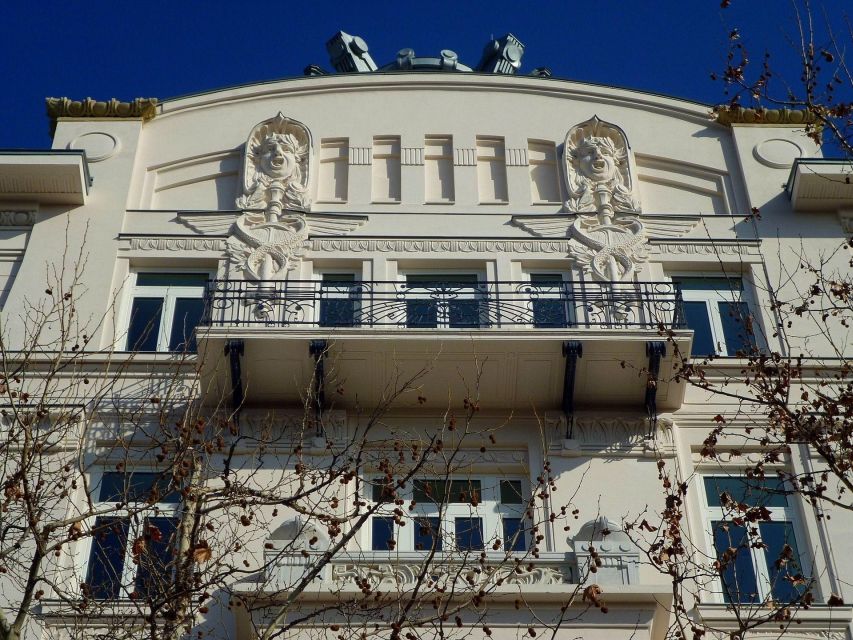
This is a strong choice if you care about design details—how buildings are made, why ornament appears, and what materials say about a city’s ambitions. If you like architecture that’s more than skin-deep, you’ll get a lot from the Hungarian Secession lens and the Zsolnay/Asian-motif explanations.
It’s also a good match if you want a guided route that includes interiors. Entrance halls at major sites mean you’re not restricted to distant facade viewing.
The main “not ideal” scenario is a weekend-heavy plan where key sites close. On weekends, the Hungarian National Bank can’t be entered (it has fine examples of Zsolnay porcelain). And on Saturdays, the Orthodox Synagogue is closed. If you can only travel on those days, you’ll still get a tour, but your experience could shift toward other Art Nouveau sites.
Should you book the Budapest Art Nouveau walking tour?
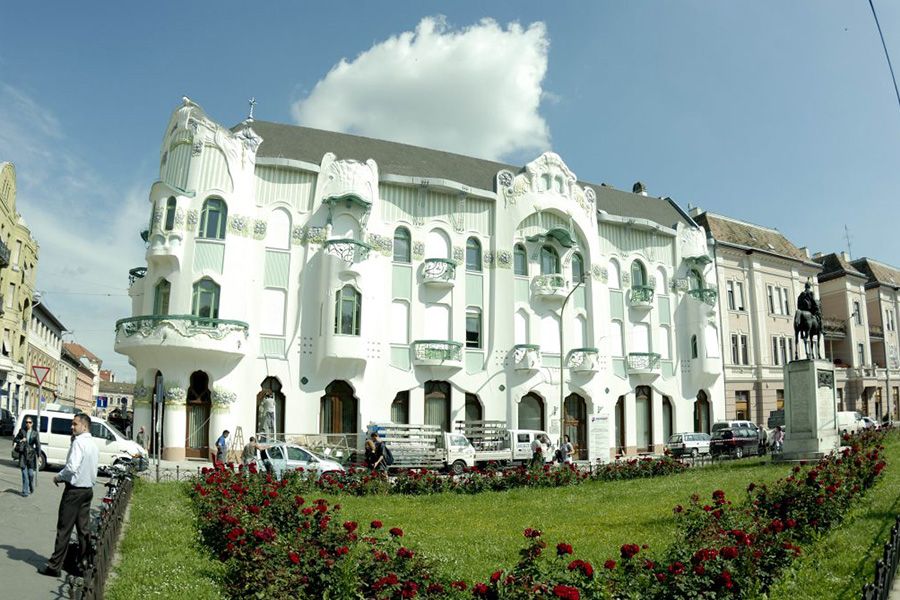
If your goal is to understand Budapest’s Art Nouveau beyond postcard facades, I’d book it. The combination of a historian guide, the focus on entrance-hall viewing at major buildings, and the recurring themes (Hungarian Secession, Zsolnay porcelain, and motif sources) makes the 3 hours feel structured instead of scattered.
Two practical reasons to feel confident:
- You’ll come away with a mental checklist for spotting the style as you walk around on your own.
- You get an ending at Kazinczy Street Synagogue when opening hours allow—one of the most visually dramatic payoffs in the whole category.
FAQ
FAQ
How long is the Budapest Art Nouveau walking tour?
It lasts 3 hours.
What does the tour cost?
The price is $123 per person.
Is the tour guided?
Yes. You’ll have a live historian guide.
What language is the tour offered in?
The tour is in English.
Where does the tour start?
The starting location depends on the option you select. Pickup can be arranged at Madal Café, Budapest, Alkotmány u. 4.
Do I need tram or metro tickets?
Tram and metro tickets are not included.
Can I enter the buildings on the tour?
For key stops, you can enter entrance halls—specifically mentioned for the Palace of the Royal Post and Gresham Palace.
Are there any days when access changes?
Yes. On weekends you cannot enter the Hungarian National Bank. The Orthodox Synagogue on Kazinczy Street is closed on Saturdays.
Are there extra entrance fees for certain sites?
Yes. The House of Hungarian Art Nouveau is 1000 HUF per person (about $3.50). The Orthodox Synagogue is 2000 HUF per person (about $7.00).
What is the cancellation policy?
You can cancel up to 24 hours in advance for a full refund.