REVIEW · BUDAPEST
Budapest: Buda Castle Walking Tour in German
Book on GetYourGuide →Operated by Tourist Angel · Bookable on GetYourGuide
Castle Hill tells stories if you walk. On this German tour, you get the Buda Castle District in two hours, with history tied to what you’re seeing, not just dates.
I love how it hits the big-ticket sights and still keeps things moving on real streets, so the place feels lived-in, not staged.
What I like most is the focus on Matthias Church and its Gothic splendor, explained in a way you can actually follow while you’re standing there. I also really enjoy the stop at Fishermen’s Bastion, because the views over the Danube make it easy to understand where Budapest’s drama sits—straight across the water.
One drawback: it runs rain or shine, and the Castle District means cobbles and some walking. If weather’s awful or your shoes aren’t up to it, the 2 hours can feel longer than it needs to.
In This Review
- Key moments to expect
- Getting oriented at Szentháromság tér and Matthias Church
- Fishermen’s Bastion: fairy-tale views with real context
- Royal Palace complexes: courtyards, fountains, and guards
- Castle Hill and medieval walls: the Buda Hills angle
- Danube bridges in one sweeping storyline
- The German guide experience: what makes it feel worth it
- Price and value: is $23 a smart deal for two hours?
- Who should book this Buda Castle tour, and who should skip it
- My verdict: should you book it?
- FAQ
- Where is the meeting point?
- How long is the tour?
- What language is the guide?
- Is the tour outdoors?
- What are the main sights included?
- Is the tour wheelchair accessible?
Key moments to expect
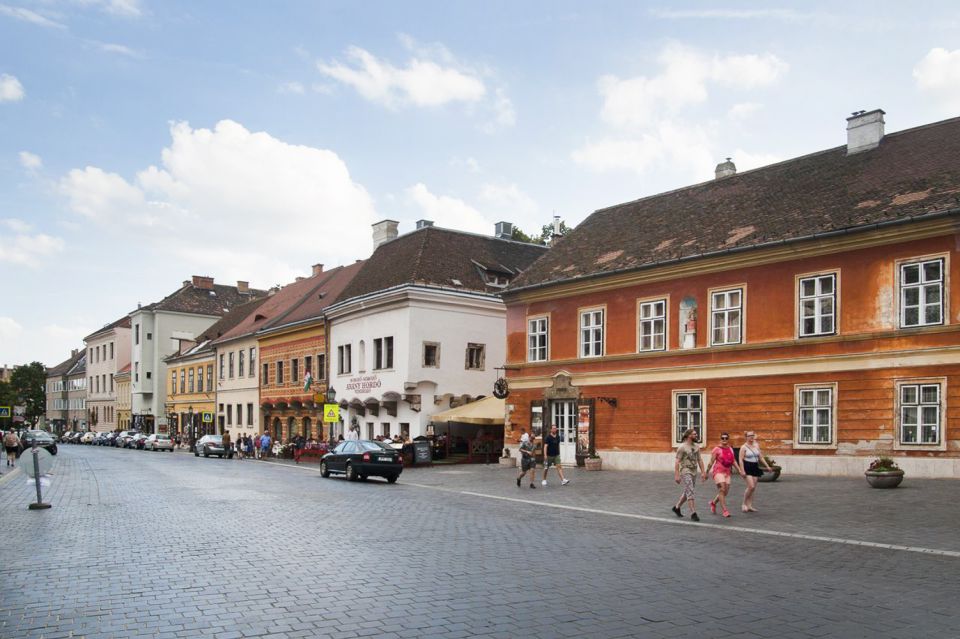
- Start at Szentháromság tér, by Matthias Church for quick orientation and great photos
- Matthias Church with German commentary that helps you read the building
- Fishermen’s Bastion views over the Danube and major bridges
- Royal Palace courtyards and fountains, plus guards outside the complex
- Medieval walls plus a perspective toward the Buda Hills
Getting oriented at Szentháromság tér and Matthias Church
Your tour begins at Szentháromság Square (Szentháromság tér 2), in front of the Holy Trinity Column, opposite the front gate of Matthias Church. You’re asked to arrive 15 minutes early, and I get why: it’s the kind of meeting point where you want to be calmly in place, not doing last-minute route math while everyone funnels toward the gate.
The best part of starting here is that Matthias Church is close enough to feel immediate. You’re not spending the whole first stretch looking for the story—you’re getting it right away. The guide begins with the area around the Holy Trinity Statue, then you move into Matthias Church. Expect guided sightseeing and a walk that keeps turning your attention back to details: what you’re looking at, why it matters, and how this corner of Budapest fits into the larger Hungarian story.
Matthias Church is described as Gothic in splendor, and that lines up with what you’ll see: it’s the kind of building where the shapes and textures reward slow attention. In a group, it can be easy to rush. On this tour, you get a plan for seeing without sprinting—so you can enjoy the atmosphere instead of just collecting pictures.
And yes, it’s a German-language tour. That’s a plus if you speak or want to practice, but it also means the guide’s pacing matters. From the feedback, guides like Monika (mentioned by name) are praised for being friendly and for answering questions. That matters, because if something catches your eye—architecture, symbolism, or a bit of local legend—you don’t have to wait until the end to ask.
You can also read our reviews of more walking tours in Budapest



Fishermen’s Bastion: fairy-tale views with real context
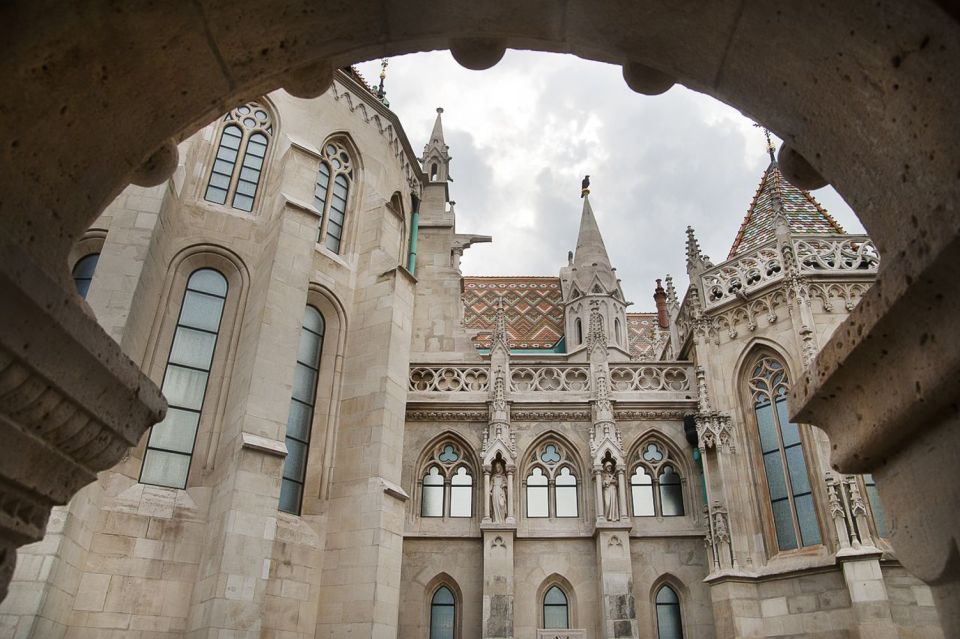
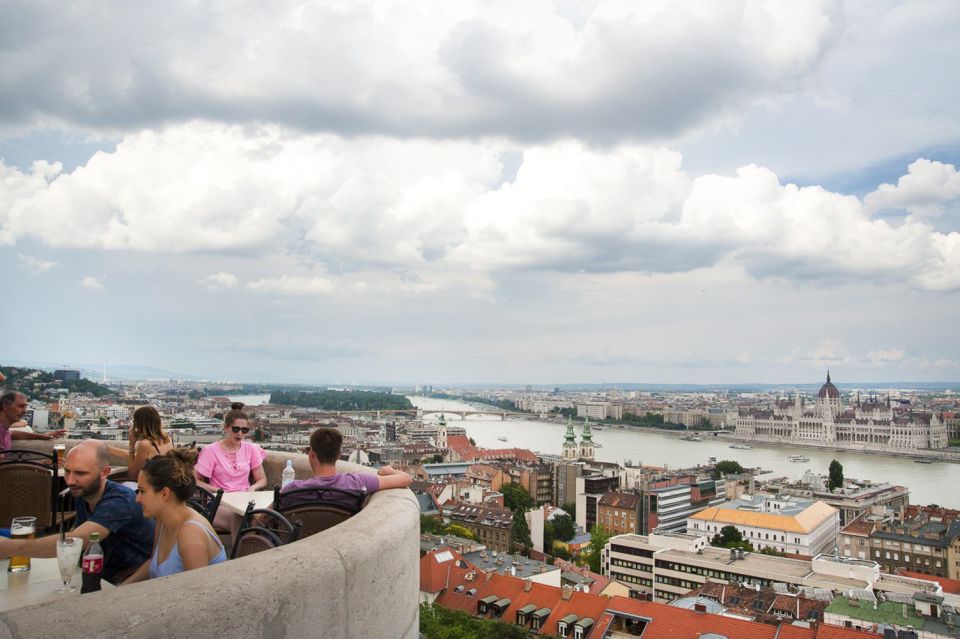
Next up is Fishermen’s Bastion, a stop that’s worth planning for even if you only have a half day in Budapest. The key reason is the view. This is where you look out over the Danube River and start connecting the dots between the Buda side and the landmarks across the water.
The tour doesn’t just point. It explains. As you enjoy the “wow” factor—Danube views and the sweep toward the Hungarian Parliament building—you’ll also hear the stories and legends tied to this part of the city. That’s the difference between seeing a viewpoint and understanding it. You leave with a better sense of why this spot became so iconic.
Another practical benefit: the route makes it feel like you’re walking with the city’s geography. Fishermen’s Bastion is not an isolated postcard stop. It’s positioned so you can start thinking about the bridges that connect both sides of Budapest—because you’ll be referencing them again later.
The cobblestones and hills of the Castle District can turn sightseeing into a workout. That’s not a bad thing, but it is a reason to wear comfortable footwear and go at the pace of the guide. You’re here to enjoy the views, not to white-knuckle a knee down a slope.
Royal Palace complexes: courtyards, fountains, and guards
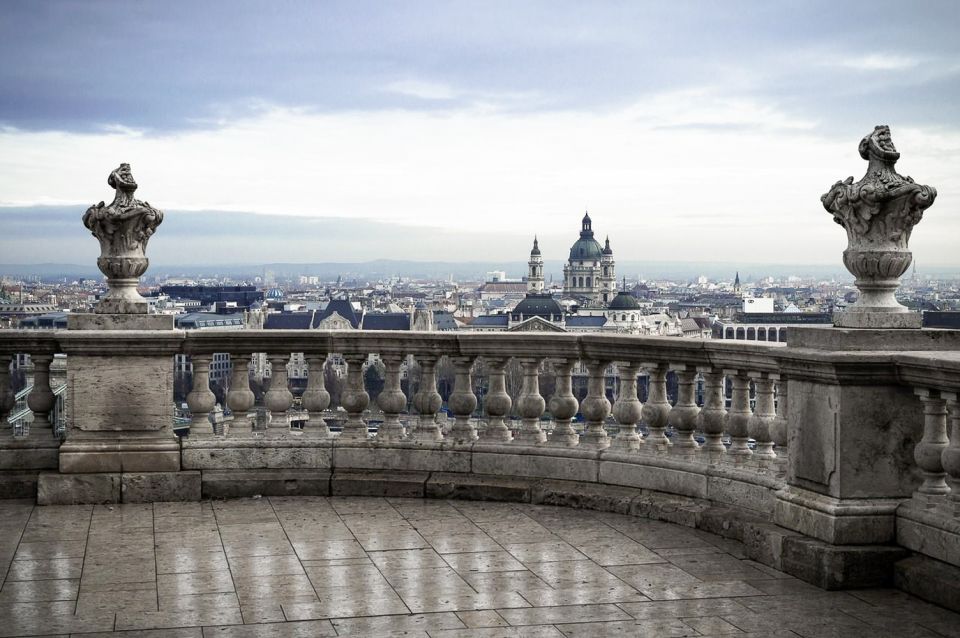
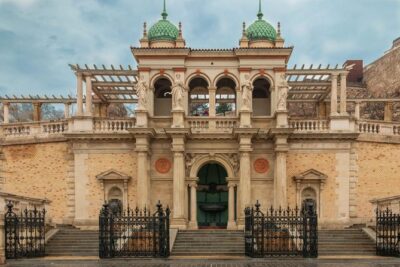
After Fishermen’s Bastion, the route moves onward toward the Royal Palace complex area. The tour includes a transfer through the Castle Hill zone, and you’ll leave the more residential feeling of the district to reach the President’s Palace and the Royal Palace complexes.
From there, you’re walking around the courtyards and fountains. That’s an underrated part of palace areas: courtyards are where buildings feel functional and human, not museum-quiet. You get to move through space, see how the grounds are laid out, and notice the contrast between grandeur and day-to-day architectural rhythm.
One of the standout moments here is the sight of the guards outside the palace. It’s one of those details that’s easy to notice but hard to interpret. On the tour, you’re not left guessing—you’re given context and the kind of story that helps the scene make sense on the spot.
Also, this section helps you understand scale. From viewpoints earlier, you’re high above the river. Here, you’re close to the structures and you can appreciate how the palace complex anchors this whole hilltop world.
If you’re visiting on a day when other tours are swarming the big sites, the palace zone is a good place to slow down. Two hours overall isn’t long, so you want the guide’s time management to feel tight—and the tour is designed so you hit the big beats without dragging.
Castle Hill and medieval walls: the Buda Hills angle
Between the palace area and the viewpoint transitions, you’ll spend about 30 minutes at Castle Hill (as part of the route). Think of this as the middle stretch where the tour shifts from “architectural highlights” to “how this hill connects to the wider city.”
You’ll explore the other side of the castle and you’ll get an excellent view from the medieval walls. The Buda Hills come into view—specifically the western part of the city with forests and nature parks. That detail matters because it shows how Budapest isn’t only river and buildings. The hill country is part of the city’s identity, and this view helps you picture how people move between urban life and nature without leaving the region.
This is where the tour feels especially good for first-timers. If you only spend time around the riverfront, Budapest can feel two-dimensional. The medieval-wall perspective brings depth—literal depth, since you can see the city’s layers.
Practical tip: this is also a good time to pause for a breather if you need it. The tour format includes walks between stops, so take advantage of the 30-minute Castle Hill window to rest your legs and let the scenery land.
Danube bridges in one sweeping storyline
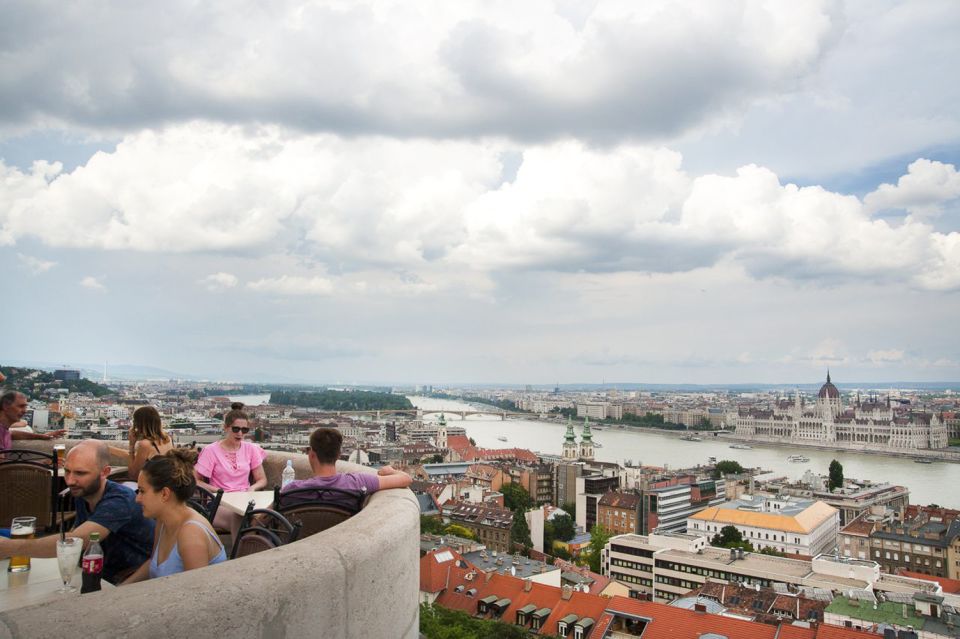
One reason people love Buda Castle District tours is the Danube. The other reason is that the river lets you see Budapest’s two personalities at once: historic grand buildings on one side, and the lively riverfront story on the other.
This tour is built around that. From the Buda side, you’ll get stunning views across the Danube River with full views of main bridges: Margaret Bridge, Chain Bridge, Elizabeth Bridge, and Liberty Bridge. Seeing them from one guided route is smart because it turns separate landmarks into a single visual map.
Even if you’ve looked at these bridges on photos, the experience of spotting them in sequence helps you remember their relative positions and understand how the river shapes the city. It’s also a helpful mental shortcut for later sightseeing. When you’re walking the riverfront after this, you’ll have a better internal “this way, that way” model.
And the guide ties in additional references along the way, including the Hungarian Parliament building. That combination—bridges plus Parliament—makes the Danube feel like a stage rather than a passive background.






The German guide experience: what makes it feel worth it
This is a German-speaking local guide experience with a professional guide. That’s not a small detail. When you’re paying for a walking tour, you’re really buying interpretation: how someone helps you notice the right things and connect them.
The feedback highlights a few things that are directly useful to you:
- Guides are described as very friendly, with a positive, welcoming vibe.
- They answer questions instead of rushing past them.
- The tours are described as enjoyable and not overly tight—there’s space for questions and for the group to absorb what’s happening.
One guide named Monika is specifically praised for having lots of knowledge and a warm approach. If you happen to get her (or a similar guide with the same style), you’ll likely feel comfortable asking about details. That matters most at Matthias Church and during the story-heavy parts, where curiosity can take you off the script in a good way.
Language note: the tour is in German. If you only understand a few words, you’ll still get the atmosphere and the main sights, but your enjoyment will depend on how comfortable you are listening. If you’re actively learning German, you’ll get a practical, real-world setting for vocabulary tied to architecture and local legends.
Price and value: is $23 a smart deal for two hours?
At about $23 per person for a 2-hour walking tour, the value comes from what you cover and how efficiently you cover it. You get a professional German-speaking guide, and the route strings together multiple major landmarks in the Buda Castle District without you having to figure out logistics on your own.
In plain terms, you’re paying for:
- Guided viewing at Matthias Church
- A viewpoint stop at Fishermen’s Bastion
- Time in the Royal Palace courtyards area, including fountains and guards
- Major Danube bridge views from strategic Buda-side angles
- Stories and legends that tie those stops together
For many visitors, the hidden value is time saved. In Budapest, you can spend a chunk of a day just “getting to stuff.” This tour is tight enough to keep you in motion, but not so rushed that you lose the place. Two hours is also a good duration if you want to anchor your trip without committing your entire afternoon.
The tour currently has a strong average rating of 4.8 from 51 reviews, which is a decent signal that people feel they got what they paid for.
Who should book this Buda Castle tour, and who should skip it
This tour is a great fit if you:
- Want a structured, high-impact walk through the Buda Castle District
- Care about architecture and local stories, not just taking photos
- Speak German (or want to practice) and like hearing the “why” behind famous sites
- Appreciate views that explain the city’s layout, especially the Danube and bridges
You might want to choose a different option if:
- You strongly dislike walking on uneven cobblestone streets and slopes
- You prefer tours in English or a language you’re more confident with
- You want a totally self-paced route where you can linger indefinitely at each landmark
My verdict: should you book it?
If you’re planning a first trip to Budapest and you want the Buda Castle District to make sense quickly, I’d book this. You get the key sights—Matthias Church, Fishermen’s Bastion, the Royal Palace complex area—and you finish with a view-driven understanding of the Danube bridges.
The format also looks like it matches what many people really want in a walking tour: a friendly, question-friendly guide, a brisk but not frantic pace, and an experience that reads like a guided walk through Hungarian atmosphere rather than a checklist.
If German is your comfort zone, this is even more rewarding. Even if it’s not, the landscape and the architecture still do most of the work, and the guide helps you connect the dots faster than you could on your own.
FAQ
Where is the meeting point?
You meet at Szentháromság Square, in front of the Holy Trinity Column, opposite the front gate of Matthias Church.
How long is the tour?
The tour lasts about 2 hours.
What language is the guide?
The tour is guided in German.
Is the tour outdoors?
Yes. The tour takes place rain or shine.
What are the main sights included?
You visit Matthias Church, Fishermen’s Bastion, Castle Hill, and you walk around the President’s Palace and Royal Palace complex courtyards, including fountains and guards. You also get views across the Danube with Margaret Bridge, Chain Bridge, Elizabeth Bridge, and Liberty Bridge.
Is the tour wheelchair accessible?
Yes, it’s wheelchair accessible.