REVIEW · BUDAPEST
Budapest City Sightseeing Half-Day Tour
Book on Viator →Operated by Eurama Travel Agency - Sightseeing City Tours Budapest · Bookable on Viator
Budapest in three hours is a smart sprint. This half-day tour gives you a coached route across the Danube, then a short guided walk in the Buda Castle area, with photo stops at big-name sights like Heroes Square and the Citadel. I like the live-guided format (not just a drive-by slideshow), and I also love the Danube-to-Castle flow that helps you get your bearings fast.
The catch is time. You’ll see a lot of exteriors and viewpoints, but the moments for photos and wandering are brief, especially at the Castle-area highlights. If your departure runs with multiple languages, you may also find it harder to catch every detail.
In This Review
- Key things I’d zero in on
- Why this 3-hour Budapest highlights route works
- Getting started at Eurama and finding your rhythm
- Margaret Bridge: your best first view of Pest and Buda
- Opera, St. Stephen’s Basilica, and Andrassy Avenue’s big names
- Heroes’ Square and City Park: one stop, lots of cues
- Gellért Hill Citadel: the view stop that actually lands
- Matthias Church exterior and Fisherman’s Bastion: quick looks with serious payoff
- Matthias Church (from outside)
- Fisherman’s Bastion (from outside)
- How much walking should you expect?
- Guide quality: what you should watch for on your departure
- Price and value: is $50.69 a good deal for a half day?
- Who this tour is best for (and who might want something else)
- Final call: should you book it?
- FAQ
- How long is the Budapest City Sightseeing Half-Day Tour?
- What is the price per person?
- Where does the tour start and end?
- Do I need tickets for Heroes’ Square and the Citadel?
- Are entry tickets included for Matthias Church and Fisherman’s Bastion?
- Is hotel pickup included?
- Is the tour offered in English?
- Is there a live guide?
- How much walking should I plan for?
- What is the cancellation policy?
Key things I’d zero in on
- A coach route that stitches the city together across Pest and Buda instead of making you bounce around on your own
- Photo-friendly stops at Heroes Square and Gellért Hill (Citadel) where the views do the selling
- Short, guided Buda Castle district walk that’s actually useful for orientation
- Major landmarks from the outside so you get context without waiting for timed entries
- Small group limits (up to 49) that usually keeps the pace manageable
Why this 3-hour Budapest highlights route works
This tour is built for the “first day in town” mindset. You don’t come for deep museum time. You come to understand how Budapest fits together, then decide what deserves your money and energy later.
You’ll move through the main storylines right away: Pest’s grand streets and civic landmarks, then the view-and-history spine of Buda. The cross-Danube starting point matters. From the bridge you get an instant sense of where the major sights sit, and that makes the rest of the city easier to navigate on foot afterward.
Also, it’s intentionally short. At roughly three hours, it’s one of the better ways to spend a morning or early afternoon when you’re still figuring out your hotel location, which tram/bus routes make sense, and how long walking will take.
You can also read our reviews of more city tours in Budapest



Getting started at Eurama and finding your rhythm
The tour meets at EUrama Budapest Quality Sightseeing City Tours near InterContinental, on Apáczai Csere János u. 12-14. That’s convenient if you’re staying in central Pest and want minimal hassle at the start.
There’s no hotel pickup. So if you’re staying farther out, plan a quick trip to the meeting point (public transit is nearby). Once you’re on board, you’ll be in an air-conditioned vehicle, which is a real comfort factor in hotter months.
The group size is kept to a maximum of 49, and the pace is built around short stops plus moving between districts. If you prefer a slow stroll day, this isn’t that. If you want a clean overview, it’s the right speed.
Margaret Bridge: your best first view of Pest and Buda
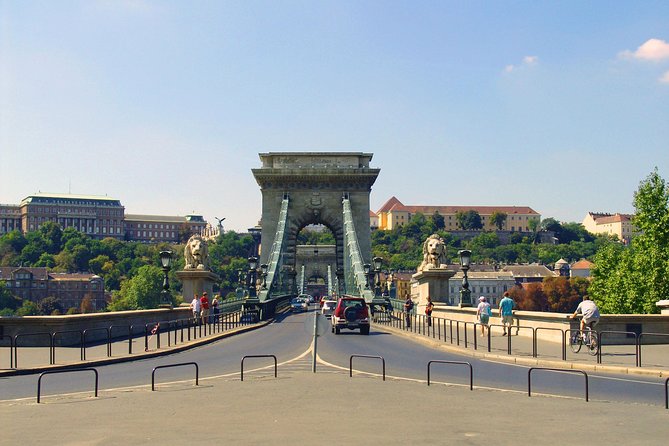
One of the smartest elements here is that the tour crosses the Danube right at the start via Margaret Bridge. This is where the city stops being a list of attractions and starts becoming a place.
From the bridge, you get a visual map. You can spot the general positions of key areas and understand why locals split Budapest into two sides. That matters later when you’re picking between walking routes, viewpoints, and where to start your evening plans.
This segment is mostly about sightlines and context. You’re not expected to linger or explore. But you are setting yourself up so the next stops make sense right away.
Opera, St. Stephen’s Basilica, and Andrassy Avenue’s big names
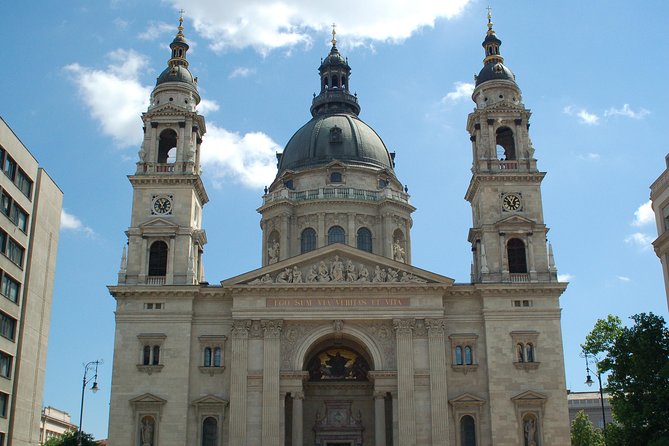
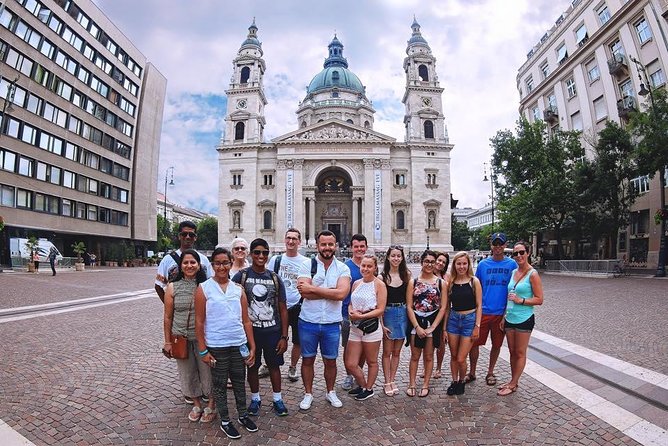
After the bridge crossing, the route passes two Pest icons that anchor a lot of first-time planning: the Opera and St. Stephen’s Basilica, both viewed from the outside.
Why do exterior passes matter? Because they help you connect what you’ve seen in photos to what you actually find in person. You’ll also get a sense of scale—how grand the buildings look when you’re up close, even if you’re not going inside on this tour.
Then comes Andrassy Avenue. You’ll see the Opera House again in this broader corridor, plus the exterior of the House of Terror. You’ll also notice how Andrassy Avenue feels different from the streets around it, with luxury shops lining the route. If you’re the type who likes to understand a neighborhood by its vibe and architecture (not just its landmarks), this drive-through is useful.
Heroes’ Square and City Park: one stop, lots of cues
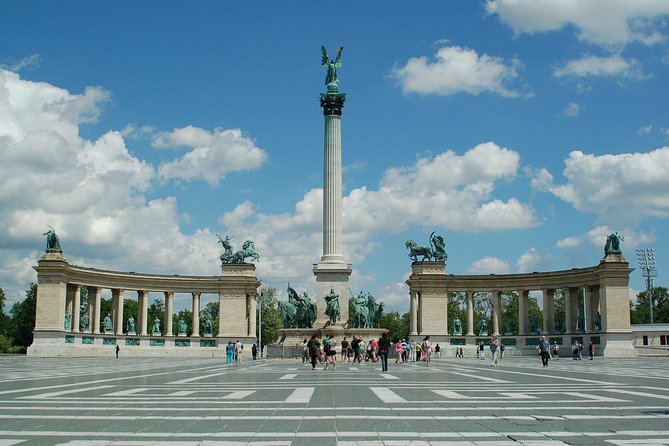
The tour’s photo stop at Heroes’ Square is quick but classic. It’s a major landmark of Budapest, and you’ll typically have about 30 minutes for photos there. Since this is a free admission photo moment, you can treat it as your “got it” stop and move on without worrying about tickets or timing.
From there, the bus heads toward City Park. You won’t be doing a long on-foot park loop. Instead, you’ll pass key spots along the route, including Vajdahunyad Castle, Széchenyi Bath, the Budapest Zoo, and Once Upon a Time Park.
This is where the tour becomes especially valuable for decision-making. You’ll see enough to understand what’s near what. For example:
- Széchenyi Bath is a huge draw in Budapest, but it’s easier to plan a return visit once you’ve seen where it sits within the park area.
- Vajdahunyad Castle looks like it belongs in a postcard, and you’ll get its location in relation to the rest of the park.
- The zoo and family-oriented park areas help you gauge whether that side of town fits your travel style.
If your schedule is tight, this “pass-by, not park all day” approach keeps you moving while still giving you enough clues to plan later.
You can also read our reviews of more tours and experiences in Budapest





Gellért Hill Citadel: the view stop that actually lands
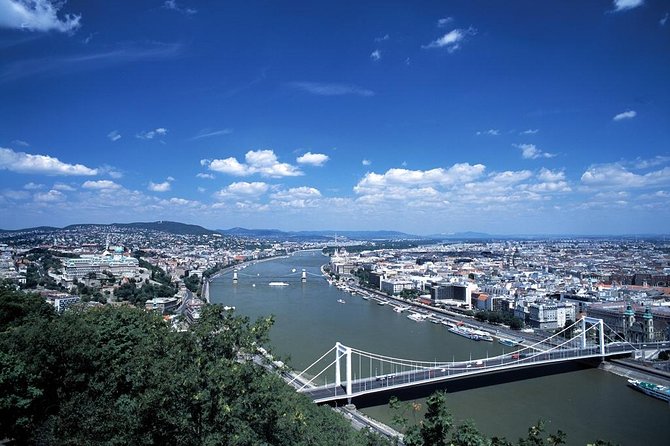
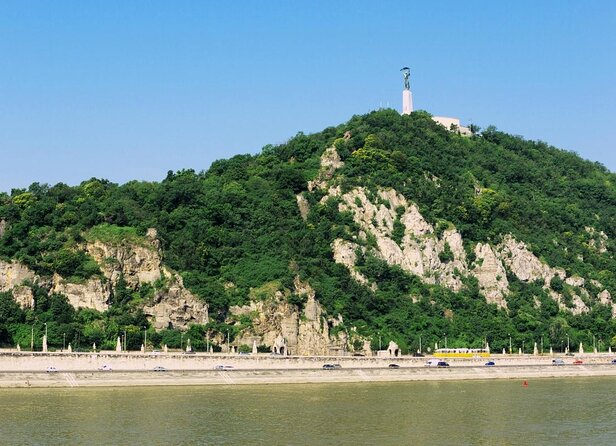
Then you hit Gellért Hill for the Citadel area (Gellért Holl). This stop is short—about 20 minutes—and the goal is straightforward: see the best panoramic view of Budapest and grab photos before the tour moves on.
This is one of the most rewarding segments for many first-timers because the viewpoint compresses your mental geography into one glance. The river, the districts, the major city shapes—everything clicks. And since the admission here is listed as free, you’re not wrestling with ticket issues during a time window that’s already tight.
Practical tip: treat this as your “camera first, shoes second” stop. If you want the best angle for photos, arrive ready and don’t wait until the last minute.
Matthias Church exterior and Fisherman’s Bastion: quick looks with serious payoff
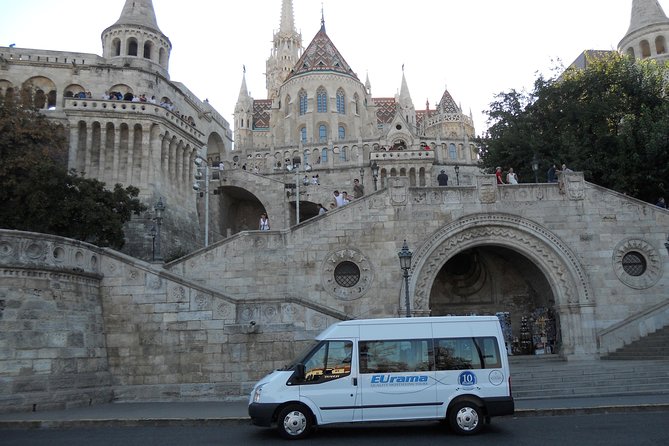
The last portion of the sightseeing centers on the Castle area skyline, with two of the most iconic visuals in Budapest—Matthias Church and Fisherman’s Bastion—seen from the outside.
Matthias Church (from outside)
You’ll get around 20 minutes here. This is the kind of stop that works even without entry, because the exterior is what most people come to recognize: a historic gothic look that’s one of Budapest’s most visited sights.
The tradeoff is clear: you don’t get the full experience of going in and exploring. If your main goal is interior details, plan a separate visit later.
Fisherman’s Bastion (from outside)
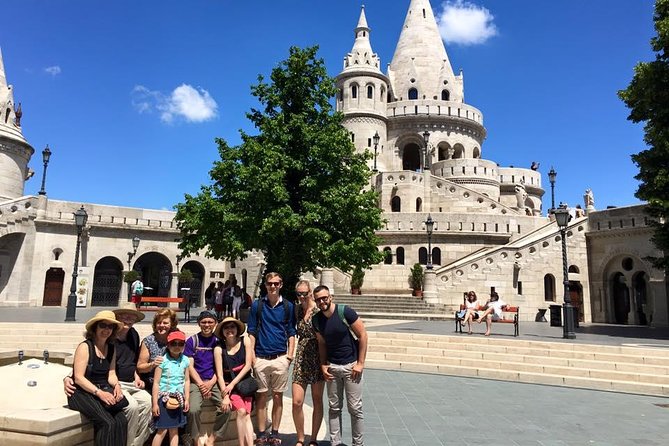
Next is Fisherman’s Bastion, also about 20 minutes. It was built between 1895 and 1902 to celebrate the 1000th anniversary of Hungarians settling in the Carpathian Basin. It has seven towers, each representing one of the seven Hungarian chieftains who led the people to settle around 895.
The tour’s timing hits the “best panoramic views” payoff: those windows and terraces are where you get the big skyline shots. The windows provide some of the strongest views of Budapest, which is why even a short stop can feel worth it.
But remember: the admission for Matthias Church and Fisherman’s Bastion is listed as not included. So you’re touring the exteriors and viewpoints during the time window, not paying those fees through the tour. If you want to go inside, you’ll need to plan it for another day.
How much walking should you expect?
This is not a long, all-day walking tour. You’ll spend most of your time in the vehicle, with short stops and a short guided walk in the Buda Castle district.
Still, “short” can feel different depending on the weather and how crowded the areas get. Plan for standing around photo points and moving between nearby spots. Comfortable shoes matter, even if you’re not doing mile after mile.
There’s also a pacing reality: people who want plenty of time at the Castle-area highlights sometimes find the stop length limiting. If that sounds like you, this tour is best as the orientation act—not the main performance.
Guide quality: what you should watch for on your departure
One thing this tour really leans on is the guide. A strong guide can turn brief exterior stops into a story you remember.
On recent departures, guides like Dora, Atilla, Clara, Maria, and Elisabeth have been praised for clear narration and for making the info easy to follow. Dori and others have also been singled out for professional handling and helpful navigation.
On the flip side, listening can become tricky if the narration shifts between languages or if the English delivery is hard to follow due to accent or speed. If you’re particular about getting every detail, I suggest you set yourself up to listen:
- Stand where you can hear the guide clearly during stops.
- Ask a question early, so you’re not stuck waiting later for a moment.
- If you notice a mixed-language setup, don’t get frustrated—focus on the big points and use the stops to get the visuals you need.
And one practical note: the tour is designed to keep the group together, which is why you might not always get the time you’d give yourself if you were walking independently.
Price and value: is $50.69 a good deal for a half day?
At $50.69 per person, this isn’t a bargain bus tour, but it’s also not priced like an all-day museum pass. The value comes from three things you’re paying for:
1) Air-conditioned coach transport between Pest and Buda
2) A live guide who provides context and a guided walk in the Castle area
3) A curated set of major sights and photo stops that help you choose what to do next
You’ll also avoid added costs for some of the stop moments that are listed as free for admission (Heroes Square photo stop and the Citadel area). But you should still plan for the fact that some big sights—Matthias Church and Fisherman’s Bastion—are not included for entry.
So the best way to think about the price is this: you’re paying to save time and reduce guesswork. If you’re the kind of traveler who enjoys deciding on the fly and wandering without a plan, this might feel limiting. If you prefer to get oriented first and then tailor your day later, it’s a solid use of money.
Who this tour is best for (and who might want something else)
You’ll get the most out of this tour if:
- It’s your first time in Budapest and you want a fast overview.
- You want a clear route across both sides of the river.
- You’re traveling solo and like the ease of having the plan handled.
- You’d rather see key landmarks efficiently than spend the entire day queuing or paying for multiple entries.
You might want a different approach if:
- You’re hoping for long, unhurried time at the Castle-area viewpoints.
- You want to control every minute on your own schedule.
- You’re very sensitive to mixed-language narration and want a strictly single-language experience.
Final call: should you book it?
If you’re in Budapest for a short stay, this tour is one of the easiest ways to get your bearings fast and build a shortlist for later visits. The best part is the structure: Danube view first, major Pest landmarks next, then the Castle-area skyline payoff.
Book it if your goal is orientation plus photos. Skip or supplement it if your priority is deep time inside the major sites. Either way, plan to return to at least one Castle-area attraction on your own if you want the full experience, since this tour is designed for quick exterior moments and panoramic context.
FAQ
How long is the Budapest City Sightseeing Half-Day Tour?
It runs for about 3 hours.
What is the price per person?
The price is listed as $50.69 per person.
Where does the tour start and end?
It starts at EUrama Budapest Quality Sightseeing City Tours at Apáczai Csere János u. 12-14, 1052 Hungary. It ends back at the meeting point.
Do I need tickets for Heroes’ Square and the Citadel?
The admission ticket for the Heroes’ Square photo stop is listed as free. The Citadel stop is also listed as free.
Are entry tickets included for Matthias Church and Fisherman’s Bastion?
No. The tour notes admission for Matthias Church and Fisherman’s Bastion as not included.
Is hotel pickup included?
No. Hotel pickup and drop-off are not included.
Is the tour offered in English?
Yes, the tour is offered in English.
Is there a live guide?
Yes, the tour includes a live-guided tour and a guided walk in the Buda Castle area.
How much walking should I plan for?
You should expect some walking, including a short guided walk in the Buda Castle district, plus time at photo stops. Most of your time is spent traveling by vehicle between areas.
What is the cancellation policy?
Free cancellation is available up to 24 hours in advance of the experience start time for a full refund.