REVIEW · BUDAPEST
Budapest E-bike Tour
Book on Viator →Operated by Absolute Tours · Bookable on Viator
Budapest looks faster from the saddle. This 4-hour e-bike tour stitches together Pest landmarks and Buda viewpoints while a guide helps you stay confident in city traffic.
You get two things I really like: the Pedelec motor makes hills feel manageable, and the tour includes a coffee-and-dessert break that turns the ride into a proper break, not just sightseeing.
One drawback to plan for: you must know how to ride a bike, since the tour is paced for moving together as a small group.
In This Review
- Key highlights to know before you go
- Why an e-bike makes Budapest click (instead of exhausting you)
- Price and what $71.35 buys in real value
- Meeting at Yellow Zebra and setting up for a smooth ride
- The ride’s pacing: four hours, lots of stops, and real breaks
- Opera House stop: seeing the city’s culture zone from the road
- Learning Hungarian history without turning it into a lecture
- Parliament stop and the Danube perspective shift
- Margaret Island on two wheels: break time with real breathing room
- Bike through Buda Castle: hill work made doable by the motor
- Panoramas on the move: how to get the best photos
- Fisherman’s Bastion viewpoint: closing with a classic Budapest angle
- Weather, traffic, and bike skills: what you should be ready for
- Who this tour is best for (and who should skip it)
- Should you book the Budapest e-bike tour?
- FAQ
- What’s the duration of the Budapest e-bike tour?
- How much does the tour cost?
- Is the tour offered in English?
- What’s included in the price?
- Are museum or sight entry fees included?
- Where do I meet the guide?
- Do I need to know how to ride a bike?
- What’s the group size limit?
- Does the tour run in bad weather?
- Can I bring children?
Key highlights to know before you go

- Max 8 travelers means you’re not fighting for attention at every stop
- Pedelec assist helps you pedal up Buda without arriving sweaty and defeated
- Coffee, cake, and dessert are included on the 4-hour version
- Parliament, Margaret Island, Buda Castle, Fisherman’s Bastion in one morning/afternoon plan
- English guide with real-world navigation support in busy areas
Why an e-bike makes Budapest click (instead of exhausting you)
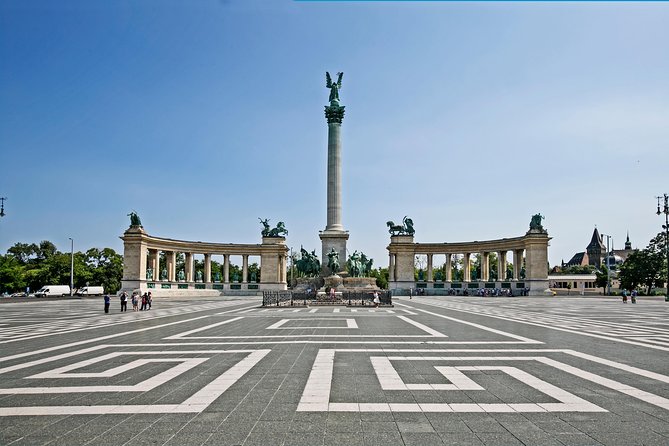
Budapest is built for views—but it’s also built for hills. If you try to do the big “both sides of the Danube” circuit on foot, you’ll spend more time walking uphill than seeing. On an e-bike, you still get the fun of riding, but you don’t burn your energy before the best panoramas.
This tour is a smart fit because the route is designed to move across a lot of the city in only about four hours. You’re not just cranking along and hoping for the best; the guide keeps the timing realistic and builds in stops where the view (or the story) matters.
The small group size (up to 8) is a big deal here. You can actually hear what your guide is pointing out, and it’s easier to stay close when the route runs through busy streets, bridges, and places with lots of pedestrians.
And yes, the motor assist is the whole point. The bikes are Pedelec style, meaning there’s a small electric motor that helps you pedal. That makes a difference when the route swings from flatter Pest stretches to the hillier Buda side.
You can also read our reviews of more cycling tours in Budapest

Price and what $71.35 buys in real value
At $71.35 per person for roughly four hours, this isn’t a budget “cheap and cheerful” option. It’s priced like an experience: an English-speaking guide, the e-bike hire, and time-efficient route planning.
Here’s why it can feel like good value anyway:
- You’re paying for coverage. In four hours, you hit major landmarks that would take a lot longer by foot. Several guides in the reviews were praised for moving people around efficiently without turning it into a rushed blur.
- You’re not paying extra for the included break. The 4-hour tour includes coffee and dessert (and the general “complimentary cake and coffee” vibe shows up again and again in the feedback).
- The safety and confidence factor matters. Multiple reviews call out that the guide actively helps with traffic navigation. If you’ve ever tried to bike in a busy city without a local, you know why that’s worth paying for.
What’s not included is also important for value math: entry fees to sights and museums are not part of the price. That’s normal for this type of tour, but it means you should decide in advance whether you want to budget for museum tickets later.
Meeting at Yellow Zebra and setting up for a smooth ride
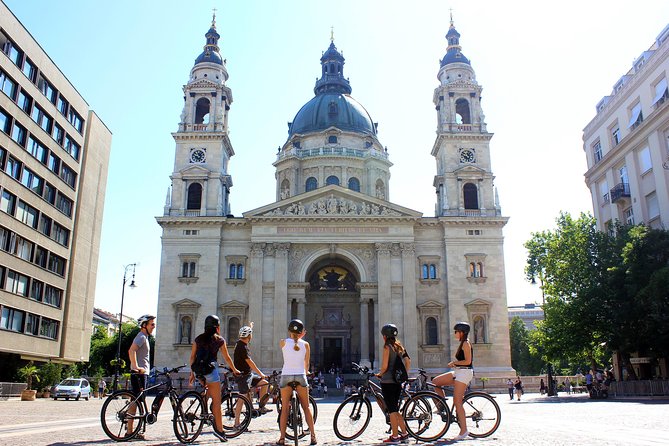
You start at Yellow Zebra – Bike & Segway Tours at Régi posta utca 2, 1052 Hungary, and the tour ends back at the same meeting point.
This start location is convenient because it’s near public transportation. If you’re arriving by tram or metro, you won’t be stuck on the far side of town just to begin the ride.
When you arrive, expect a quick setup and time to get comfortable. Several reviews mention guides teaching bike expectations before leaving the meeting area, which matters a lot if you don’t ride often. The tour also has a helmet option during the tour time, and an optional helmet is included—so use it if you like the extra peace of mind.
The ride’s pacing: four hours, lots of stops, and real breaks
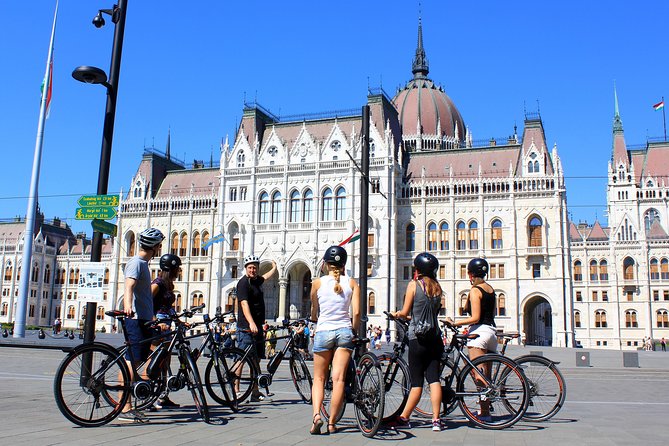
The itinerary is built around a steady cadence: ride, stop briefly for a story or photo, ride again. That works well because Budapest rewards short “pause moments.” The best viewpoints aren’t always the places you linger for an hour; sometimes they’re the places where you stop, look, learn, and move.
The best part is that you’re not stuck in one mode of tourism. You get:
- landmarks and big “wow” architecture moments
- light history and context during strategic stops
- a long-enough rhythm that you can enjoy the ride, not just endure it
And because this is the 4-hour version, you’ll have the coffee break and dessert included during that time window.
Opera House stop: seeing the city’s culture zone from the road
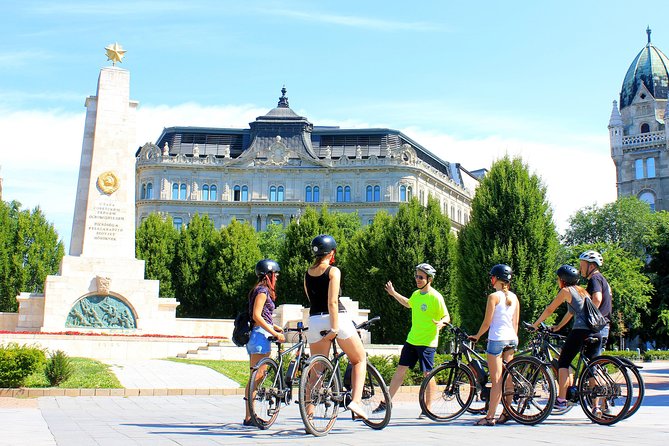
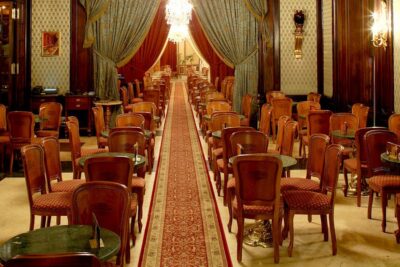
One early stop is the Opera House area. Even if you’ve seen pictures of it, there’s something different about approaching it while you’re moving through the neighborhood. It gives you a sense of where Budapest places culture and grandeur in the city layout.
Practically, this is also a good “early” stop. If you’re still getting used to the e-bike and the pacing, you can settle in quickly. Then your guide can start layering context—so the ride isn’t only motion, it’s orientation.
You can also read our reviews of more tours and experiences in Budapest




Learning Hungarian history without turning it into a lecture
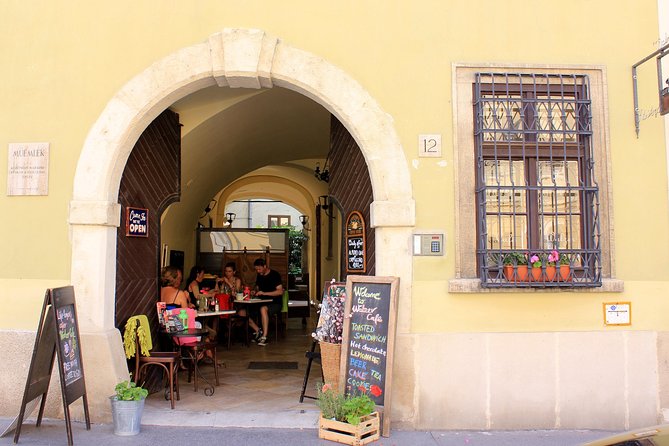
You’ll also spend time on learning Hungarian history during the tour. This is the kind of stop that makes a bike tour feel more grounded. Instead of memorizing random facts, you connect stories to specific places you can point at as you ride.
Guides like Sam, Phillippe, Philippe, Jose, Alan, Nour, and Beka/Bekka show up repeatedly in feedback as being friendly and professional, with strong city storytelling. The consistent theme: it’s not dry. You get facts that match what you’re physically seeing.
A small warning: with any group tour, audio clarity depends on the guide and the weather. One review flagged that the guide was a bit difficult to understand at times during rain. If you’re sensitive to that, try to stand where the guide is speaking most clearly.
Parliament stop and the Danube perspective shift
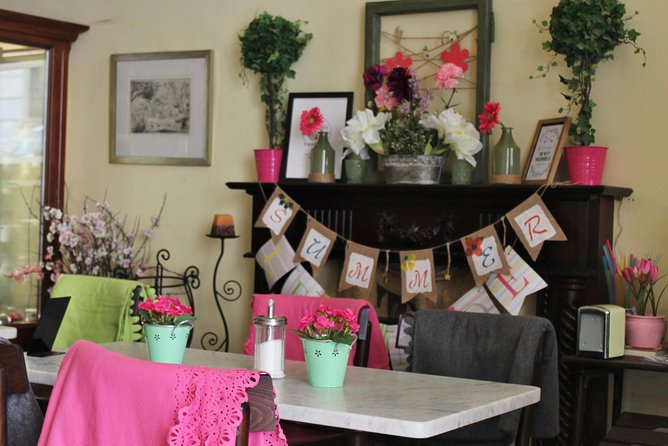
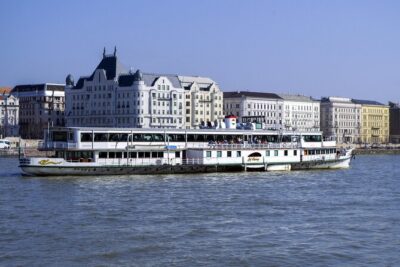
You’ll stop by the Parliament, one of the most recognizable sights in the whole city. Seeing it from the bike route helps because you don’t just view the building—you see how it sits in the broader urban scene along the Danube.
This part of the route is where the tour often becomes more than sightseeing. You start to notice how Budapest is arranged: river-facing grandeur on the Pest side, then the uphill swing that takes you toward Buda viewpoints.
Expect the ride around here to feel busier. That’s why having a guide who can manage traffic flow is so valuable. Reviews mention guides helping riders with traffic and bike-lane navigation, which is exactly what you want for a smooth experience.
Margaret Island on two wheels: break time with real breathing room
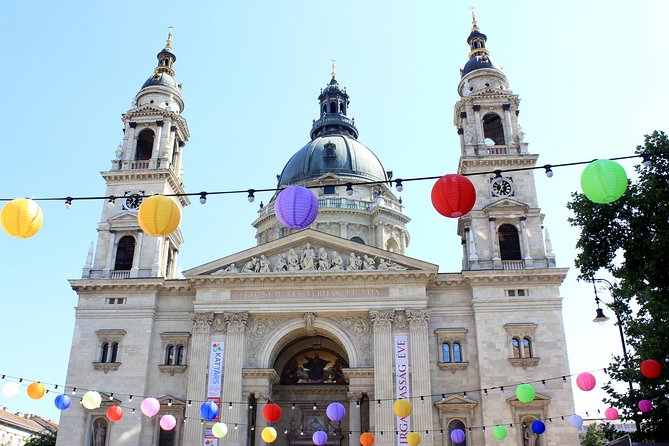
Next up: Margaret Island. Rolling along the island feels like a reset. You’re still in the city, but the atmosphere changes. It’s a place for air, strolling paths, and a calmer sense of space.
This stop is a good reminder that the tour isn’t only about the biggest monuments. It also shows you how Budapest gives locals and visitors green space right in the middle of the Danube setting.
The ride through here can be a highlight if you like scenery variety: you’ll go from landmark intensity to a more relaxed, park-like pace. And if it’s hot, the benefit of being on a bike is that you’re getting wind while still covering ground.
Bike through Buda Castle: hill work made doable by the motor
Then comes one of the most important segments: Buda Castle. This is where the Pedelec assist earns its keep. Even confident cyclists can struggle with steep grades when they’re already tired. With e-bike help, you can focus on the ride and the sights instead of grinding your gears.
One review mentions a guide giving extra time at Buda Castle, which is exactly what you want. The area is big and visually rich, and you’ll want at least a few minutes to look around without feeling herded like a checkout line.
Practical note: wear shoes with solid grip and dress for cooler air near castle heights. If you run into rain, the bikes and brakes still operated well according to one rain-focused review, and jackets helped—but no extra ponchos were offered, so plan to come layered.
Panoramas on the move: how to get the best photos
There’s a stop noted as enjoying panorama, and then the route continues toward major viewpoint territory. This is where you should think like a photographer even if you’re not taking a thousand pictures: look for the angle, then stop. Don’t rush your gaze.
The e-bike format helps because you can reposition quickly. You’re not locked into one viewpoint like you would be if you had to walk from far away. Instead, the guide times stops so you can see key angles of the city and the river.
This is also a good stretch to ask questions. If a guide is doing their job well, this is when you’ll get the most “oh, that’s why that building is there” type of context.
Fisherman’s Bastion viewpoint: closing with a classic Budapest angle
The tour ends with a view from Fisherman’s Bastion. This is one of those places where the view is the whole point, and the bike tour approach makes it easier to reach without tiring yourself out first.
If you’re deciding when to visit viewpoints in your trip, this is a strong option because it’s part of a route already connected to major landmarks. You’re not hopping around the city on separate transport plans—you’re building a single, coherent “Budapest in one circuit” day.
Also, because the tour group is small and the timing is structured, you’ll usually have enough time to pause, look around, and then continue without feeling like you’re constantly moving.
Weather, traffic, and bike skills: what you should be ready for
This tour goes in all weather conditions, so you need to plan your clothing like you would for a city walk plus a bike ride. Dress appropriately. If rain is possible, bring a real rain layer.
Safety-wise, this is a guided ride in real city conditions. Reviews praise guides for handling trafffic and bike-lane navigation. That’s a major reason this experience works even if you’re not a speed cyclist.
But the one hard requirement is bike comfort. The tour states that participants must know how to ride a bike. If you’re shaky, you’ll feel stress, and it can take away from enjoying the viewpoints.
One more practical detail: no children are allowed on this tour. If you’re traveling as a family and were hoping to bring younger riders, you’ll need a different option.
Who this tour is best for (and who should skip it)
I’d put this tour high on your list if you want:
- a fast, guided orientation to both sides of Budapest
- a way to see major sights without spending days walking
- help managing hilly routes thanks to Pedelec assist
- a small-group experience where you can actually hear stories
You might skip it if:
- you’re uncomfortable riding a bike in traffic-like city conditions
- you only want museum time and paid entries (since entry fees are not included)
- you’re traveling with children (this one doesn’t allow them)
Should you book the Budapest e-bike tour?
Yes, if your goal is a smart first look at Budapest and you want to spend your energy on views, not on uphill suffering. The biggest strengths are simple: big coverage in about four hours, a guided ride that keeps you confident in busy areas, and an included coffee-and-dessert break that makes the tour feel like more than transportation.
If you’re a confident rider who likes history side-by-side with architecture, you’ll likely find this hits the sweet spot. And if you’ve been debating whether to do Budapest by foot or bike, this route is one of those rare cases where biking genuinely improves the day.
FAQ
What’s the duration of the Budapest e-bike tour?
It’s listed as about 4 hours.
How much does the tour cost?
The price is $71.35 per person.
Is the tour offered in English?
Yes, it’s offered in English.
What’s included in the price?
Included are an English-speaking guide, e-bike hire, an optional helmet during the tour time, and for the 4-hour tour there’s a coffee break and dessert.
Are museum or sight entry fees included?
No. Entry fees to sights and museums are not included.
Where do I meet the guide?
The meeting point is Yellow Zebra – Bike & Segway Tours, Régi posta utca 2, 1052 Hungary. The tour ends back at the same meeting point.
Do I need to know how to ride a bike?
Yes. The tour requires participants to know how to ride a bike.
What’s the group size limit?
The tour has a maximum of 8 travelers.
Does the tour run in bad weather?
Yes. The tour goes in all weather conditions, so dress appropriately.
Can I bring children?
No. No children are allowed on this tour.