REVIEW · BUDAPEST
Budapest: Guided Tour of the House of Music, Hungary
Book on GetYourGuide →Operated by Városliget Ingatlanfejlesztő Zártkörűen Működő Részvénytársaság · Bookable on GetYourGuide
Music meets bold architecture in Budapest. The House of Music tour is basically a guided walk through Sou Fujimoto’s unusual ideas, plus the spiral staircase you’ll remember long after you leave the building.
I really like how the design feels human, not cold: exposed concrete and wood tones sit under a roof that looks like it’s floating. You also get a clear sense of how the building is meant for music, even when you’re not watching a concert.
The setting helps, too. You’re in City Park, with the building designed to feel like a continuation of the landscape, so the outside views aren’t an afterthought. One possible drawback: this tour focuses on the architecture and public spaces, and it does not include entry to exhibitions or the Sound dome.
In This Review
- Key things to know before you go
- House of Music in City Park: the 1-hour plan that works
- The floating roof and the leaf-metal canopy outside
- Entering the foyer: glass light, open space, and a calm start
- Sou Fujimoto’s organic design: how the building blurs inside and out
- The spiral staircase: the interior artwork moment
- Music-first acoustics: what they explain when you can’t attend a show
- Concert hall, library, and archives: what you get during the tour
- Outdoor spaces and panoramic park views you’ll actually enjoy
- Sustainability and “why it matters” details
- Gift shop and the practical wrap-up in the foyer
- Price and logistics: is $13 good value?
- Who should book this tour (and who might skip it)
- The guide makes the difference: what stands out from real tours
- Should you book the House of Music guided tour?
- FAQ
- How long is the House of Music guided tour?
- What’s included in the tour?
- What isn’t included?
- Where does the tour start and end?
- Is the tour wheelchair accessible?
- Is the tour suitable for children?
- Are pets allowed?
Key things to know before you go
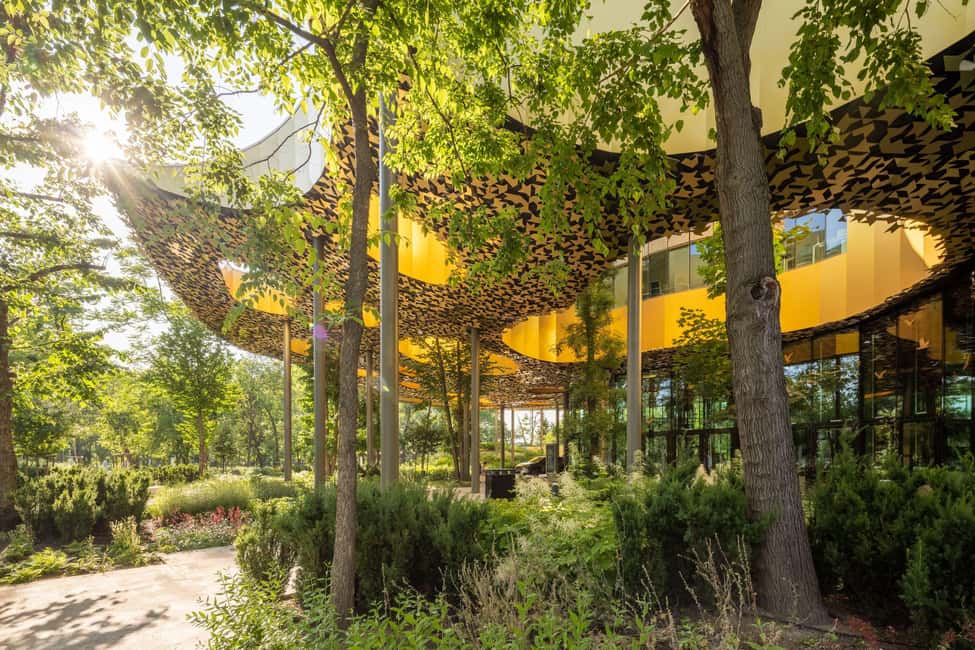
- Leaf-like metal canopy: the undulating roof creates dramatic light and acoustics.
- Sou Fujimoto’s organic feel: glass, open levels, and warm materials make it easy to enjoy.
- Spiral staircase: a standout interior moment, not just a way to get upstairs.
- City Park views: you’re constantly aware you’re still in a park, not an office building.
- Music-first planning: they explain how shape and materials support sound quality.
- Sustainability details: geothermal energy and rainwater harvesting are part of the story.
House of Music in City Park: the 1-hour plan that works
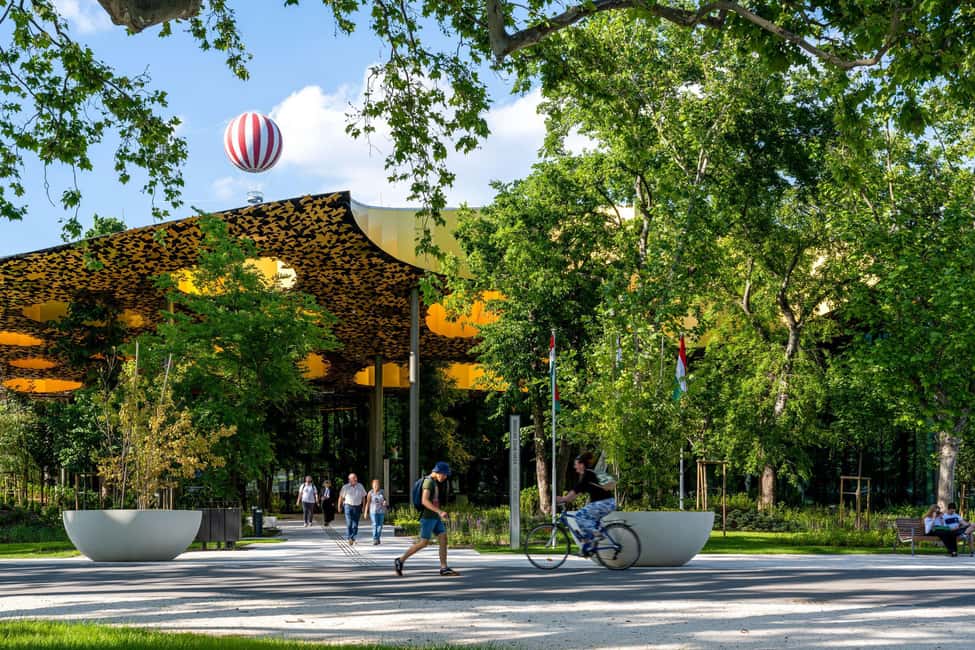
Budapest has plenty of grand sights, but this one is different. The House of Music is an architecture tour with a music brain, set inside City Park, right where people go to stroll, relax, and people-watch.
If you’re the type who notices details (roof lines, materials, staircases, how buildings use light), this fits you well. The tour is short enough to tack on to a busy day, and focused enough that you’ll feel like you got value without needing a full half-day commitment.
Also, the guide makes a real difference. The best-rated experiences emphasize lively, friendly guiding that turns a building tour into a story.
You can also read our reviews of more guided tours in Budapest



The floating roof and the leaf-metal canopy outside
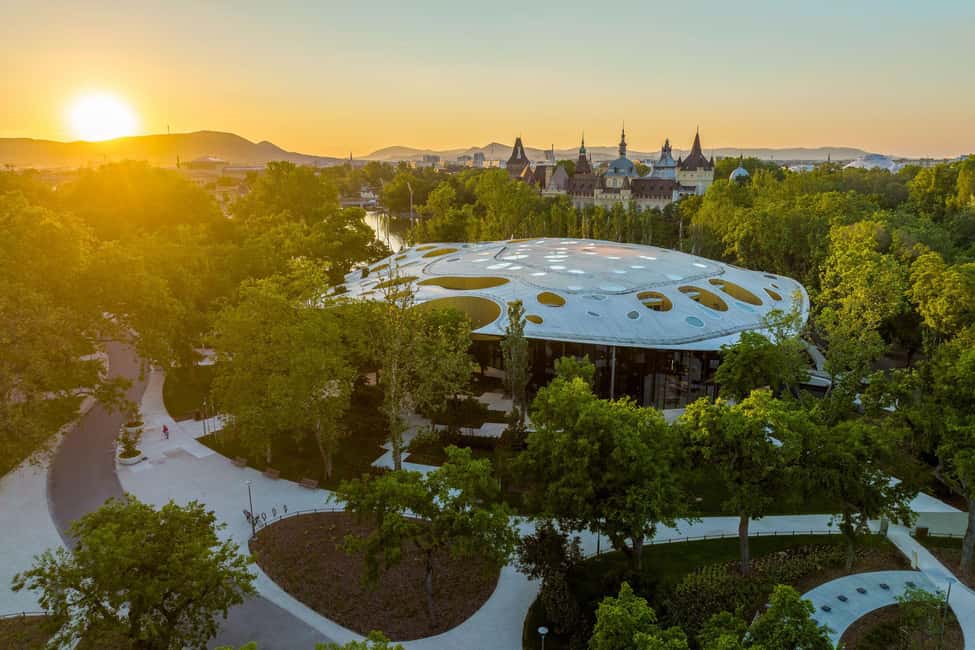
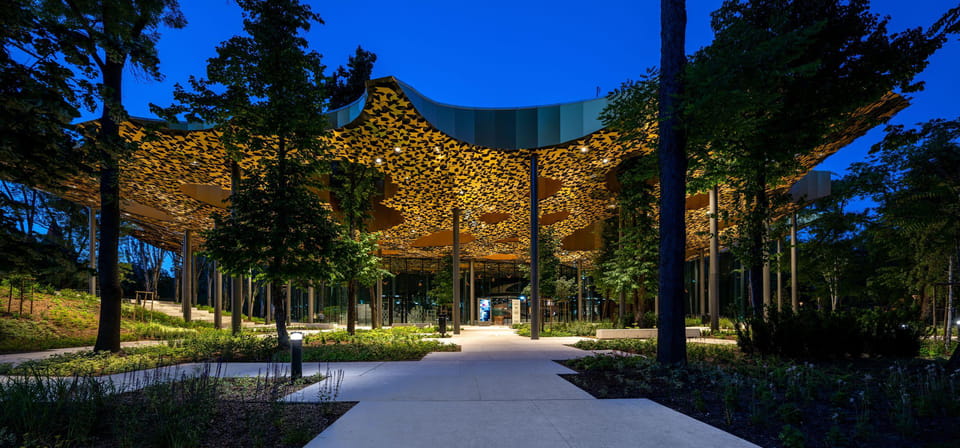
The tour starts by pulling your eyes upward. Look at the undulating roof from the outside, and you’ll see why it’s such a conversation piece: it’s made of thousands of small, leaf-like metal elements, arranged in a way that looks almost weightless.
You’ll also hear how those roof shapes aren’t just aesthetic. The same form that creates that floating look is tied to how the building handles natural lighting and sound. Even if you’re not a nerd about acoustics, you can sense the logic—this place was designed to perform, not just pose.
On a clear day, the roof also helps you “read” the building in motion as you walk around it. It keeps changing in the corner of your eye, especially as you glance between the park and the structure.
Entering the foyer: glass light, open space, and a calm start
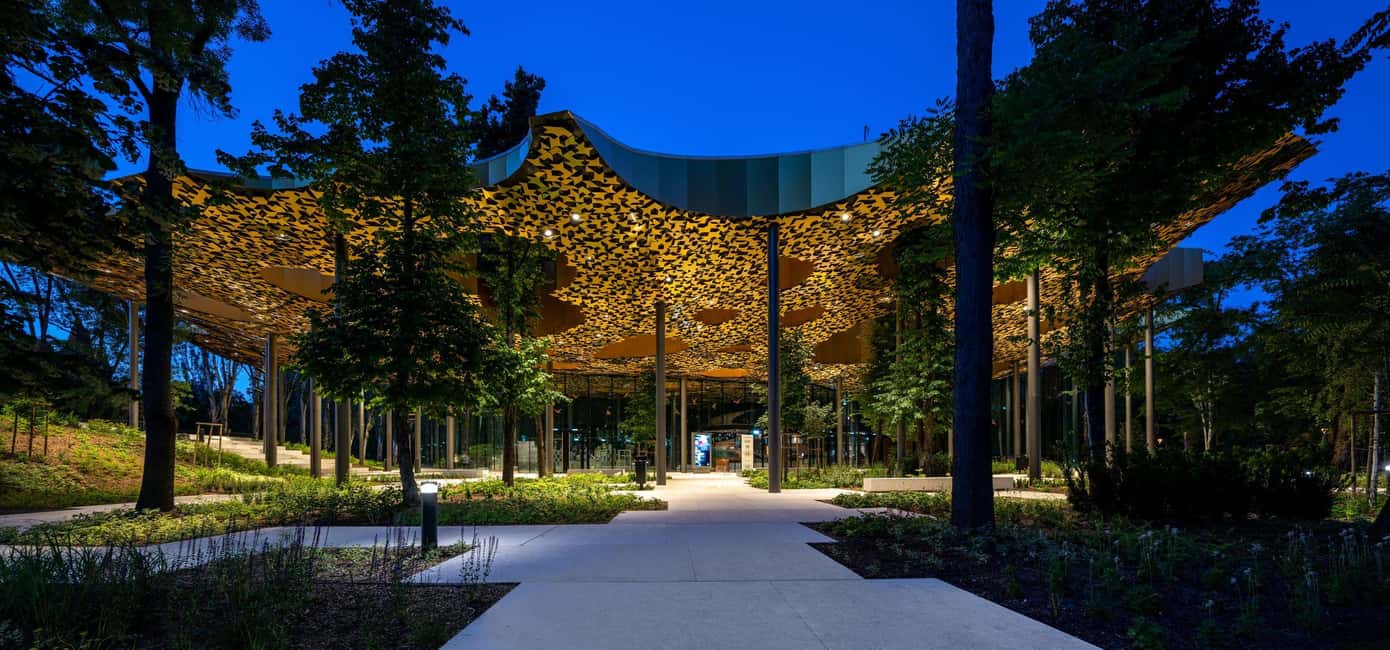
When you step inside, the tone shifts from dramatic exterior to airy interior. The foyer is spacious, and the large use of glass brings daylight deep into the building. It’s the kind of space where you can reset your brain before the tour starts asking you to pay attention.
This is a good moment to slow down. Take a few seconds just to look at the mix of exposed concrete surfaces and the warmer wooden elements. The materials aren’t trying to impress you with shine; they impress you with texture and balance.
The tour begins here and ends back here, so you’re not lost wandering around. You get a clean loop: arrive in the light, see the structure explained, and finish in the same easy meeting point.
Sou Fujimoto’s organic design: how the building blurs inside and out
A big part of the appeal is that the House of Music doesn’t feel like an object dropped into the park. It feels like it’s growing from the landscape.
The guide will point out how the building works as a continuation of City Park, with a plan that makes indoor and outdoor space feel connected. That shows up in the open levels, the way sightlines keep pulling you back toward windows and outside views, and the sense that you’re in a shared public space.
Inside, you’ll also notice circular openings and the way the structure frames space. This isn’t a museum layout where every room is sealed off. Instead, it’s set up for people to gather, move, and learn—music education ideas show up in the public areas even when you aren’t entering exhibitions.
And yes, it can feel slightly unusual in the best way. This is a building that wants your attention, but it doesn’t demand it loudly.
The spiral staircase: the interior artwork moment
The spiral staircase is the star you can’t miss. Even if you think you’ve seen every cool staircase in Europe, this one changes the rhythm.
Expect it to feel sculptural, not functional. The tour highlights it as a true work of art, which makes sense once you’re standing near it. The shape and placement turn circulation into a viewpoint, and it pulls you upward while you keep catching glances back across the open interior.
If you like architecture photography, this is your best target. The staircase gives you both vertical lines to play with and angles where the park light hits glass behind you. Just don’t block others—this building is popular, and it’s a shared space.






Music-first acoustics: what they explain when you can’t attend a show
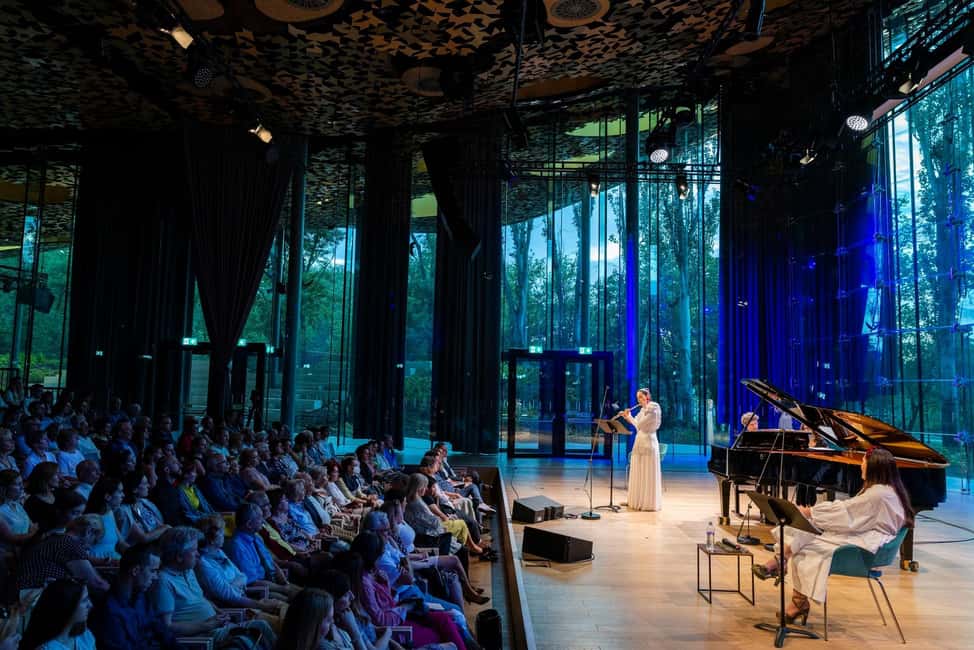
This tour is not about sitting in a performance. In fact, you won’t experience a concert during the visit. But the building is designed for music, and the guide makes that clear by walking you through how acoustics were planned.
They focus on how the shape, materials, and the roof structure support sound quality in performance spaces and public areas. You don’t need technical vocabulary to follow the explanation. The point is simple: form affects sound.
Even better, this kind of guided talk helps you “listen” with your eyes. As you look at the curves, surfaces, and roof elements, you start to understand why sound behaves the way it does in spaces built for it. It’s a different kind of cultural experience—more design literacy than passive sightseeing.
Concert hall, library, and archives: what you get during the tour
Included in the tour are views of key areas: the concert hall, the library and archives, plus additional indoor public spaces and outdoor areas around the building.
The concert hall isn’t presented as a stand-alone attraction you wander into on your own. It’s part of a story about the building’s purpose. So, you’ll usually get context about why certain design choices matter, not just where to look.
The library and archives add a second layer. Instead of only showing performance spaces, you also see how the House of Music supports learning and preservation. That makes the building feel more grounded as a cultural center, not a one-event venue.
One practical note: the tour includes looking around these spaces, but it does not include entry to the exhibitions. You’re getting a guided architectural and public-space tour, not a full museum visit.
Outdoor spaces and panoramic park views you’ll actually enjoy
Because you’re inside City Park, the outdoors is never far away. The tour emphasizes outdoor areas and views of the Park, which is where the whole concept of integration really clicks.
Look for moments when the building framing makes the park feel like a living backdrop. Glass and open levels help you keep a connection to the greenery, so you’re not trapped in a purely indoor experience.
This is especially nice if you’re touring in warmer months and want a break from indoor walls. The outdoor segments give you a natural reset between architecture stops.
And if you’re the type who likes a few scenic photos, these park-facing views are more useful than you’d expect from an “architecture only” tour.
Sustainability and “why it matters” details
It’s not all shape and drama. The guide also covers the building’s sustainability approach, including geothermal energy and rainwater harvesting.
Those sound like buzzwords until you connect them to the building’s overall philosophy. When a structure is designed for long-term public use, energy planning stops being optional. You’re seeing a cultural building that treats sustainability as part of its identity, not an add-on.
Even if you don’t quiz the guide on systems, it helps you see this as modern architecture with real-world thinking behind it.
Gift shop and the practical wrap-up in the foyer
The included experience also finishes with access to the gift shop area. That’s a small thing, but it matters when you’re planning your day.
When the tour ends, you come back to the foyer where you started. That keeps the experience tidy: no searching for your group, no wandering with a confused “now what?” feeling.
If you want a snack or a pause afterward, the foyer’s spaciousness makes it easy to regroup. It’s also a good spot to review photos and compare notes with your group before you head back out.
Price and logistics: is $13 good value?
At about $13 per person for a 1-hour guided tour, this feels like strong value if you care about architecture and want a structured overview.
Why? Because you’re paying for more than a ticket. You’re paying for explanation—how the roof affects acoustics and light, how the materials shape the feel of the interior, and how the design supports music learning and community spaces.
Could you see some of it on your own? Sure, the exterior and park setting are there for anyone. But the paid piece is the connecting story. And the reviews strongly emphasize guides who keep the tour engaging, so your time doesn’t feel wasted.
A bonus for planning flexibility: the experience includes free cancellation up to 24 hours in advance and a reserve-now, pay-later option.
Who should book this tour (and who might skip it)
I’d say book it if you:
- love architecture details like roof geometry, glass design, and unusual staircases
- want an easy 1-hour activity in Budapest that doesn’t require a museum mindset
- enjoy guided interpretation and clear explanations about how things work
You might skip it if you:
- mainly want hands-on exhibitions or a museum deep dive (those are not included here)
- are traveling with kids under 15, since the tour is not suitable for that age group
If you’re a couple, a solo traveler, or a small group, this tour also makes sense because the pace is manageable and the sights are concentrated.
And if you do book, choose the English option. The guide is English-speaking, and that matters when the focus is on design reasoning and acoustics explanations.
The guide makes the difference: what stands out from real tours
The most praised part of this experience is the guiding itself. Names show up in the best feedback: Dora is highlighted as genuinely passionate, upbeat, and highly effective at answering questions with a smile.
Other tours are praised for professionalism and warmth, with at least one guide described as having white hair with colorful highlights. The common thread is simple: you don’t just get facts; you get someone who can turn the building into a story.
That kind of guide energy matters in a tour like this, because the architecture is abstract enough that you’ll appreciate guidance on what to notice first.
Should you book the House of Music guided tour?
Yes, I’d lean toward booking if you like architectural design and want a fast, well-focused introduction to a modern cultural building in Budapest’s City Park.
This is not a full exhibition ticket. It’s a guided walk that explains the thinking behind the roof, the glass-filled interior, the spiral staircase, and the sound-focused layout—then sends you back out with park views on your mind.
If you want a simple win in one hour—great design, strong guiding, and real value at around $13—this is a smart pick. Just go with the right expectations: you’re here for the building and its music logic, not for exhibition galleries.
FAQ
How long is the House of Music guided tour?
It lasts about 1 hour.
What’s included in the tour?
You get a guided look at the House of Music’s architectural features, the concert hall, the library and archives, outdoor spaces, and the gift shop.
What isn’t included?
The tour does not include entry to exhibitions, the Sound dome, or the Creative sound space.
Where does the tour start and end?
It starts inside the foyer and ends back at the same meeting point.
Is the tour wheelchair accessible?
Yes, the tour is wheelchair accessible.
Is the tour suitable for children?
It is not suitable for children under 15.
Are pets allowed?
Pets are not allowed, but assistance dogs are allowed.