REVIEW · BUDAPEST
Communist History Evening Walking Tour of Budapest
Book on Viator →Operated by Perfect European Tours - Budapest FREE Walking Tours. · Bookable on Viator
Communism hits different on the street. This evening walk connects Budapest’s landmarks to what Hungarian communism changed, and how people pushed back. You’ll move block by block and get the story behind what you’re seeing, from grand buildings to the less-glamorous corners that history also leaves behind.
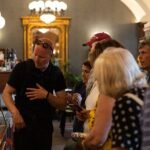
I love the small group feel (up to 15) and how the guide, history professor Victoria, connects the communist era to today’s Budapest. I also like the practical touch of bottled water so you stay comfortable during the walk.
One possible drawback: it’s an outdoor route and you need to manage about 3 km of walking, so wear proper shoes and dress for evening weather.
In This Review
- Key things you’ll notice on this tour
- Why this Budapest communist history walk feels real at street level
- Getting oriented: Andrássy Avenue and the route logic
- Stop 1: St. Stephen’s Basilica and religion under communist pressure
- Stop 2: Liberty Square, the closed Stock Exchange, and protest memory
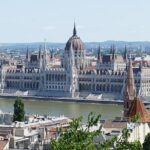
- Stop 3: Hungarian Parliament Building and the 1956 uprising
- More than three stops: a packed evening across central districts
- Price and value: what $36.01 really buys you
- Logistics and comfort: starting at Blaha Lujza tér, ending near Kossuth Square
- Who this tour suits best (and who might want a different option)
- Should you book this Communist History evening walk?
- FAQ
- How long is the Communist History Evening Walking Tour of Budapest?
- What is the price per person?
- Where do you meet and where does the tour end?
- Is the tour offered in English?
- Does the tour include anything?
- What walking ability is required?
Key things you’ll notice on this tour
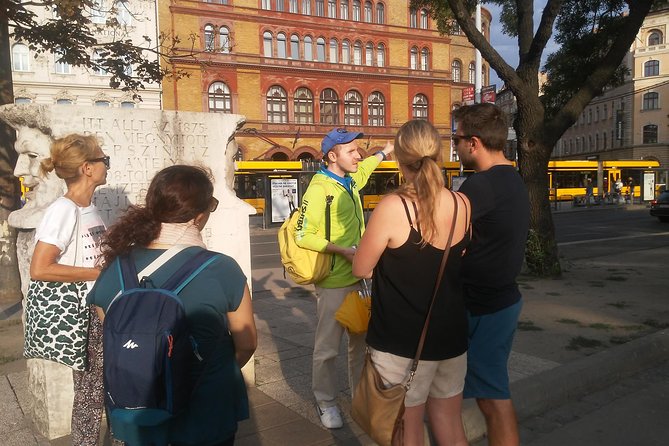
- Andrássy Avenue context: you learn how the area changed and which older monuments shaped the past.
- St. Stephen’s Basilica and faith under communism: the tour explains the church’s pressure and role during the regime.
- Liberty Square as a memory hub: you connect the former Stock Exchange’s shutdown to later public unrest.
- Parliament Building as a 1956 witness: the 1956 uprising against the Communist party is explained where it happened.
- A tight, teachable pace: the group limit helps the guide keep it personal and answer questions.
Why this Budapest communist history walk feels real at street level
Budapest can look like a postcard during the day. At 6:00 pm, it feels more like a living timeline. This tour is built for that mood. Instead of treating the communist period as an abstract topic, you follow the city’s geography and see how ideas, power, and public life shaped specific places.
What makes it worth your time is the way you get cause-and-effect. You’re not just handed dates and names. You’re shown how communist rule affected religion, politics, and everyday space—then pointed to what you still see now. The result is a walk that feels like it helps you read the city in a more grown-up way.
And yes, you still get the satisfying sights: St. Stephen’s Basilica, Liberty Square, and the Hungarian Parliament Building are all visually striking. But the tour also puts the spotlight on the places that don’t look famous in photos. That contrast is often where the story lands hardest.
You can also read our reviews of more walking tours in Budapest

Getting oriented: Andrássy Avenue and the route logic
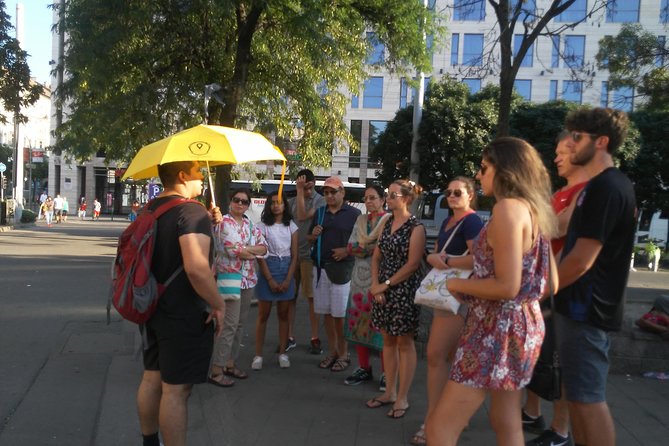
You start at Blaha Lujza tér (1085 Hungary). From there, the walk begins down Andrássy Avenue, one of the city’s defining boulevards. The guide uses this opening stretch to explain how the area changed over time and what happened to former monuments.
This matters more than it sounds. Andrássy Avenue is not just a scenic starting point. It’s a framework for the whole tour. When you understand why streets and buildings were treated in certain ways, you start noticing details you would otherwise miss—like how the city’s public face can be reshaped by politics.
The evening timing also helps. You’re moving with the city, not stuck in a single room. It’s easier to build a mental map when you’re actively walking between story beats.
Stop 1: St. Stephen’s Basilica and religion under communist pressure
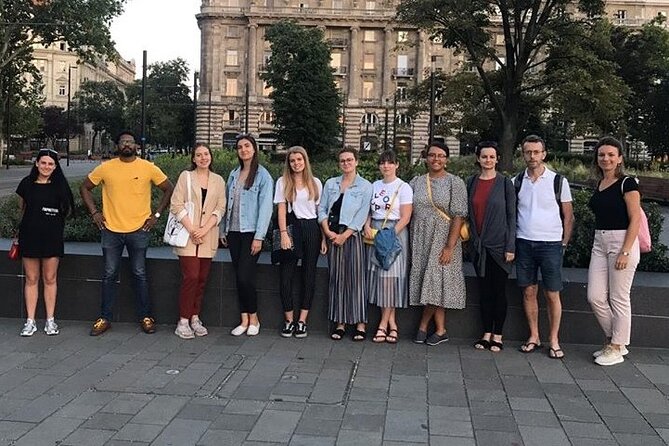
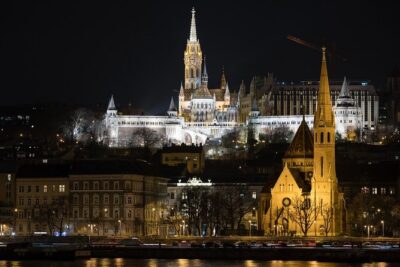
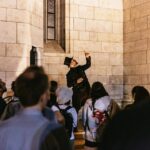
St. Stephen’s Basilica (Szent Istvan Bazilika) is where the tour turns toward religion and control. You’ll learn how Hungarian communism impacted the church and broader religious life.
You also get a story that ties history to a very specific place: a famous Hungarian football player who fled the communist system and was later buried at the basilica. The point isn’t the celebrity detail for its own sake. It’s that the communist era pushed people to leave, and even after life changed, their paths could still end up tied to major national landmarks.
Duration here is short—about 10 minutes—and the good news is you won’t need to pay for entry. That keeps the focus on explanation rather than ticket lines. If you want a tour that makes religious history feel personal and not just institutional, this is one of the strongest moments.
Practical tip: because this is a major church site, dress code and basic etiquette still matter. Keep your shoulders covered and be ready for a calm, respectful atmosphere.
Stop 2: Liberty Square, the closed Stock Exchange, and protest memory
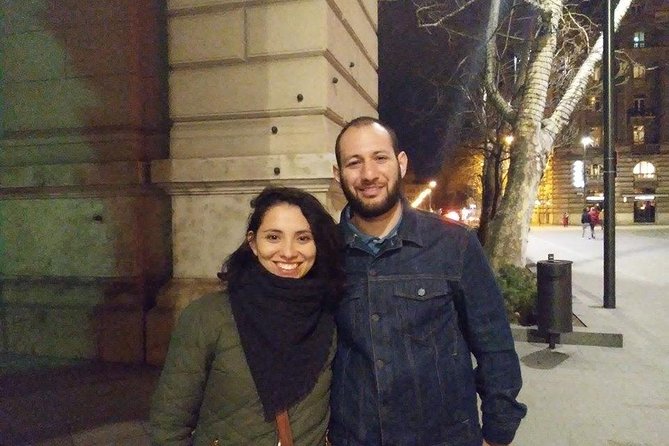
Liberty Square is one of the key stops for anyone who wants communist history to connect to public life. The tour explains that the Stock Exchange operated there but was shut down at the start of communism. In other words, you see how the regime reshaped not only politics, but also economic identity and the rhythm of daily exchange.
Then comes the harder part: Liberty Square is also described as a site of bloody protests. The guide’s job here is to connect what happened to why it matters now—how a square can become a repeating stage for political tension, and how collective memory can stay attached to a place even when the original institutions are gone.
The stop is about 15 minutes, and you’ll likely notice how the square’s openness can make it feel both like a civic space and like a place where conflict could gather quickly. That emotional contrast is hard to get from a museum wall.
One small reality check: some locations along the route are beautiful, and some are much less photogenic. Liberty Square’s significance doesn’t always match what your camera wants to capture, but it’s central to understanding why the tour is worth doing.
Stop 3: Hungarian Parliament Building and the 1956 uprising
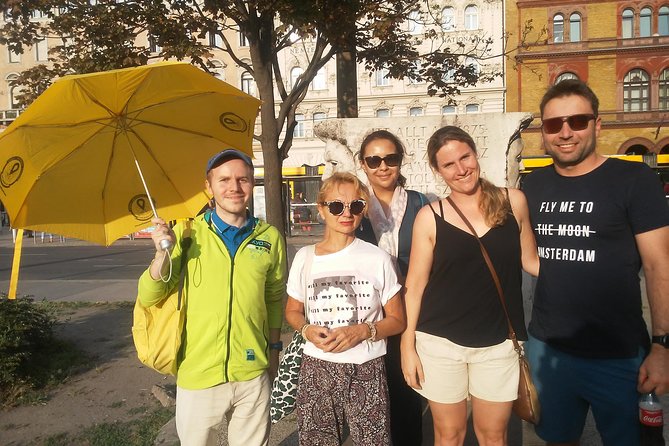
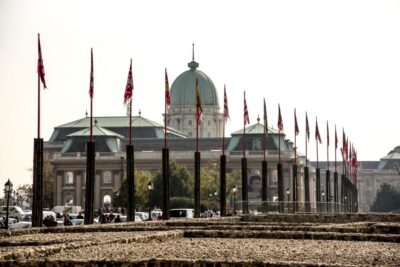
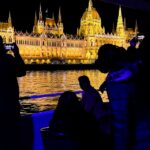
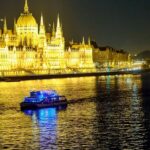
The Parliament Building stop brings the story into the 1956 uprising. You’ll hear that this is the site connected to the uprising against the ruling Communist party, and that considerable blood was shed.
This is where the tour can feel intense, because the building is monumental but the events were brutal. The guide’s approach helps you keep both truths in mind: grand architecture doesn’t erase violence; it can even amplify how surprising that violence was.
The session here is also around 15 minutes. It’s enough time to understand the political shock of what people tried to do—and how that struggle fits the bigger narrative of communist control and resistance.
At this stage, I like that the guide doesn’t treat the uprising as a standalone dramatic moment. You get enough context to see it as a consequence of the pressures and restrictions described earlier in the walk.
You can also read our reviews of more historical tours in Budapest


More than three stops: a packed evening across central districts
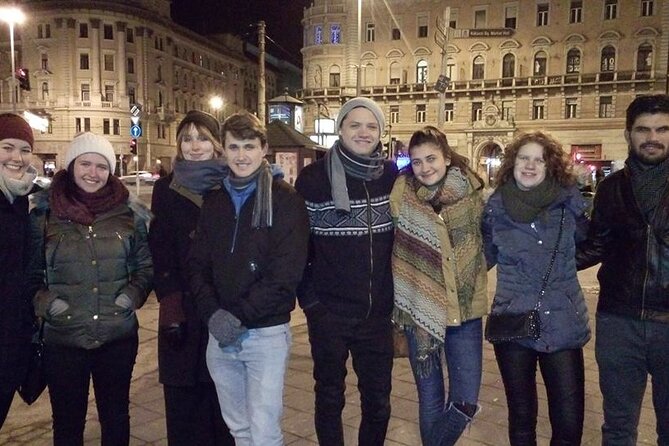
Even though the highlighted moments include Andrássy Avenue, St. Stephen’s Basilica, Liberty Square, and Parliament, the overall route is clearly more than a quick hit. The tour covers a wide set of locations and monuments across central Budapest districts (including VII, VIII, VI, and V).
That variety is a big part of the value. You’re not stuck seeing only “the famous three.” You get short explanation moments tied to different corners of the city, which helps you build a fuller mental picture of how communism shaped the capital.
The pacing also stays realistic for an evening walk. You’re not sprinting, and the small group size helps the guide slow down when questions come up. If you want a guided walk that does more than narrate your photos, this structure works.
Price and value: what $36.01 really buys you
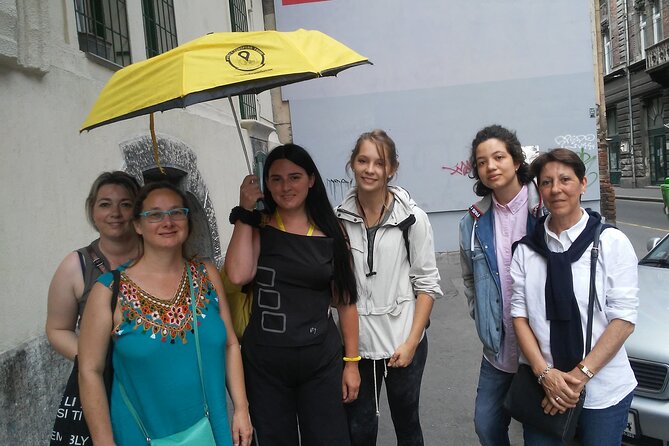
At $36.01 per person for about 2 hours, this is a straightforward deal—especially for a guided, English-language history walk. The group cap of 15 matters here. A larger group often turns history tours into audio lectures you can’t ask questions during. A smaller group usually means the guide can respond and adjust.
You also get bottled water included, which sounds small until you’re doing city walking in the evening. It’s one of those “why not” details that keeps the experience comfortable instead of rushed.
Another value signal is the guide profile and delivery style. Multiple experiences point to Victoria as strong at explaining context, with clear English and a teacher-like approach. One review even notes she is an actual history professor teaching at university, which tracks with the way the tour reads like structured storytelling rather than random facts.
Bottom line: you’re paying for guided interpretation plus access to a walking route where the city itself becomes the lesson plan.
Logistics and comfort: starting at Blaha Lujza tér, ending near Kossuth Square
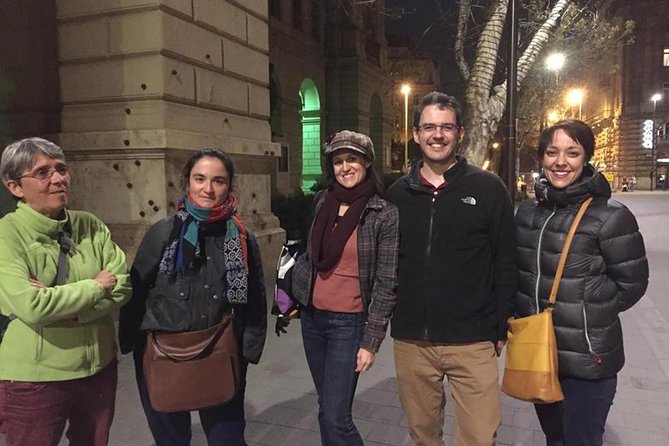
This is an evening tour, starting at 6:00 pm. You meet in Budapest at Blaha Lujza tér (1085 Hungary) and finish around Kossuth Lajos tér 1–3 (1055 Hungary), close to either the Kossuth metro line area or tram 2. The ending location is convenient if you want to keep exploring on foot after the tour, especially since Parliament Square sits at a natural sightseeing crossroads.
Two practical things to plan for:
- You’ll need to handle walking. The tour requires you to be able to walk (or wheel) yourself about 3 km.
- You’re outside for most of the experience. Good weather matters, and the route can be canceled or moved in poor conditions.
Also, expect some street-level stopping points. One helpful piece of realism from feedback: sometimes guides have to stand where the sidewalk situation is less ideal—like near noisy or less pleasant spots—because that’s where the best viewing or story context happens. It doesn’t ruin the tour, but it’s good to know not every pause is scenic and quiet.
Who this tour suits best (and who might want a different option)
This tour fits you if:
- You like understanding how political systems shape everyday life, not just big events.
- You enjoy city walking tours where the route teaches you to see buildings differently.
- You want a focused introduction to Hungarian communism, with key stops in central locations.
You might prefer something else if:
- You want a mostly indoor experience with no walking.
- You’re looking for a museum-style deep archive of documents and artifacts. This is about connections you can see and walk to, not a heavy research library.
For people who want to add depth, one suggestion that comes up is pairing this with the Museum of Terror, since it complements the street story with more direct material about the regime’s impact.
Should you book this Communist History evening walk?
Yes, if you’re in Budapest and you want communism explained through the city itself. At $36.01 for around two hours with a small group, bottled water, and an English-speaking guide like Victoria, the value feels solid. The strongest reason to book is the way you leave with a clearer read of places like Liberty Square and Parliament—plus the sense of how the past still echoes in today’s Hungary.
If your schedule allows only one history-oriented activity beyond sightseeing, this is a smart choice because it’s active, focused, and anchored to places you can revisit later.
FAQ
How long is the Communist History Evening Walking Tour of Budapest?
It runs for about 2 hours.
What is the price per person?
The price is $36.01 per person.
Where do you meet and where does the tour end?
You start at Blaha Lujza tér, 1085 Hungary, and the tour ends at Kossuth Lajos tér 1-3, 1055 Hungary, near Kossuth metro access and tram 2.
Is the tour offered in English?
Yes, it’s offered in English.
Does the tour include anything?
Yes. Bottled water is included.
What walking ability is required?
You must be able to walk (or wheel) yourself about 3 km.