REVIEW · BUDAPEST
Alternative Street Art Free Walking Tour of Budapest
Book on Viator →Operated by Perfect European Tours - Budapest FREE Walking Tours. · Bookable on Viator
Street art here has a point. This Alternative Street Art Free Walking Tour of Budapest takes you on a 1 hour 40 minute walk through the Jewish District, looking at graffiti, small street pieces, and commissioned murals. It’s not a random photo walk, either: you get the human context behind what you see, and it finishes at Szimpla Kert, a real community ruin bar.
I love that the guide connects wall art to the bigger story of Hungary and the neighborhood, so you understand why certain styles show up when they do. I also like that it’s easy to find the group quickly with a yellow umbrella. One drawback to plan for: it’s an outdoor walking tour, so you’ll want decent weather and comfortable shoes.
In This Review
- Key things you’ll notice on this Budapest street art walk
- What this tour feels like (and why it works)
- Walking the Jewish District through art, politics, and everyday life
- The route: what you can expect, even without a printed checklist
- Finding your guide: Rákóczi tér start, yellow umbrella nearby
- Stop you should remember: Szimpla Kert finish (and why it’s a smart ending)
- Price and value: why it’s cheap, and why that doesn’t mean it’s basic
- Group size, pacing, and the kind of questions you’ll ask
- Who this is best for (and who might want a different plan)
- When to go: weather matters for this one
- Should you book this Budapest street art tour?
- FAQ
- Where does the tour start?
- How long is the Alternative Street Art Free Walking Tour of Budapest?
- Is it offered in English?
- What’s included, and what should I pay for myself?
- Where does the tour finish?
- What if the weather is bad?
Key things you’ll notice on this Budapest street art walk
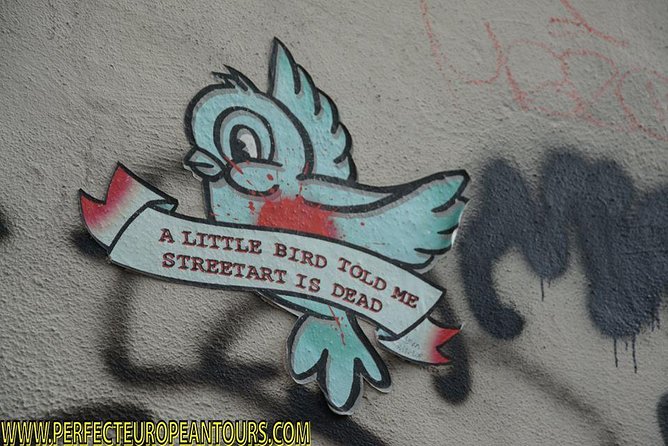
- Street art with context: you’ll hear how murals and graffiti connect to social and political change, not just aesthetics
- Jewish District focus: a neighborhood where art, youth culture, and history overlap in surprising ways
- Small group size: up to 15 people, so questions and conversations stay realistic
- Fast meeting point: the guide is easy to spot with a yellow umbrella near the central area
- Ruin bar finish: the tour ends at Szimpla Kert, so you can keep the vibe going right after
What this tour feels like (and why it works)

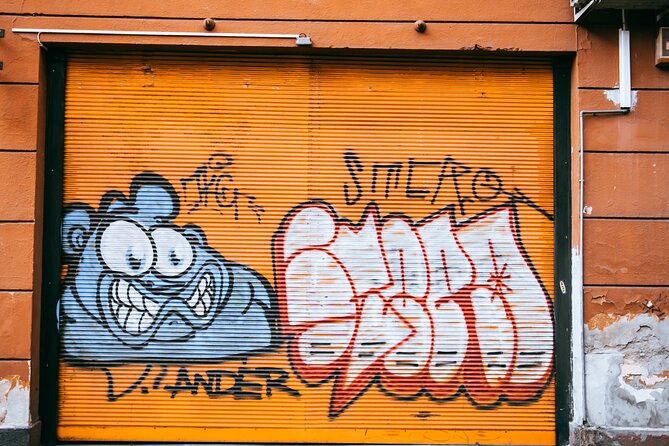
Budapest has plenty of classic sights. This tour goes the other direction—right where the city argues with itself on brick, metal shutters, and old walls. Over about 1 hour 40 minutes, you’ll walk through parts of the Jewish District and get a guided tour of street art that’s meant to be read, not just photographed.
The big difference is the guide’s angle. You’re not only learning what’s on the walls. You’re learning why those images exist in that exact place and time. That’s what makes it more than a “cool urban pics” stop. You start to see street art as a local language—sometimes political, sometimes personal, sometimes just stubbornly creative.
And yes, it finishes in a place that feels like Budapest took a left turn. Szimpla Kert is one of the city’s best-known ruin bars, and the tour uses that stop as a satisfying end point rather than a random nightlife detour.
You can also read our reviews of more walking tours in Budapest



Walking the Jewish District through art, politics, and everyday life
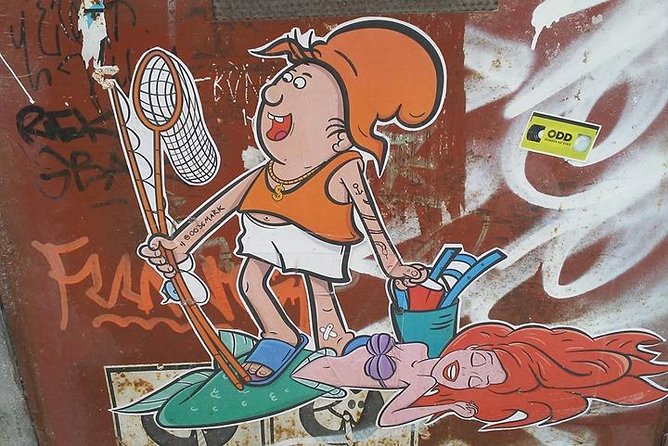
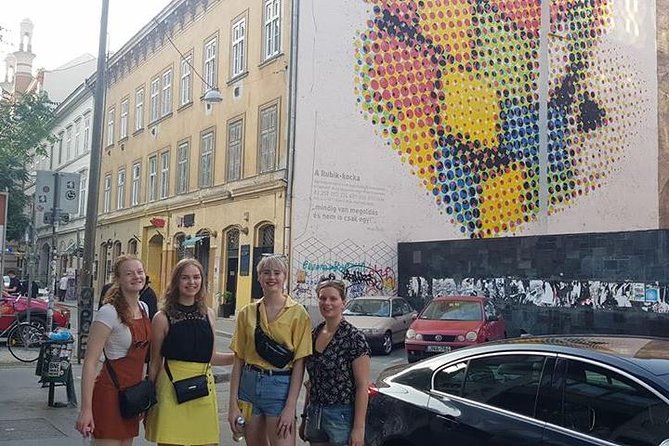
This tour’s core is simple: follow the guide, look closely, and learn how the neighborhood’s street art relates to life around it. You’ll see multiple kinds of public art, not just tags and bold graffiti. Expect talk about:
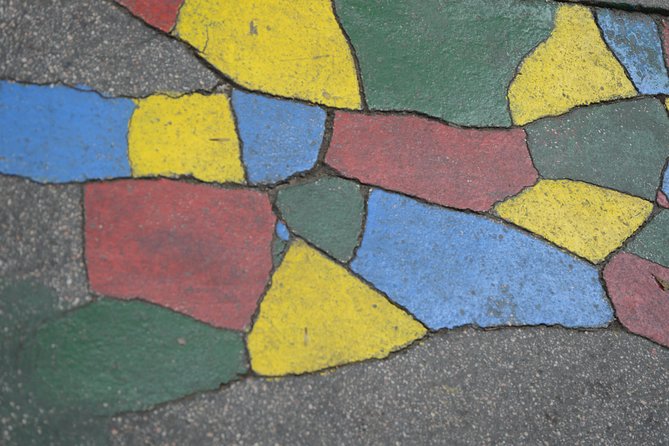
- small local pieces that often get ignored when you’re just passing through
- commissioned murals (the kind that show up with official support)
- how street art can reflect what people feel—especially after major political shifts
In practice, you end up with a way to “decode” walls in Budapest. You’ll notice how certain themes show up together, how style changes depending on the message, and how the neighborhood’s past makes certain images land harder.
If you like history that feels human instead of museum-still, you’re in the right place. One of the strongest points in the feedback I’m basing this on is that the guides explain the art while also tying it back to Hungarian culture and social change. That’s the sweet spot: art + context + a local’s point of view.
The route: what you can expect, even without a printed checklist
The tour doesn’t give you a long list of named landmarks in the materials. Instead, the structure is about movement and spotting. You start in District VIII and you finish at Auróra u. 11. Somewhere along the way, the guide steers you through the neighborhood’s public art scene and gives you the stories behind what you see.
Here’s how to mentally prepare:
- You’ll spend most of your time walking at a comfortable pace, stopping when something needs explaining.
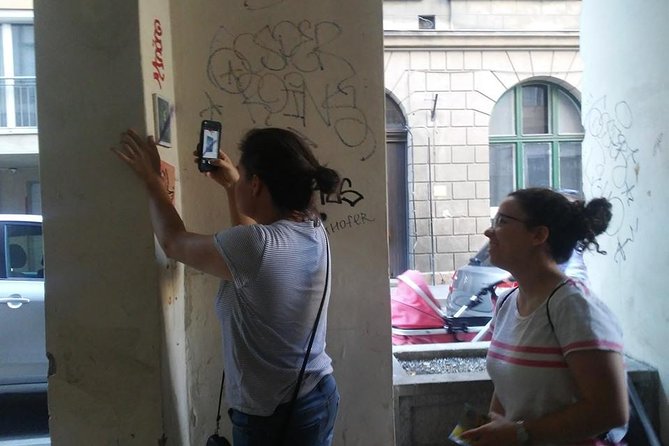
- You’ll be encouraged to look up. Street art here is often high on walls or partly hidden where casual tourists don’t look.
- You’ll hear the “why” behind the images—how the neighborhood became a youth and art hub, and how public art reflects that identity.
This kind of tour is great when you want to feel like you’re traveling with someone who actually pays attention, not a script-reading robot. And because the group stays small, you can ask questions when something sparks your curiosity.
Finding your guide: Rákóczi tér start, yellow umbrella nearby
Getting started is usually where free tours can wobble. This one is designed to be easy.
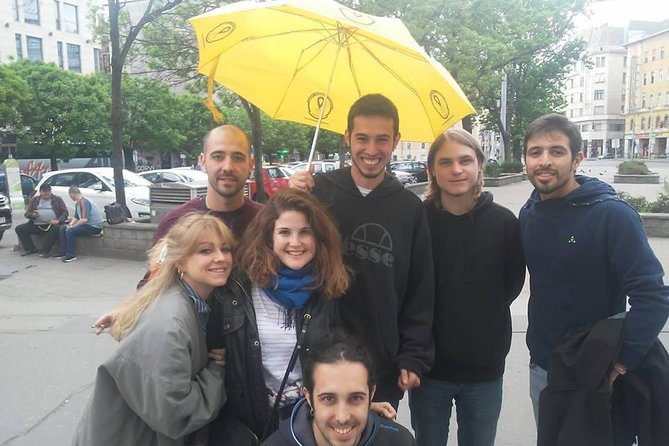
You’ll meet at Rákóczi tér in Budapest (District VIII). The tour also notes that you’ll be able to spot the guide by a yellow umbrella near the central area around Blaha Lujza Tér. That matters more than it sounds: when you’re doing a walking tour, losing 15 minutes at the start kills your whole rhythm.
Practical tips:
- Arrive a few minutes early so you’re not rushing to find the umbrella.
- If you’re using your phone for directions, keep an eye on the street-level meeting area. The guide is easy to identify visually, which saves time.
The tour uses a mobile ticket, and you’ll receive confirmation at booking. That means less email hunting and more time for your first mural.
Stop you should remember: Szimpla Kert finish (and why it’s a smart ending)
The tour’s itinerary includes a final highlight at Szimpla Kert. You’ll spend about 10 minutes there, and the entry for that stop is listed as free for the tour.
Why this makes sense as an ending:
- Szimpla Kert is a ruin bar where the whole vibe is about reclaimed spaces and creative community energy. Street art fits that story naturally.
- Ending here lets you shift from “watching and learning” to “staying and soaking it in” without needing to change plans at the last minute.
- The guide also gives a short rundown of ruin bars, so you can understand what you’re seeing when you walk around after the tour.
If you want a smooth transition, this finish is a win. You’re already in the right area and the atmosphere matches the tour theme.
You can also read our reviews of more tours and experiences in Budapest




Price and value: why it’s cheap, and why that doesn’t mean it’s basic
The listed price is $3.62 per person, and the tour is described as complimentary in the sense that you pay a booking fee and then tip your guide.
Here’s the honest way to think about value:
- You’re paying for a guided walk with a professional guide, not a printed brochure.
- The guide’s role is the product—explaining context, guiding you to what you’d miss, and helping you understand what you’re looking at.
- The price is low enough that it’s easy to try even if you’re not sure you’ll love street art.
The tour also notes what’s not included: parking fees and the cost of using a public toilet. That’s normal for city tours, but it’s worth remembering so you don’t get surprised by small extras while you’re out walking.
What I’d budget mentally:
- A tip for the guide (if you want the experience to keep thriving, this is the right way to support it).
- A little cash for a toilet break if you need it.
If you’re the type who likes to spend your money on local time—someone else doing the routing and explanations for you—this one is a bargain.
Group size, pacing, and the kind of questions you’ll ask
This tour caps at 15 travelers. That size is perfect for a street art walk. Big groups struggle to stop and look up without bumping into each other. Small groups keep things moving, but still allow real conversation.
The reviews repeatedly praise the guide style: clear speech, enough time to talk, and explanations that go beyond just identifying a piece of art. You should expect a tour that feels paced and human, not rushed.
Also, this is offered in English, and the tour is near public transportation. So if you’re hopping around Budapest, you won’t lose your day lining up complicated transfers.
Who this is best for (and who might want a different plan)
This is ideal if:
- you love modern culture and want Budapest beyond the postcard landmarks
- you’re curious about how political and social change show up in everyday places
- you like walking tours where the route is the lesson, not just the stops
It’s also a strong fit if you’re visiting as a couple or small group and want something that feels more personal than a bus tour.
You might consider a different tour if you only want famous monuments and sweeping views. This one is about street-level culture. If that’s not your thing, you’ll feel the difference fast.
On the practical side, the tour says most travelers can participate and service animals are allowed. That’s useful for planning, especially if you’re traveling with someone who needs their animal companion.
When to go: weather matters for this one
The tour specifically notes it requires good weather. If the day turns bad, you’ll be offered a different date or a full refund.
So before you lock in your schedule, check the forecast and plan to wear shoes you trust on uneven sidewalks. You’ll be outdoors for most of the time, and Budapest can be surprisingly slick when weather shifts.
A small scheduling note: this tour is often booked about 22 days in advance on average. If you’re traveling in a busy season or you want a specific day, don’t wait for the last minute.
Should you book this Budapest street art tour?
Book it if you want a city walk that teaches you how to see. For a small price, you’ll get a guided look at public art tied to the neighborhood’s real story, plus an ending at a well-known ruin bar that feels like Budapest’s alternative side.
Skip it (or pair it with a more traditional sights tour) if you want monumental highlights and minimal walking. This one rewards curiosity and attention, not checklist energy.
If you fall in the middle—curious about modern Budapest, interested in street art, and happy to spend a couple hours outside—this tour is a great way to make your time count.
FAQ
Where does the tour start?
The tour starts at Rákóczi tér in Budapest (1084), Hungary. You’ll also find your guide more easily by looking for a yellow umbrella near the central Blaha Lujza Tér area.
How long is the Alternative Street Art Free Walking Tour of Budapest?
It lasts about 1 hour 40 minutes (approximately).
Is it offered in English?
Yes, the tour is offered in English.
What’s included, and what should I pay for myself?
Included is a professional guide. Not included are parking fees and the cost of using a public toilet.
Where does the tour finish?
The tour finishes at Budapest, Auróra u. 11, 1084 Hungary, at a grassroots community ruin bar. The tour also includes a stop at Szimpla Kert, where the listed admission ticket is free.
What if the weather is bad?
The tour requires good weather. If it’s canceled due to poor weather, you’ll be offered a different date or a full refund. Free cancellation is available up to 24 hours in advance for a full refund.