REVIEW · BUDAPEST
Original Budapest Alternative Street Art & Jewish Tour
Book on Viator →Operated by Original Budapest Tours · Bookable on Viator
Street art can be a map, not just decoration. This 3-hour alternative walk pairs Budapest’s street-scene creativity with stories tied to the Jewish quarter, all while you crisscross the 6th and 7th districts. I like that the tour is paced in short blocks and stays social, so it feels easy to ask questions and compare notes without being stuck in one place.
Two other things I’d bet on: you get guided context at each stop (not just photos), and the focus stays on local artists and real neighborhood feel rather than a checklist of famous monuments. One drawback to keep in mind is that this is a guide-dependent experience. A small number of past departures flagged uneven training and factual slips, so if you care a lot about historical accuracy, I’d ask a few pointed questions early.
In This Review
- Key things to know before you go
- Street art with Jewish-quarter context: why this tour is more than graffiti
- Meeting at St. Stephen’s Basilica: timing, route flow, and the 3-hour pace
- Stop 1: Lépcső Street Art and how to read a wall like a story
- Stop 2: Terézváros and the 6th/7th district switch
- Stop 3: Andrássy Avenue, Király utca, and the 7th district atmosphere
- Stop 4: Színes Esernyők (Colourful City) and why local artists matter
- How the tips-based model changes what you should do during the walk
- What to bring and how to make the most of the 6th and 7th districts walk
- Who should book this tour, and who might prefer a different style
- Should you book the Original Budapest Alternative Street Art & Jewish Tour?
- FAQ
- Where does the tour start and what address should I use?
- How long is the tour?
- What time does the tour begin?
- Is this a ticketed tour at the stops?
- What do I get as part of the price?
- Is bottled water included?
- Is there a mobile ticket?
- How large can the group get?
- What happens if the weather is bad?
- What is the cancellation window?
Key things to know before you go
- Pay-what-you-want vibe: Guides work for tips, so your final contribution is part of the experience.
- Four focused stops, ~30 minutes each: A tight route keeps the story moving and helps you see more than you’d on your own.
- District shift in the middle: You spend time in Terézváros, then cross into the 7th district area around Andrássy Avenue and Király utca.
- Street art has a theme: You’ll see works tied to the Colourful City concept (Színes Város / Színes Esernyők).
- Small practical items matter: Water is not included, and the tour depends on decent weather.
- Group size can be large: Up to 100 people, so arrive on time and be ready for a louder, group-walk rhythm.
Street art with Jewish-quarter context: why this tour is more than graffiti

Budapest has plenty of walls with color. What makes this kind of walk work is the way the guide ties those visuals to place—what neighborhoods were for, how people lived, and how cultural memory shows up in streets.
This tour leans into an alternative culture angle, but it’s not random. You’re led through the 6th and 7th districts, where youth culture and creative expression have a strong presence. The result is a route that feels current, even while it touches heavier topics related to the Jewish quarter. If your goal is to understand Budapest as a living city (not only postcards), this format fits.
The best part for most people is the balance: street art first, history context alongside it. You don’t have to be an expert. And if you already know Budapest, the stops are still designed to give you new ways to look at ordinary streets and landmarks.
You can also read our reviews of more tours and experiences in Budapest


Meeting at St. Stephen’s Basilica: timing, route flow, and the 3-hour pace
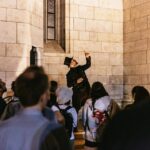
You start at St. Stephen’s Basilica (Szent István tér 1, 1051). The tour begins at 11:00 am, runs about 3 hours, and uses a mobile ticket. End point varies, so plan for a finish somewhere around the route you’re walking rather than at the basilica again.
The pacing is built around four main stops, each around 30 minutes. That matters more than it sounds. When street art is the theme, you get better results by moving regularly. You also avoid the “one mural, one hour” trap, where attention fades and the group loses momentum. This tour keeps the rhythm tight enough that you stay curious.
It also helps that most stops have free admission, so you’re not constantly scanning for entrances or ticket machines. One practical note: bottled water isn’t included. In warmer months or if you run hot, bring a small bottle so you’re not tempted to buy at every corner.
Group size can be up to 100 travelers, so don’t expect a quiet, intimate chat the whole time. That said, the tour is designed to be social—good for solo travelers and pairs who want conversation without joining a huge hostel crowd.
Stop 1: Lépcső Street Art and how to read a wall like a story
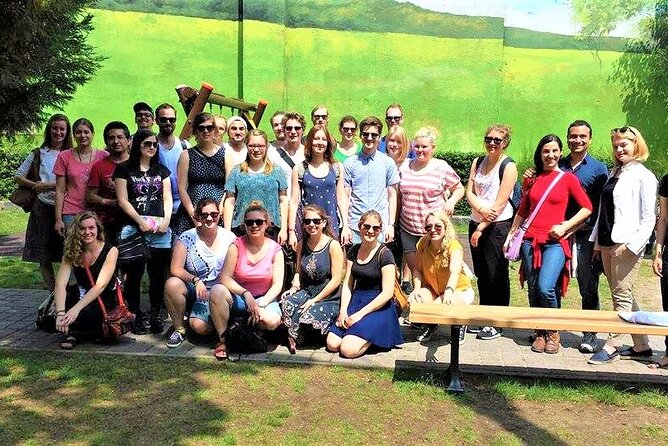
Your walk starts at Lépcső Street Art, which is a strong first stop because it sets expectations immediately. Instead of beginning with a lecture, you’re anchored to the thing you came for: street art as an actual language.
Here’s what I’d pay attention to: don’t just take in the colors. Look at the placement and the mood. Street art tends to work differently depending on whether it’s tucked onto a side street, slapped into a visible route, or attached to a recognizable local landmark. A good guide helps you notice those details fast—so you’re not stuck wondering what you’re supposed to see.
The tour frames the stop as an introduction to Budapest’s alternative culture, which is useful if you’re arriving with “tour mode” expectations. After Lépcső, you’ll understand that these works aren’t random decoration. They’re part of how neighborhoods show identity and, sometimes, how they push back on the official version of the city.
Possible drawback: If you’re looking for a purely history-first start, Lépcső is a visual hook, not a museum-style timeline. Still, it’s the right move if you want to keep the walk cohesive.
Stop 2: Terézváros and the 6th/7th district switch
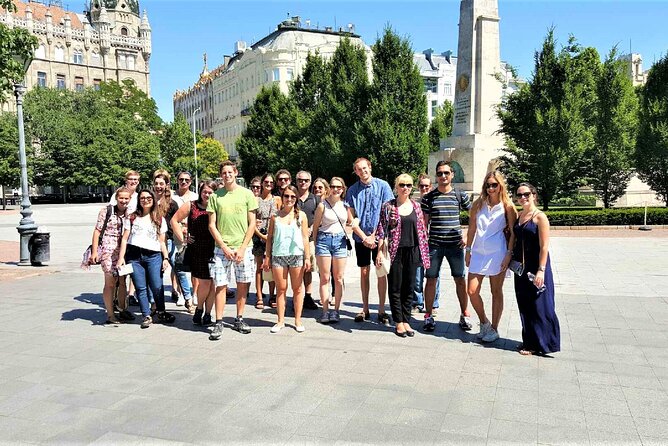
From Lépcső, you head into Terézváros, where the tour keeps the vibe friendly and social. This is where the route becomes about neighborhoods, not only artworks.
Terézváros is presented as a district where the young—and young at heart—come out to play. That phrasing matters because it signals the lens of the tour: not just architecture, but how people occupy streets. When a guide points out that kind of lived energy, you’ll start noticing what you’d otherwise walk past—hangout spots, street rhythms, and the feel of the block.
This stop also sets you up for the major transition. The tour isn’t built around staying in one area and repeating the same environment. It’s a deliberate move between districts, and that shift is a big reason the walk feels like a “storyline.”
Practical tip: During this section, if you’re planning to ask questions about the Jewish-quarter part of the tour, this is a good time. The group is settled into the pace, and it’s early enough for the guide to correct misunderstandings before you’re too far along.
Stop 3: Andrássy Avenue, Király utca, and the 7th district atmosphere
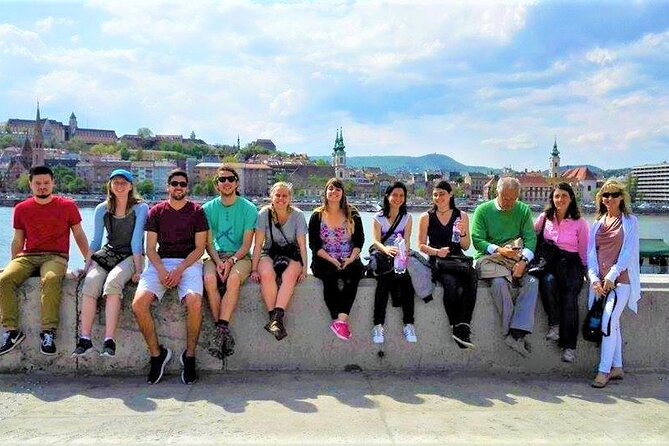
Next up is Andrássy Avenue, with the route description making a clear geographic point: Andrássy Avenue marks one end of a square and Király utca marks the other. Then you cross Király utca and step into the 7th district atmosphere.
This is a smart middle stop. Andrássy Avenue is a familiar-sounding name even for first-time visitors, so it helps you anchor mentally. Then crossing into Király utca gives you the sense of stepping into another Budapest. Even if you’ve read about these districts before, walking the boundary line is a different experience than seeing it on a map.
The tour frames this part as a heart-of-the-city area where the guide reveals the unique atmosphere of the 7th district. That’s exactly what I’d look for here: street-level details. Are people moving fast or lingering? Do sidewalks feel designed for strolling or mostly for passing through? How does the “creative energy” show up in everyday scenes?
Potential consideration: Because it’s the city center feel, it can be busier than the earlier stop. If you’re sensitive to crowds, keep your earbuds out so you don’t miss the guide’s points, and try to stand where you can hear without stepping into someone’s path.





Stop 4: Színes Esernyők (Colourful City) and why local artists matter
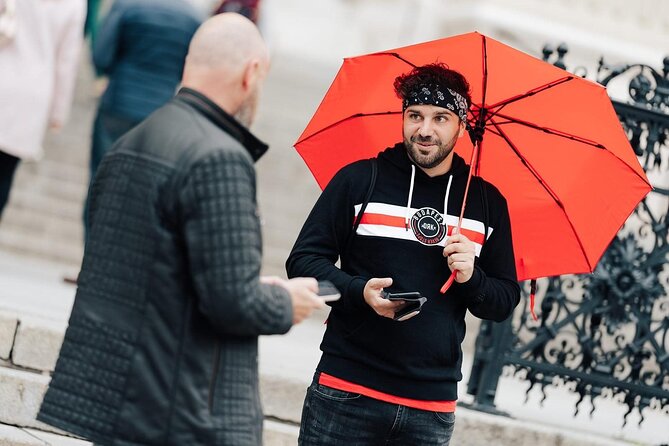
The final stop centers on Színes Esernyők, tied to a local art idea known as Színes Város, or the Colourful City. This is the stop that turns “street art” from a random assortment of walls into a recognizable concept—an art movement that adds life to landmarks and side roads across the city.
The tour explains that these works kicked off a craze for street art alternative tours in Budapest, and that the style makes art more accessible. That accessibility angle is important. In cities where street art is treated like underground mystery, visitors often feel shut out. Here, the guide’s approach emphasizes that street art can be understood and visited in a normal walking day, not only through specialized tours or late-night sightseeing.
As you look at the pieces here, don’t only search for the most eye-catching spray-painted image. Focus on the way the art interacts with the street itself—how it reframes familiar corners. That’s where the Colourful City concept clicks. It’s less about individual masterpieces and more about a citywide attitude.
Important caution drawn from real-world experience: A few people reported that their guide made mistakes when pointing to specific Jewish-quarter references. You can’t control guide training, but you can control how you respond. If a historical location claim comes up, ask a quick follow-up and make sure you understand what you’re looking at before you move on.
How the tips-based model changes what you should do during the walk
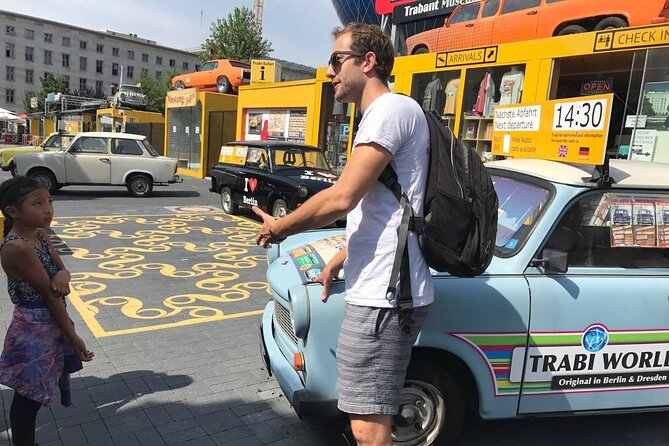
One of the defining traits of this tour is the tips-based approach. The guide works for tips, which means your experience isn’t only set by the company—it also depends on how much you engage and how you steer the conversation.
This can be great value. A motivated guide will adjust explanations if you ask. If you want more art context, ask for the artist’s intent or what to notice visually. If you want more Jewish-quarter framing, ask how the stories connect to the street artworks and why those places matter.
It also means you should treat the first few minutes as a chance to calibrate. If something feels unclear—especially around history—ask a direct question. You don’t need to be confrontational. You just want clarity.
Value-wise, the listed price (currently $25.20 per person) looks like a reasonable way to get a structured route and a local guide, with the option for a final tip that matches your satisfaction. Compared to a traditional fixed-price tour where you get one rigid version of events, this is more flexible—but that flexibility requires you to participate.
What to bring and how to make the most of the 6th and 7th districts walk
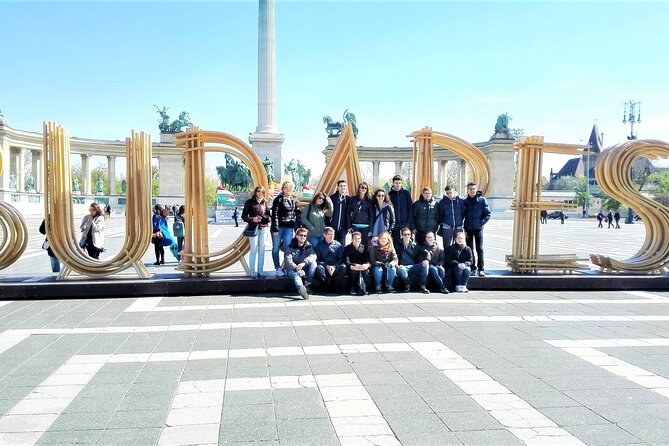
This tour is a walking experience with four stops. The basics still rule.
- Wear comfortable shoes. The route moves through city streets and likely includes uneven sidewalks.
- Bring a water bottle, since bottled water isn’t included.
- Expect it to be weather-dependent. The tour requires good weather; if it’s canceled due to poor weather, you’ll get a different date or a full refund.
- Plan for the end point to vary. Don’t schedule a tight next appointment right at the finish time.
Since you’re starting at St. Stephen’s Basilica area, I recommend arriving a few minutes early so you can orient yourself and gather your thoughts. The start time is 11:00 am, and being ready helps you settle into the group pace.
Also, because the group can be up to 100 people, don’t bring a travel strategy that requires perfect quiet. Bring your curiosity, and you’ll do fine.
Who should book this tour, and who might prefer a different style
This tour fits best if you want Budapest through a street-level lens. You’ll enjoy it if you like:
- street art as culture, not just pictures
- short guided stops with time to look on your own
- a route that connects neighborhoods across the 6th and 7th districts
- a social group vibe where questions are welcome
You might want to choose a different tour type if you need very exact, academic sourcing for specific historical locations. The tour touches Jewish-quarter references, and a small number of departures reported issues with accuracy. If you’re traveling with someone who is strict about that kind of detail, go in ready to ask for clarification when points come up.
If you’re a first-time visitor, this can be a great way to get bearings fast. If you’re a repeat visitor, the street art angle can still refresh how you see familiar areas.
Should you book the Original Budapest Alternative Street Art & Jewish Tour?
I’d book it if your priority is walking, looking, and learning at street pace. The best-case experience here is strong: a guided route that links Budapest’s creative street scene with context tied to the Jewish quarter, plus a social group atmosphere that keeps things moving.
One “smart caution” before you go: because guide quality can vary, don’t rely on the tour to be flawless on every historical detail. Ask a question early, especially when the guide points to specific references. If the guide responds clearly and confidently, you’ll get the full value.
At $25.20, with a local guide and a structured 3-hour route, this is good value for people who like alternative culture and want more than a standard sightseeing loop. If you want a quiet, museum-level experience, it’s not that. If you want Budapest as a living city you can read off walls and streets, it’s a very reasonable bet.
FAQ
Where does the tour start and what address should I use?
The tour starts at St. Stephen’s Basilica, Szent István tér 1, 1051 Hungary.
How long is the tour?
It runs about 3 hours.
What time does the tour begin?
The start time is 11:00 am.
Is this a ticketed tour at the stops?
The stops have free admission, and the tour provides a local guide. (Bottled water is not included.)
What do I get as part of the price?
A local tour guide is included.
Is bottled water included?
No. Bottled water is not included.
Is there a mobile ticket?
Yes, this experience uses a mobile ticket.
How large can the group get?
The maximum group size is listed as 100 travelers.
What happens if the weather is bad?
The tour requires good weather. If canceled due to poor weather, you’ll be offered a different date or a full refund.
What is the cancellation window?
You can cancel for a full refund up to 24 hours in advance of the experience’s start time.