REVIEW · BUDAPEST
Budapest: Street Art and Underground Movements Walking Tour
Book on GetYourGuide →Operated by ET Alternative · Bookable on GetYourGuide
Street corners tell stories here. On this Budapest walk, you trade fast sightseeing for a slow hunt for street art and the messages behind it, led by guides like ET and Suzie. It is built for people who want more than the usual postcard view of the city.
I especially love the small group size (up to 8), which keeps the pace human and questions actually get answered. I also like how the tour explains what you’re looking at, from techniques to political and social context tied to Budapest’s culture.
The main thing to consider is that this is an outdoors, on-your-feet tour for about 2 hours, so plan for walking time rather than a quick stop-and-photo outing.
In This Review
- Key highlights to look forward to
- Telep-Art Galéria: where the street-art hunt starts
- What you actually do on the street art walk
- Learning the messages behind murals and stickers
- Underground culture: why this side of Budapest clicks
- The 2-hour format: small group energy that stays relaxed
- Stop-by-stop: how the route flows
- Guides ET Alternative: what makes the storytelling land
- Price and value: $27 for a focused, context-led tour
- Practical tips so you get more out of it
- Is this tour right for you?
- Should you book this Budapest street art and underground movements tour?
- FAQ
- How long is the Budapest street art walking tour?
- How much does it cost?
- Where does the tour start?
- Where does the tour end?
- Is the tour guided in English?
- How big is the group?
- Is food included?
- Can I book a private version?
- Is the tour wheelchair accessible?
- Is there free cancellation?
Key highlights to look forward to
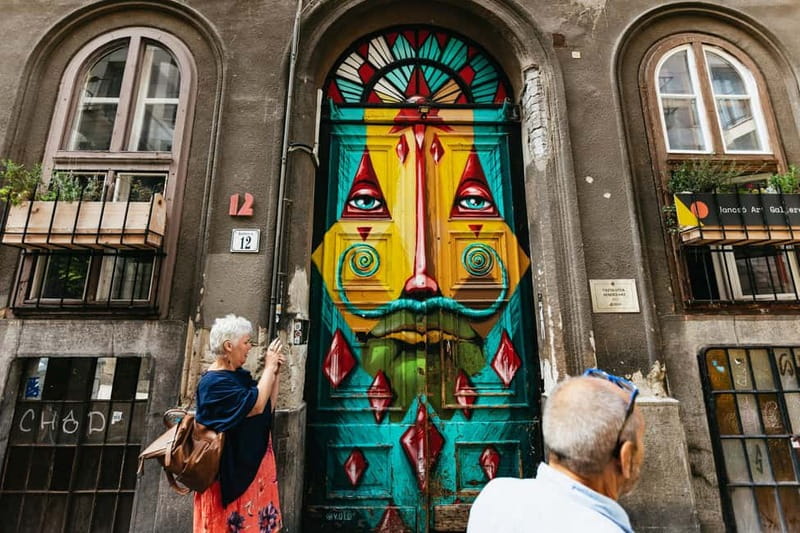
- Telep-Art Galéria start point: a sticker-covered meeting place that sets the tone
- A secret stop where the guide spotlights work most people miss
- Political and social storytelling behind murals, stickers, and street artists
- Underground culture context that helps you read the city in layers
- English live guide plus a summary after the tour to help it stick
- Interactive, family-friendly format with room to ask questions
Telep-Art Galéria: where the street-art hunt starts
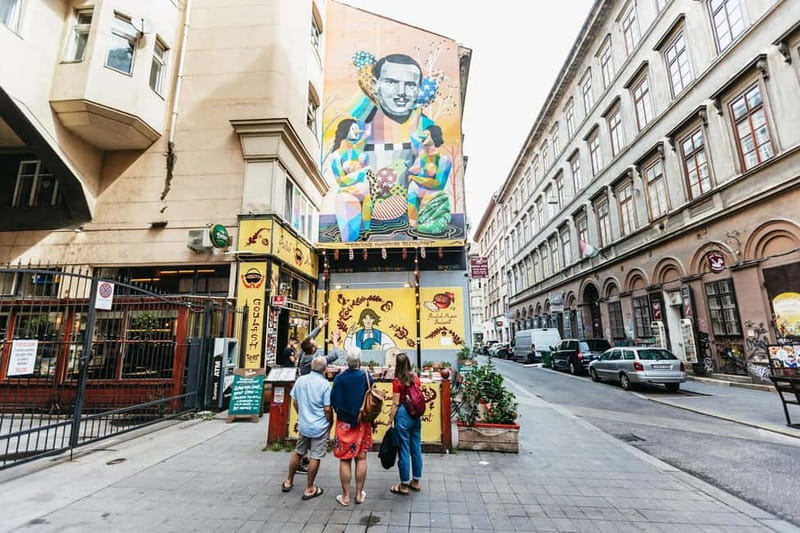
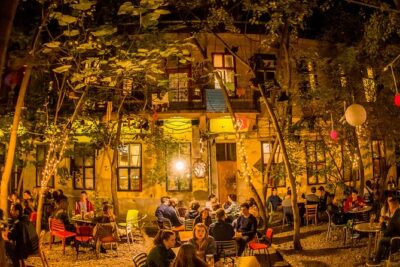
Your tour kicks off at Telep-Art Galéria, a cool bar used as the meeting point. It’s the kind of place where stickers end up as part of the décor, so you arrive already in the right mindset: look closer.
I like that the start location feels like part of the scene, not a stiff classroom. It makes the next step easier: walking out with permission to stare at walls without feeling weird.
You can also read our reviews of more walking tours in Budapest



What you actually do on the street art walk
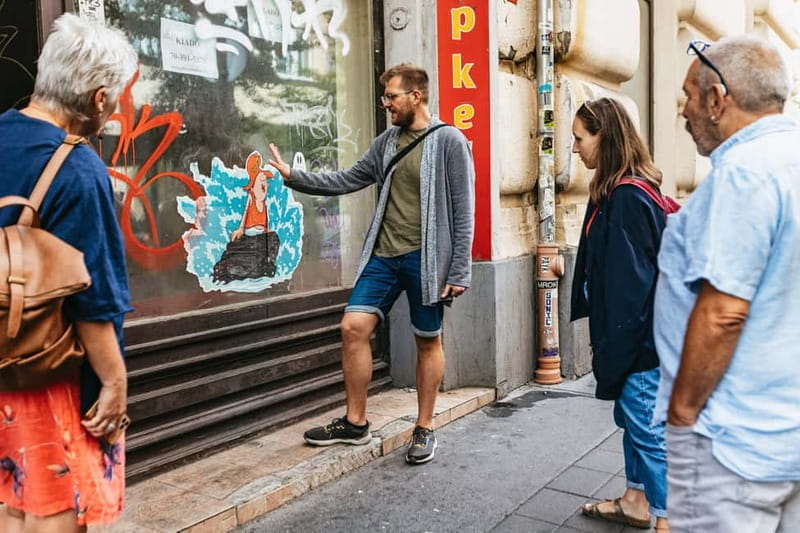
This is a guided search through Budapest streets for local street art plus work by global street artists. You’ll slow down, follow your guide, and learn what makes each piece worth noticing—often because of the story underneath it.
The pace is interactive. You’re not just listening while you pass by; you’re actively spotting details and talking about what they might mean.
You’ll also hit a secret stop as part of the 2-hour route. The tour is built around the idea that street art changes over time, so the hunt is about attention, not checking a fixed list of famous murals.
Learning the messages behind murals and stickers
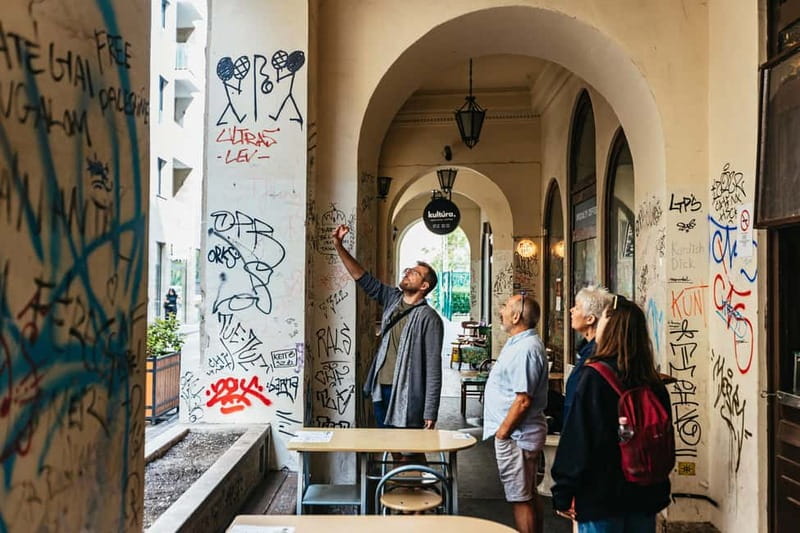
Street art is communication, not decoration. The guide’s job is to translate what you’re seeing—political and social themes, the cultural signals, and why certain styles show up in a given place.
I like that you’re not required to be an expert first. Even if street art isn’t your usual thing, the explanations help you connect the images to real-world issues and local identity.
Also, the tour focuses on technique and storytelling. That means you start noticing things like style choices and the way artists build meaning into what looks like random wall clutter.
Underground culture: why this side of Budapest clicks
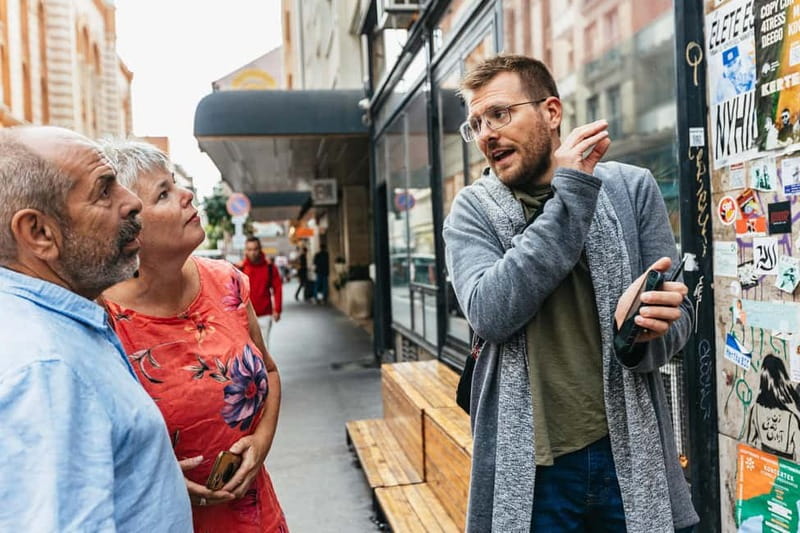
This tour leans hard into underground culture, not in a spooky way, but in a context way. You’ll hear how street art fits into broader youth and alternative scenes, and how it can act like a public bulletin board for ideas people don’t say politely in normal places.
It’s a smart fit for Budapest because the city’s layers matter. If you only stick to the mainstream highlights, you miss how contemporary voices use walls to respond to politics, daily life, and identity.
If you enjoy contemporary art, this format also gives you a path in. You’ll leave with a better sense of how street art functions as a living conversation, not a static museum piece.
The 2-hour format: small group energy that stays relaxed
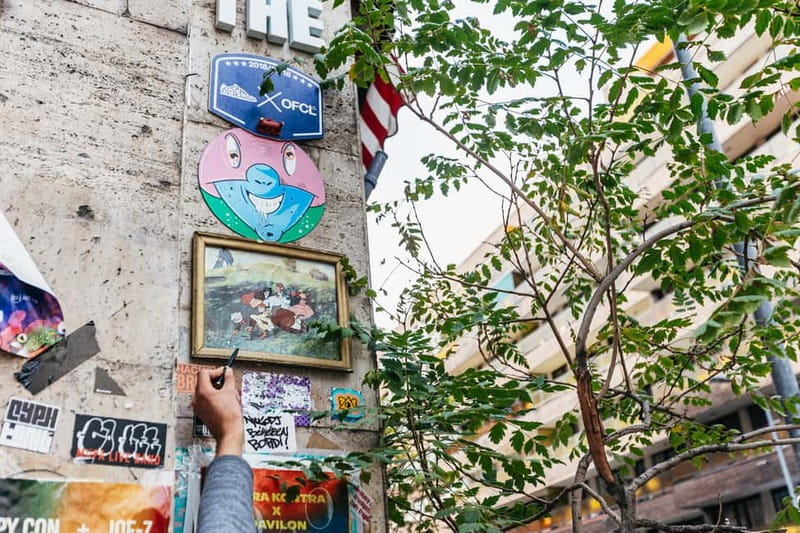
The tour runs about 2 hours. That short length is a big deal because it keeps the focus tight: you get time to look closely without burning half a day.
The group is limited to 8 participants, and that shows in how the tour feels. People get room to ask questions, and the guide can adjust pace when the group wants to slow down over a particular piece.
It’s also listed as suitable for families, and the tone is interactive rather than lecture-heavy. If you’re traveling with kids, this kind of visual hunt can work better than long stretches of history explanations.
You can also read our reviews of more tours and experiences in Budapest






Stop-by-stop: how the route flows
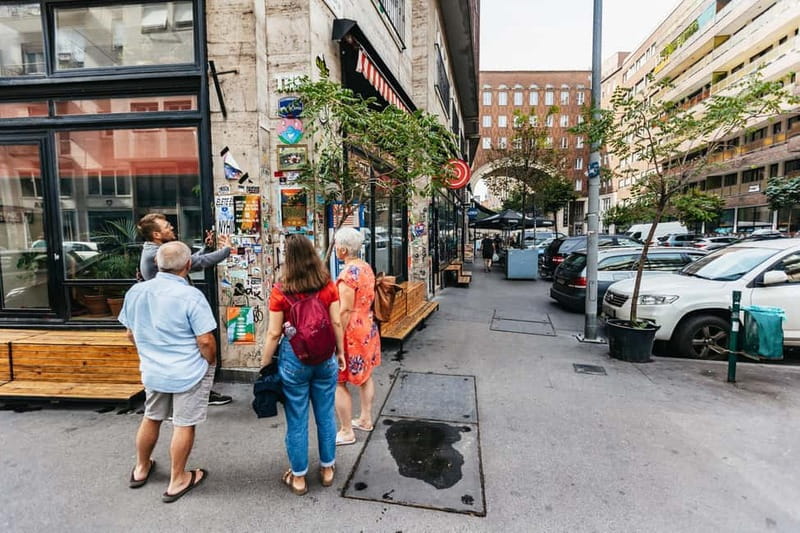
You begin at Telep-Art Galéria, then head out with the guide to search for artworks around central Budapest. Along the way, you’ll keep an eye out for both larger murals and smaller sticker work.
A secret stop is part of the experience, which is where the guide typically slows the group further and points out something that feels like a reward for paying attention. Think of it as the moment where the tour’s theme becomes extra clear.
The activity finishes back at the meeting point, with the tour ending at Telep-Art Galéria after the route completes around the central area called Központ. After that, you get a summary after the tour, which is useful if you’re the type who likes a quick recap to match faces and names to the art you saw.
Guides ET Alternative: what makes the storytelling land
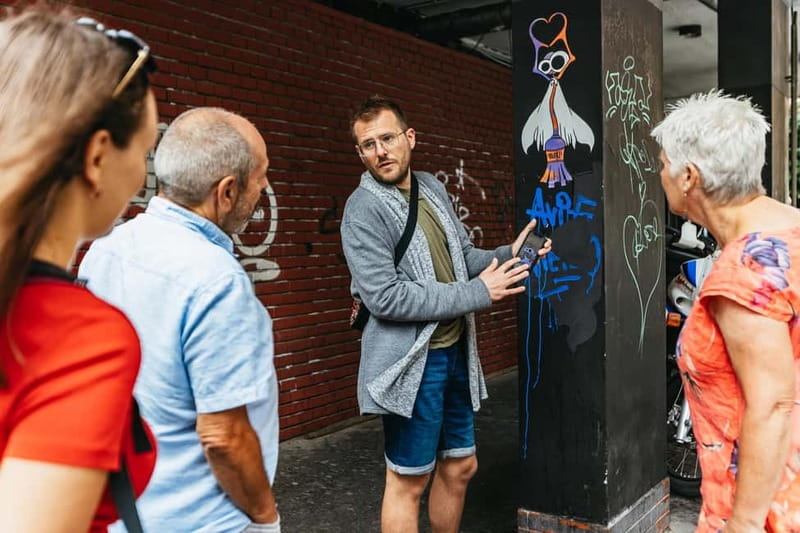
The guide makes the difference on street art tours, and this one has strong marks for the person leading it. ET is praised for enthusiasm, flexibility, and very clear English, with answers that feel thoughtful instead of rehearsed.
Suzie also gets standout feedback as a storyteller, described as warm, engaging, and professional while still making the group comfortable. If you end up with either ET or Suzie, you’re likely in for a tour that feels like a conversation with someone who genuinely cares about the scene.
One more pattern from feedback: the guides are patient with questions. That matters because street art can raise lots of interpretations, and you don’t want to feel rushed.
Price and value: $27 for a focused, context-led tour
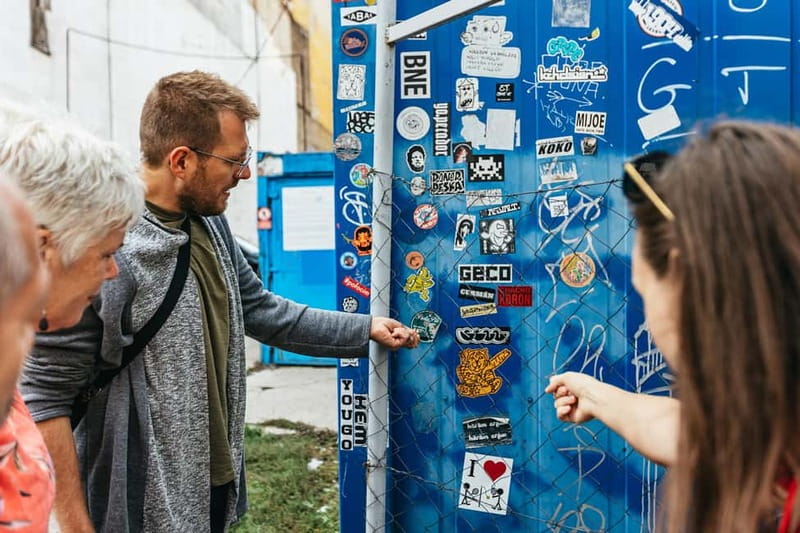
At $27 per person for a 2-hour live guided experience, this can be good value if you care about meaning, not just photos. Street art tours can range widely, but this one includes a live guide and a summary after the walk—so you’re not paying only for motion around the city.
The small group cap also supports value. You’re not squeezed into a crowd where you can’t see details up close or ask follow-ups.
Food and drinks are not included, so treat this as a walking-and-learning block. If you want a meal afterward, plan it for later once you’ve got the art context in your head.
Practical tips so you get more out of it
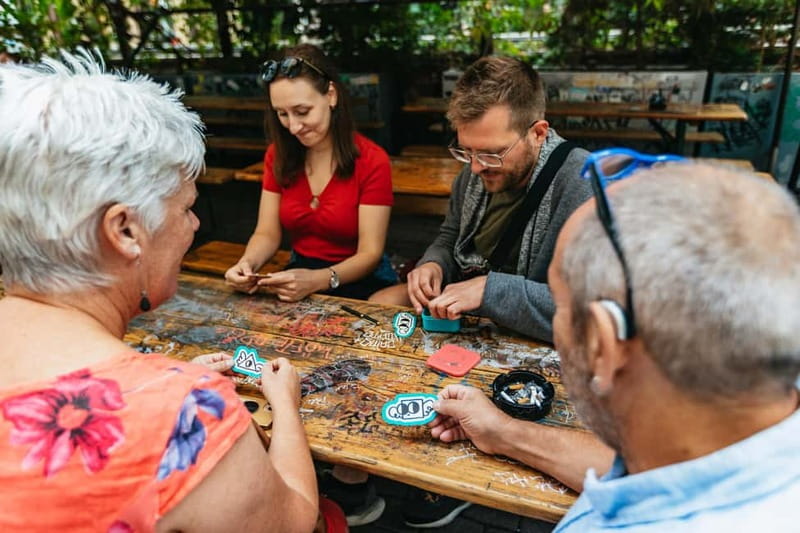
Wear comfortable shoes. You’ll spend the time walking and stopping, and the point is to notice details rather than speed through.
Bring a phone or camera if you like, but don’t let it become a screen-time contest. The best results come from looking first, then snapping, so the guide’s explanations can register while you’re actually seeing the work.
If you’re curious about politics, social themes, or how alternative scenes work, you’ll get extra satisfaction. The tour is designed to help you connect what’s on the wall to what’s going on in the city.
And if you’re not into street art, treat it like a cultural primer. The explanations are structured in a way that makes it easier to start recognizing styles and artists around Budapest.
Is this tour right for you?
Book this if you want Budapest to feel contemporary and human, not only monumental. It’s a great fit for art lovers, people who like alternative culture, and anyone tired of hearing the same standard history stops.
It’s also a smart choice if you want a guided way to look at street art without feeling lost. You’ll leave with a new lens for noticing what the city is saying.
If you prefer quiet sightseeing with minimal conversation, you might find the interactive style a bit more active than you want. But if you enjoy asking questions and comparing interpretations, this should feel like exactly the right pace.
Should you book this Budapest street art and underground movements tour?
Yes, if you want a walk that teaches you how to read the city. For $27 and about 2 hours, you get a small-group experience led in English, starting at Telep-Art Galéria and ending back there with a helpful wrap-up.
I’d especially recommend it early in your trip. Once you start seeing street art as a language, the rest of Budapest looks different in a good way.
FAQ
How long is the Budapest street art walking tour?
The tour lasts 2 hours.
How much does it cost?
The price is $27 per person.
Where does the tour start?
You meet at Telep-Art Galéria.
Where does the tour end?
The activity ends back at the meeting point (Telep-Art Galéria). It also lists Központ as a finish point.
Is the tour guided in English?
Yes. The live tour guide speaks English.
How big is the group?
The group is small, limited to 8 participants.
Is food included?
No. Food and drinks are not included.
Can I book a private version?
Yes. You can also book this tour as a private experience.
Is the tour wheelchair accessible?
Yes, it is listed as wheelchair accessible.
Is there free cancellation?
Yes. Free cancellation is available up to 24 hours in advance for a full refund.