REVIEW · BUDAPEST
Budapest Great Market Hall Chef‑Led Private Tasting Tour
Book on Viator →Bookable on Viator
Food smells in Budapest start in one hall. This chef-led private tasting tour brings you into Central Market Hall for a relaxed walk where you taste Hungarian staples and learn the stories behind ingredients like paprika. You’ll stop for seasonal produce, spices, everyday staples, and sweets as the market’s food culture comes into focus.
Two things I really like: you get a practical, friendly former-chef guide (English is excellent), and the tasting menu hits both savory and sweet so you leave full and informed. I also appreciate that it’s private, so the pace can match what you care about—history, shopping habits, or food itself.
One consideration: transportation to and from the market isn’t included, so you’ll want to plan how you’ll get there on your own.
In This Review
- Key takeaways before you go
- Central Market Hall is the perfect classroom for Hungarian food
- What makes it “chef-led private” in real life
- The 2-hour flow: how your meal happens across the market
- Stop at Central Market Hall: where Hungarian shopping makes sense fast
- Your savory tastings: the flavors you’ll remember
- Lángos: crispy comfort with toppings
- Cured sausages and pickles: why preserved foods matter
- Pogácsa: savory scone energy
- Pork crackling: the snack that explains itself
- Your sweet stops: strudel, Turo Rudi, and the chocolate-cherry combo
- Strudel with fresh phyllo layers
- Turo Rudi: cottage cheese meets dark chocolate
- Konyakmeggy: cognac and sour cherry in a dark chocolate shell
- Optional palinka: the one drink that ties the food together
- The ingredient stories you’ll actually use later
- Souvenir-smart shopping: paprika help and non-food items too
- Timing and logistics that affect comfort
- Is $78.60 a good value? Here’s how I’d judge it
- Who this tour suits best
- Should you book this tour?
- FAQ
- What is the tour duration?
- How much does the Budapest Great Market Hall Chef-Led Private Tasting Tour cost?
- Where does the tour start and end?
- What tastings are included?
- Is alcohol included?
- What’s the language of the tour?
- Is it a private tour?
- What is included besides food?
- Can I cancel for free?
Key takeaways before you go
- Chef-led, former-chef guidance: clear explanations and lots of Q&A, in English
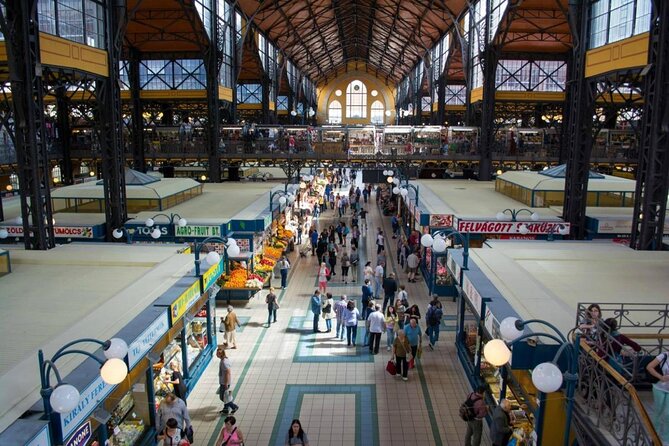
- Real market shopping context: you look at seasonal produce, spices, and everyday staples while you taste
- A well-rounded tasting lineup: lángos, strudel, Turo Rudi, cured sausages, pogácsa, pickles, and more
- Optional alcohol: a shot of homemade palinka
- Private pace: your group sets the tempo, and the experience isn’t scripted
- Helpful shopping tips: guidance for items like paprika and souvenir choices
Central Market Hall is the perfect classroom for Hungarian food
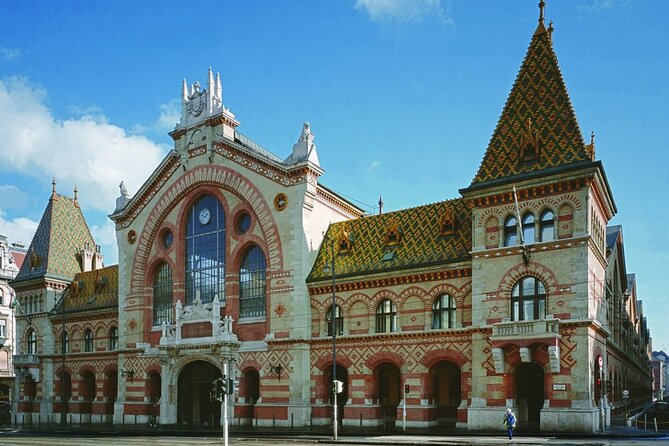
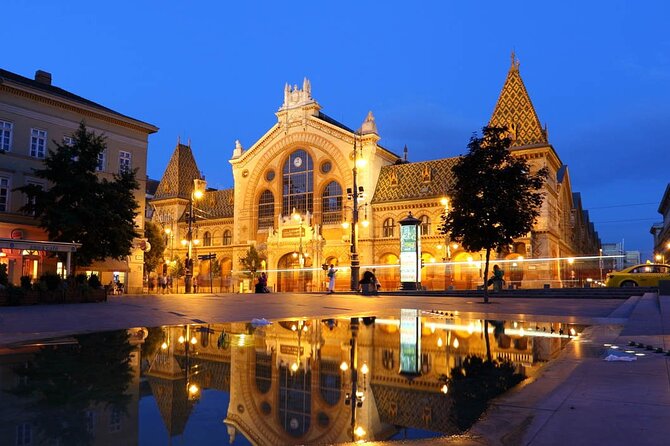
Central Market Hall is one of those places where food isn’t a side show. It’s the main event. You’ll walk through a market built for everyday shopping—produce, spices, cured meats, pastries, and the kinds of items locals grab when they’re cooking at home.
What makes this tour work so well is that it doesn’t treat tasting like a checklist. The guide helps you connect what you see to what people actually cook and eat. You’ll hear explanations for ingredients you might recognize (paprika) and others that may look strange at first glance. That matters because market food can be confusing if you’re guessing. With the guide in your corner, you’ll understand what each stall sells and why Hungarians keep coming back for it.
You also get the best kind of meal logic: tasting in the order you’ll likely encounter the foods in the hall. It turns a wandering visit into something you can mentally organize—savory first, then pastries and desserts, with optional palinka for those who want the full experience.
You can also read our reviews of more food & drink experiences in Budapest


What makes it “chef-led private” in real life
Private tours sound nice on paper. Here’s what that usually means on the ground: the guide can steer the talk toward your interests. Some people want to focus on cooking techniques and how ingredients behave in Hungarian dishes. Others care more about how food traditions grew up around the ingredients available in the region. Either way, the guide keeps the pace comfortable and answers questions along the way.
You’ll also notice the tone. Multiple guests praised the guide’s friendliness, humor, and way of mixing food with context—so it doesn’t feel like a lecture. And because this is run by a local former chef with perfect English, you can ask practical questions without worrying you’ll miss nuance.
In short: you’re not stuck following a fixed script where you’re only allowed to taste. You’re walking in a market with someone who understands what’s behind the flavors.
The 2-hour flow: how your meal happens across the market
This tour runs about 2 hours and starts at 9:00 am at Central Market Hall in Budapest. It ends back at the same meeting point, so you don’t need to figure out a second location at the end.
You’ll move at a relaxed pace and stop in different sections of the hall as you go. Along the way, the guide points out what’s worth noticing visually—seasonal produce, spices, curing styles, pastry types, and everyday staples. Tastings appear as you hit the right stalls, so it feels natural rather than random.
If you’re the kind of traveler who hates feeling rushed, the timing is a good match. Two hours is long enough to get several tastings and solid explanations, but short enough that the experience doesn’t drag.
Stop at Central Market Hall: where Hungarian shopping makes sense fast
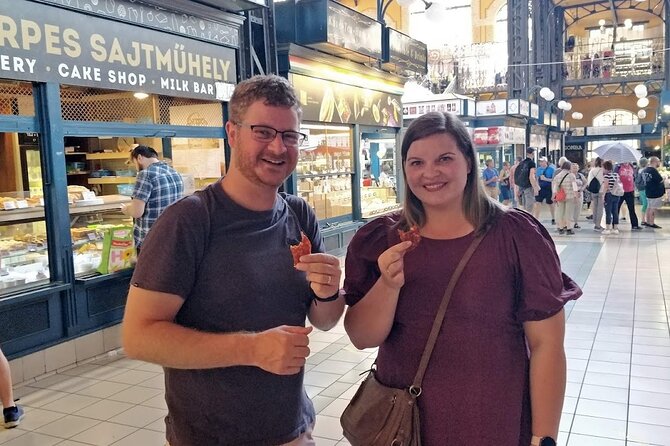
Central Market Hall is the heart of the story because you’re seeing food in the setting Hungarians shop in. That’s not just “cool ambiance.” It changes how you understand the food.
Here’s what you’ll likely notice as you walk:
- Seasonal produce and everyday staples: you get a sense of what changes through the year and what stays dependable
- Spices as a lifestyle: you’ll hear the paprika story and how it became central to Hungarian flavor
- Cured meats and pickling culture: you’ll see what Hungarians keep in rotation and why
- Pastries that feel built for sharing: baked fresh on premises for some items, not just packaged goods
You’ll also have time to ask questions about items that look unfamiliar. One theme from the experience: the guide helps you interpret labels and odd-looking foods without making you feel silly. That’s a big deal in markets, where the barrier can be language or just not knowing what you’re looking at.
Your savory tastings: the flavors you’ll remember
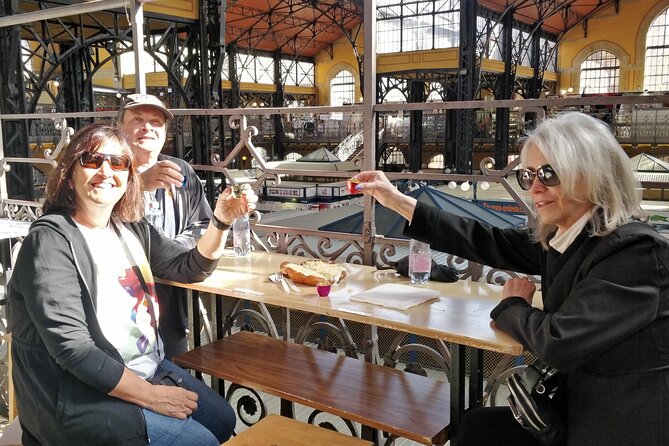
The tasting lineup is built to cover a lot of Hungarian food in a short visit. Based on what’s typically offered, you can expect these savory stops:
You can also read our reviews of more private tours in Budapest






Lángos: crispy comfort with toppings
Lángos is deep-fried bread dough topped with sour cream and cheese. It’s the kind of food that tastes like a treat even when it’s made from simple ingredients. The frying gives it that crisp exterior, while sour cream and cheese keep it rich and satisfying.
If you’ve never had it, think of it as Hungarian street-food energy—warm, salty, and perfect for eating while you walk.
Cured sausages and pickles: why preserved foods matter
You’ll sample a variety of cured sausages and an assortment of pickles. This part of the tour is more than a flavor test. It helps you understand how preservation fits into Hungarian cooking and daily life. When you can taste it next to the surrounding market stalls, it becomes easier to remember what each flavor component is doing.
Pogácsa: savory scone energy
Pogácsa are savory scones (or biscuits in US-style terms). You may try versions like cheese, potato, and pork crackling. They’re the kind of snack that makes sense in a market because they’re portable and filling.
This is also a useful tasting if you’re shopping for gifts. It gives you a reference point for what “Hungarian bakery savory” actually tastes like.
Pork crackling: the snack that explains itself
Pork crackling is exactly what it sounds like—crisped pork goodness. It’s rich and salty, and it’s one of those items that makes people understand why Hungarian snacks can be so flavorful.
One tip: take a small bite at first. It’s tasty, and then you’ll understand your tolerance for the salty, crunchy texture.
Your sweet stops: strudel, Turo Rudi, and the chocolate-cherry combo
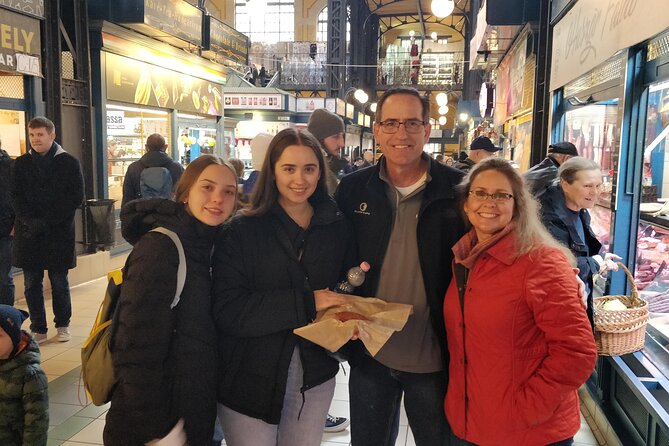
After the savory phase, the tour shifts toward desserts—so you get a full flavor arc instead of ending on just one sugar item.
Strudel with fresh phyllo layers
You’ll have strudel with a choice of filling based on what’s available. The key detail here is that the phyllo is baked fresh on premises. That makes a difference in texture. When phyllo is fresh, it’s lighter and crisp in a way that packaged versions often miss.
If you’re deciding what to eat at markets later, this tasting gives you a benchmark for what good strudel should feel like.
Turo Rudi: cottage cheese meets dark chocolate
Turo Rudi is cottage cheese with a hint of lemon, covered in dark chocolate. It sounds unusual until you taste it, and then it makes more sense. The lemon gives brightness, while the chocolate adds sweetness and bitterness.
It’s the kind of dessert that’s small enough to sample without feeling like you’ve overloaded.
Konyakmeggy: cognac and sour cherry in a dark chocolate shell
Konyakmeggy is dark chocolate filled with cognac and sour cherry. This is a more grown-up sweet—fruit-tart, with a boozy note and the deep chocolate base.
If you like desserts that aren’t just sugar, this is one of the more memorable items on the list.
Optional palinka: the one drink that ties the food together
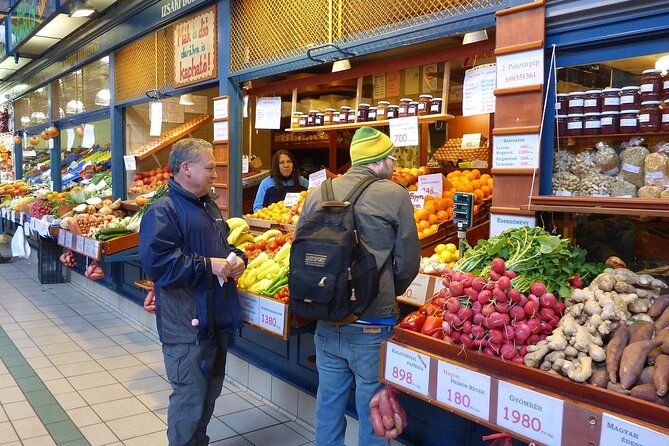
If you want the full Hungarian food-and-drink pairing, you can add a shot of the guide’s homemade palinka. It’s optional, which is smart. Palinka is strong, and it can change how you taste the last few bites if you drink too much too soon.
If you do choose it, take it slowly and keep sipping water alongside. Guests who like alcohol usually feel like this is the perfect finishing touch, because it connects to the broader ingredient story the guide is explaining.
The ingredient stories you’ll actually use later
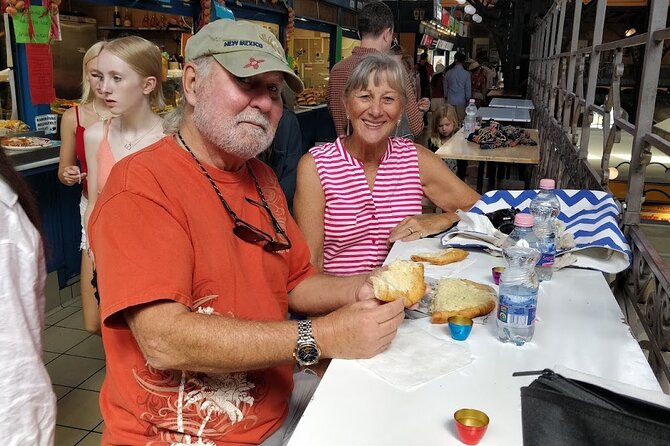
The tastings are great, but the real value is how the guide explains what’s going on in the background. You’ll hear practical stories about how ingredients got used, how dishes evolved, and how to make sense of unfamiliar items in the market.
A big theme: paprika isn’t treated like a generic spice jar. You’ll get the story of how it became central to Hungarian flavor. That turns paprika from a souvenir powder into something with context.
You’ll also learn how to spot quality in the market environment—how to ask questions, what to look for, and what makes one version different from another. Even if you’re not buying anything, that kind of guidance helps you feel confident when you browse on your own later.
Souvenir-smart shopping: paprika help and non-food items too
One of the nicest side effects of a guided market tour is that it stops you from wasting time and money. People often come to this hall to buy gifts, and having someone point you toward better options saves energy.
You may get help buying paprika to take home, including advice on the many ways paprika is sold. That’s especially useful because it can be hard to tell differences quickly when you’re staring at bags and jars without context.
Also, markets aren’t just food. At this kind of stop, you might hear about other items sold there such as porcelain and embroidery, since the hall covers more than groceries. If you like cultural shopping beyond edibles, that can add extra interest without turning the whole tour into a craft-buying spree.
Timing and logistics that affect comfort
Because the tour meets at Central Market Hall at 9:00 am, you’ll start your day in a spot that’s already active. The tour ends back where it started, so you can plan the rest of your sightseeing without detours.
Bring comfortable shoes. The hall is a walking experience, and you’ll be moving between sections while stopping for tastings. Also, you’ll want to plan how you’ll get there since transportation isn’t included.
Good to know: bottled water is included, and service animals are allowed. Most travelers can participate, so it’s a reasonable pick even for couples or small groups who want something more personal than a big group tour.
Is $78.60 a good value? Here’s how I’d judge it
At $78.60 per person for around 2 hours, this is not a budget snack-and-walk. But it often works out as good value if you compare it to:
- paying market prices for multiple tastings on your own
- booking a private guide for food explanations in a specific location
- getting English support plus drink options (including optional palinka)
You’re also getting bottled water, and the guide is a former chef who can explain what you’re tasting—language and context matter in markets. If you come hungry and curious, the price can feel fair because you leave with both food you enjoyed and a clearer sense of what to buy and what to skip.
If you only want one or two items, you might prefer casual self-guided browsing. But if you want a structured tasting experience with a knowledgeable local guide and a comfortable pace, the cost makes more sense.
Who this tour suits best
This is a strong fit if you:
- want a food-focused way to understand Budapest without a long walking day
- like tastings that cover both savory and sweet
- prefer a private format where you can ask questions and set the pace
- enjoy shopping with practical guidance, especially for ingredients like paprika
It’s also great for first-timers in Central Market Hall. If you’ve already been to the market and just feel lost, this can help you get your bearings fast by explaining what you’re seeing and tasting.
Should you book this tour?
I’d book it if you want a guided market experience that’s short, friendly, and actually useful. The best reason: you’re not just eating—you’re learning how Hungarian ingredients and flavors connect to daily life. The taste lineup covers classics like lángos, fresh strudel, Turo Rudi, cured sausages, pickles, and more, so you get a real snapshot of the country’s market food.
Skip it only if you’re trying to do the hall on a strict budget, or if you’d rather browse completely on your own with no structured tastings. Otherwise, this is an excellent way to turn Central Market Hall from a place you pass through into one you understand.
FAQ
What is the tour duration?
It’s about 2 hours.
How much does the Budapest Great Market Hall Chef-Led Private Tasting Tour cost?
The price is $78.60 per person.
Where does the tour start and end?
The tour starts at Central Market Hall, Budapest, 1093 Hungary, and it ends back at the same meeting point.
What tastings are included?
Food tastings are included. Typical options include lángos, strudel, Turo Rudi, Konyakmeggy, cured sausages, pogácsa, pork crackling, and an assortment of pickles.
Is alcohol included?
A shot of the guide’s homemade palinka is available and listed as optional. Bottled water is included.
What’s the language of the tour?
The tour is offered in English.
Is it a private tour?
Yes. Only your group participates.
What is included besides food?
Bottled water and food tasting are included, along with a local former chef with perfect English as your guide.
Can I cancel for free?
Yes. Free cancellation is available if you cancel up to 24 hours in advance for a full refund.