REVIEW · BUDAPEST
Budapest: Jewish History Guided Walking Tour with Historian
Book on GetYourGuide →Operated by Budapest Explorers · Bookable on GetYourGuide
Jewish Budapest has layers, and you’ll walk them. This small-group route through Budapest’s 7th district is led by a historian, with stops that connect centuries of Jewish heritage to the most painful moments of the 20th century. Guides like Barbara, Andrea, András, Noémi, and Gábor are praised for turning street corners into stories you can actually remember.
I especially like the way the tour gives you two treats at once: a real taste break with Flódni (served with coffee or a soft drink) and a guided walk that doesn’t skip the hard parts. The memorial scenes tied to Raoul Wallenberg and Carl Lutz, plus the focus on people who saved tens of thousands in winter 1944/45, make the history feel grounded, not just displayed.
One possible drawback: this tour shows you the synagogues from the outside only—so plan on photos and context, not indoor visits.
In This Review
- Key Highlights Worth Marking in Your Head
- Getting Started at Kempinski Corvinus: Easy to Find, Quick to Focus
- The 7th District Jewish Quarter Walk: Where Centuries Collide on Purpose
- Synagogue Exteriors Only: Why That Still Works (and When It Won’t)
- Flódni and Coffee: A Break That Feels Like Part of the Story
- WWII Rescuer Memorials: Raoul Wallenberg and Carl Lutz in Context
- Gozsdu Passage, Street Art, and Elizabeth Town Secrets
- Price and Group Size: How $63 Becomes Value, Not Just Cost
- Who This Tour Suits Best (and Who Might Want a Different Option)
- Should You Book This Budapest Jewish History Walking Tour?
- FAQ
- FAQ
- How long is the walking tour?
- Where does the tour start?
- Is there synagogue entry included?
- What food is included?
- What group size should I expect?
- What language is the tour offered in?
- Does the tour run in bad weather?
- What is the cancellation policy?
Key Highlights Worth Marking in Your Head
- Flódni (a local Jewish cake) plus coffee or a soft drink, served at a neighborhood cafe
- Dohány Street Synagogue exterior photos, with the right historical framing
- Raoul Wallenberg and Carl Lutz memorial stops tied to the winter of 1944/45
- Otto Wagner’s Rumbach Street Synagogue from the outside (1872), plus neighborhood storytelling
- Street art and Elizabeth Town / Gozsdu Passage flavor, with practical tips for later exploring
Getting Started at Kempinski Corvinus: Easy to Find, Quick to Focus
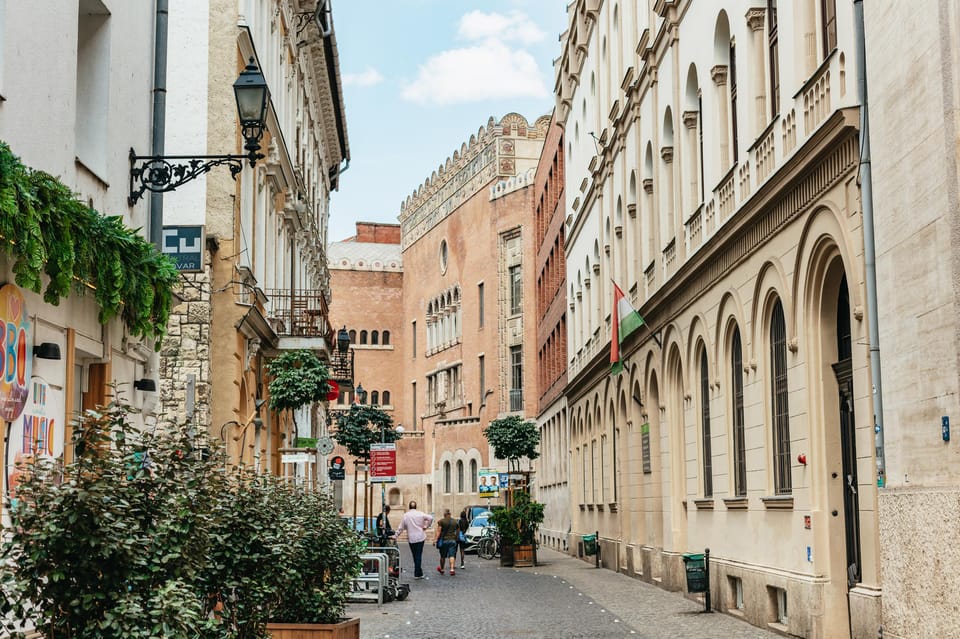
You meet at Kempinski Hotel Corvinus Budapest, on Erzsébet Square, facing the Ferris wheel. The location is convenient because it anchors the tour in the middle of where most visitors already pass through, so you’re not wasting your first 20 minutes hunting down a side street.
Getting there is straightforward with the subway. You can use M1, M2, or M3, and get off at Deák Ferenc tér, then walk to the hotel. Even if you’re jet-lagged, this start point is simple enough that you’ll be concentrating on the walk instead of on your phone map.
One more thing I like for tours like this: the group is capped at 10 participants. That matters because a historian guide can pace the story without getting lost in a crowd, and it gives you a real chance to ask questions while you’re standing at the exact spot where the story happened.
You can also read our reviews of more walking tours in Budapest


The 7th District Jewish Quarter Walk: Where Centuries Collide on Purpose
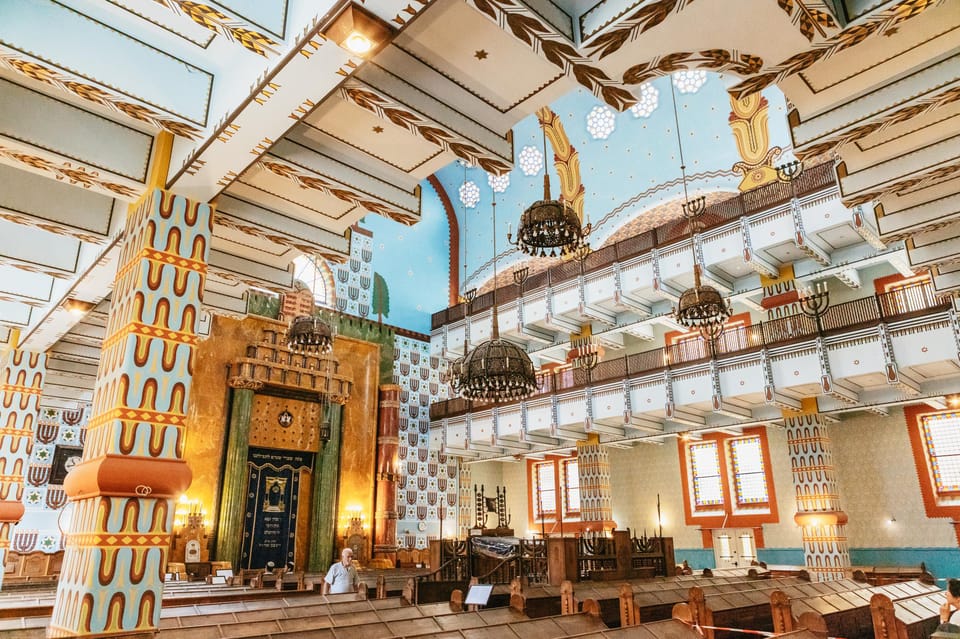
Once you start, you’re in Budapest’s Jewish Quarter, the 7th district, where Jewish culture has been present for over 200 years and where there’s still a large and active Jewish community today. The tour isn’t just sightseeing. It’s meant to help you connect what you see now—synagogues, kosher shops and restaurants, monuments—with the layers of the past that produced them.
As you walk, you’ll cover the streets tied to the former ghetto area and learn how the neighborhood functioned as both community and target. You’ll see how the mix of institutions still shapes the feel of the place: synagogues nearby, memorials that force you to slow down, and everyday businesses that show the community didn’t vanish.
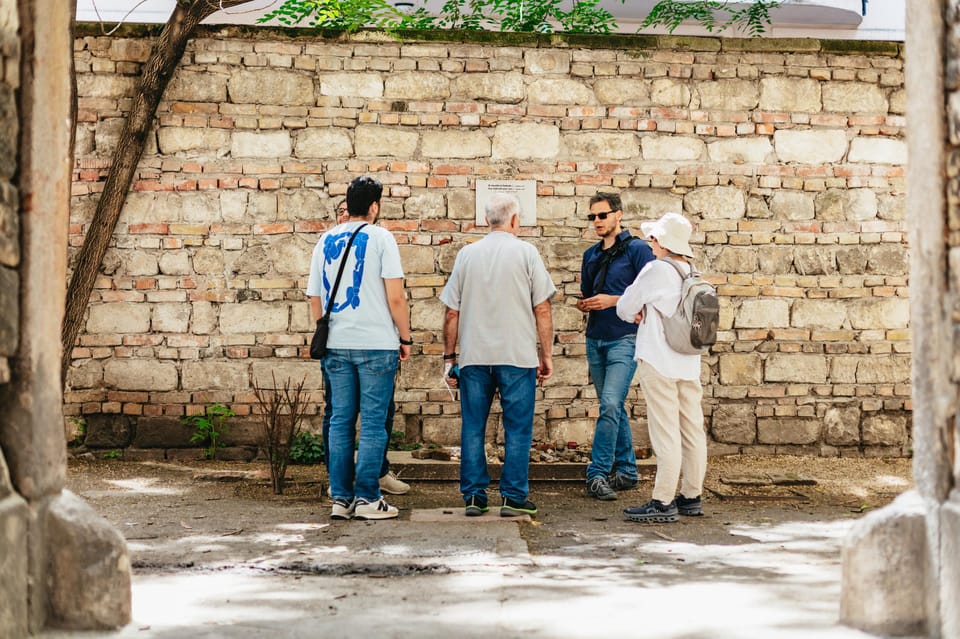
A special moment is spotting surviving remnants linked to the ghetto era. One guide approach highlighted in the experience is pointing out a segment of the original ghetto wall, then explaining how short that sealed-in period was—an uncomfortable detail that makes the scale of history hit harder.
If you’re coming from North America and you feel like you don’t know Hungary’s Jewish story well, this is the kind of orientation that helps your other Budapest stops make sense. It sets context for later sites around the city, so you don’t just read plaques—you understand why they exist.
Synagogue Exteriors Only: Why That Still Works (and When It Won’t)
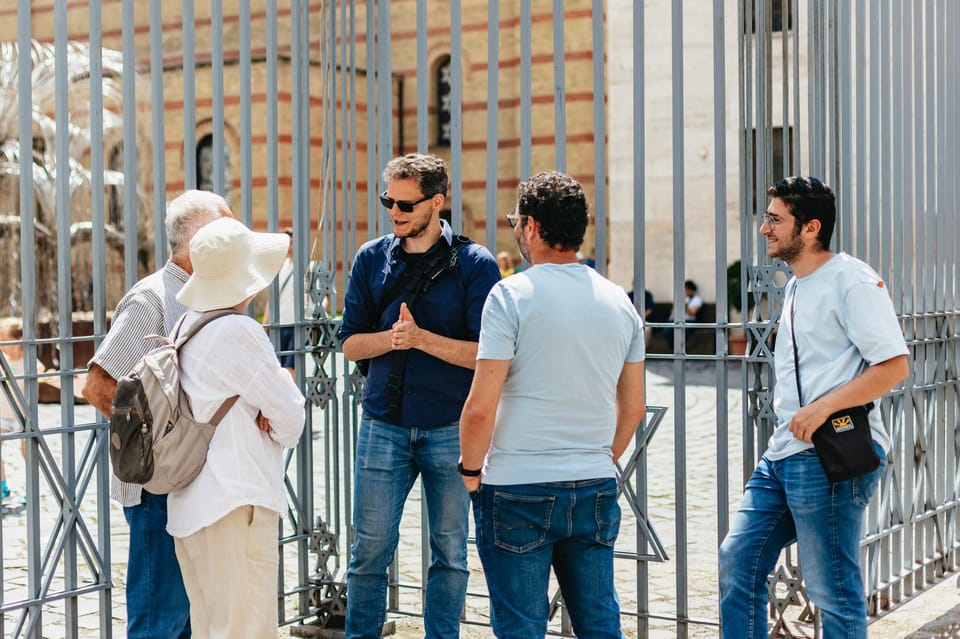
The tour focuses on the three main synagogues in the area, and the big promise is you’ll see them from the outside. That includes the Kazinczy Street Orthodox Synagogue, the Neolog Rumbach Street Synagogue, and the showpiece: the Dohány Street Synagogue.
From an approach point of view, I think this choice is smart for many visitors. When a historian narrates the symbolism and the historical role of these buildings, the exterior views are often enough to let you grasp meaning quickly—especially in a compact 2.5-hour walk. You get the dramatic visuals, then the why behind them.
That said, you should go in knowing what you’re not getting. Entry to the synagogues isn’t included, and the visits are explicitly outside only. If you want to see interiors, details inside sanctuaries, or you’re collecting architecture sketches floor-to-roof, this may feel limiting.
Still, the Dohány Street Synagogue exterior is powerful even without going inside. It’s framed in the story as one of the most important synagogues in Europe, and you’ll also learn what makes the building architecturally and historically significant—especially when the guide connects it to the community that built and maintained it through major upheavals.
Flódni and Coffee: A Break That Feels Like Part of the Story
About 15 minutes is set aside for a coffee-and-dessert stop at a neighborhood cafe. You’ll try a local Jewish cake called Flódni, served with coffee or a soft drink.
This is the kind of inclusion I appreciate because it’s not just a snack. Flódni signals that Jewish life here isn’t trapped in history books; it’s also lived through food, recipes, and everyday routines. In a walking tour that covers war, deportation, and moral heroism, a sweet break can feel strange at first—then you realize it’s exactly the point.
Practical note: because it’s a short break, you’ll want to keep your expectations realistic. This isn’t a long sit-down meal. It’s enough time to recharge, taste something local, and get back to walking while the story is still fresh.
Also, this stop helps your pacing. Many city walks feel like nonstop information until you hit a wall. Here, the dessert/caffeine break gives your brain a reset, which is handy when the tour is carrying heavy material.
WWII Rescuer Memorials: Raoul Wallenberg and Carl Lutz in Context
The tour pays close attention to the people who saved Jewish lives during the darkest period of the war—especially winter 1944/45. You’ll learn about individuals who helped protect tens of thousands of people during that time, with specific memorial stops for Raoul Wallenberg and Carl Lutz.
What makes these memorial moments more than a name-drop is the framing: the guide connects the heroism to the immediate urgency of the winter period, not just the end result. You’ll also hear that both Wallenberg and Lutz are among those honored with the title Righteous Among the Nations, a detail that adds weight to what you’re seeing in the street.
If your Budapest trip includes other WWII-era stops, this is the connective tissue. A lot of memorials leave you with emotion and facts but not always context. Here, the historian’s job is to keep the story coherent—who did what, when it mattered, and why the community survived long enough for postwar recovery.
One more value point: because you’re walking, these moments hit differently. You’re not sitting in a museum all day; you’re moving through the neighborhood where memory is still present. The memorials function like punctuation marks, telling you where to slow down and reflect.
You can also read our reviews of more guided tours in Budapest






Gozsdu Passage, Street Art, and Elizabeth Town Secrets
After the solemn sections, the tour gives you contrast through the neighborhood’s modern identity. You’ll pass Gozsdu Passage, which is described as lively, and you’ll hear local tips tied to the area’s nightlife reputation—especially the well-known ruin pubs that many visitors associate with Budapest after dark.
Then the guide shifts to the street scene: examples of street art show up as part of the walk. The idea isn’t just to point at murals; it’s to help you read the city visually and understand how Budapest layers self-expression onto old neighborhoods.
You’ll also get a sense of the broader area sometimes referred to as Elizabeth Town, including practical “secrets” for what to look for when you wander on your own. If you’re the type who likes to walk first, plan later, this kind of hint is gold. It turns your free evening into something with direction.
And because this tour is compact, it doesn’t drag you off into a full nightlife program. Instead, it plants seeds: where to go, what to notice, and which streets feel more alive after sunset.
Price and Group Size: How $63 Becomes Value, Not Just Cost
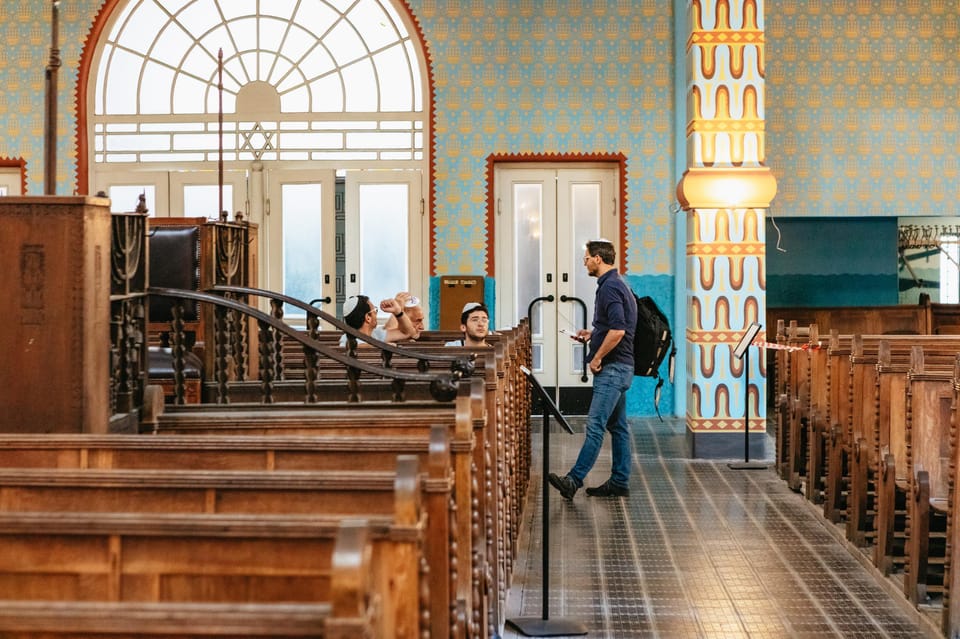
At $63 per person for about 2.5 hours, the price is fairly reasonable given what’s included. You’re not just paying for someone to walk beside you. You’re getting a historian guide plus a guided walking route through the Jewish Quarter, and you get a small food component: Flódni with coffee or a soft drink.
The small group size—limited to 10—is part of the value math. In a big crowd, guides often have to talk in one direction and ignore questions. Here, the format makes it easier to follow the story closely, and it’s easier to ask something when it pops into your mind.
Also, because synagogue interiors aren’t included, you’re not paying extra for tickets. That can be a benefit if you prefer the guided context plus quick outdoor landmark stops rather than long entry lines.
So the real question isn’t whether $63 is low. It’s whether you want a guided “story map” of Budapest’s Jewish Quarter in a short time. If yes, this price feels like a fair trade.
Who This Tour Suits Best (and Who Might Want a Different Option)
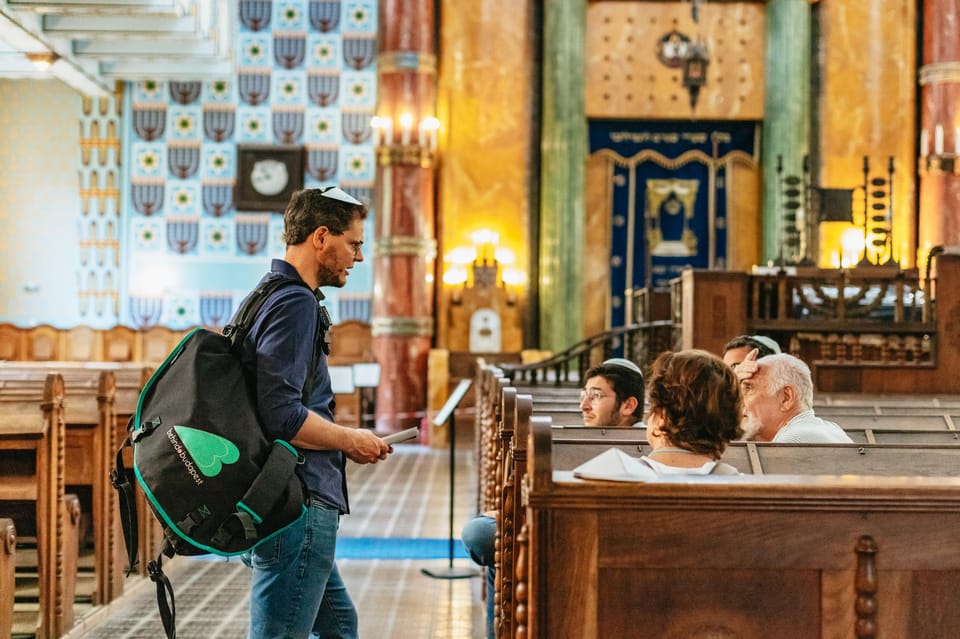
This tour fits best if you like walking tours that feel like a lecture with breaks—because you’ll get enough history to change how you see the city. It’s also a good match if you’re curious about Hungary broadly, not just Jewish sites. Several guide styles highlighted in the experience connect Budapest’s Jewish story to wider Hungarian history, which helps you understand how the political climate shaped people’s lives.
It’s also a strong choice for anyone who wants WWII context without losing sight of daily community life. You cover memorials, but you also see how the neighborhood functions now through shops and restaurants nearby.
If you strongly prefer religious or architectural interiors, you should know the limitation up front: synagogues are outside only, with no entry included. You may end up wanting a second, longer option later to go inside.
Finally, weather matters. The tour starts in all weather conditions, so dress accordingly. In other words: bring layers, rain gear if needed, and comfortable shoes. If you’re cranky on your feet, history will not fix that for you.
Should You Book This Budapest Jewish History Walking Tour?
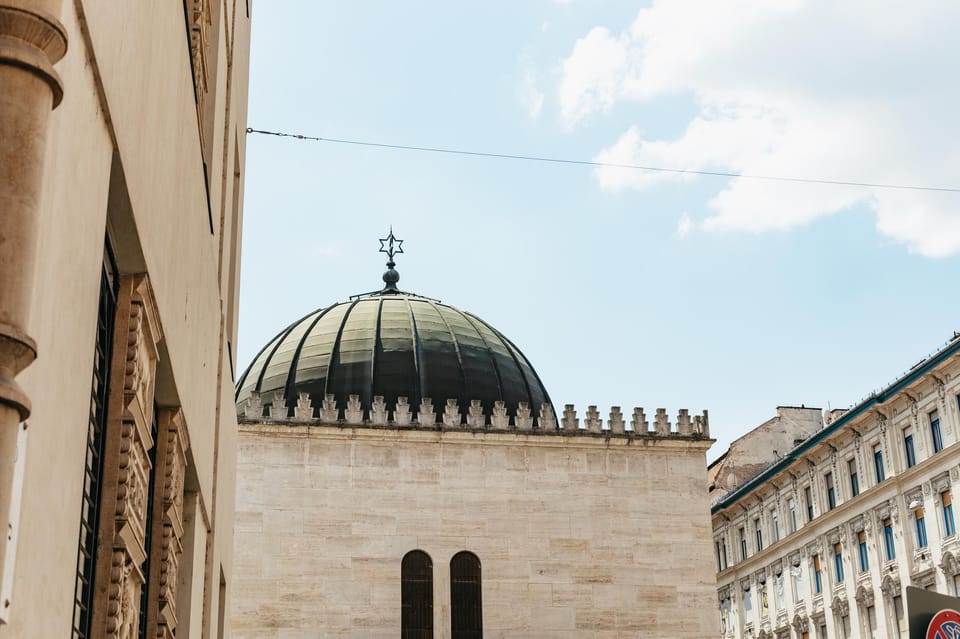
Book it if you want a focused, 2.5-hour introduction to Budapest’s Jewish Quarter with a historian guiding you street by street, including the key synagogues’ exteriors and the WWII rescuer memorials of Raoul Wallenberg and Carl Lutz. The Flódni stop is a nice bonus that keeps the tour from feeling like nothing but grief.
Skip it or pair it with another option if you’re hoping to tour synagogue interiors. This is a context-first outdoor walk, not an inside-focused building visit.
FAQ
FAQ
How long is the walking tour?
The tour lasts about 2.5 hours.
Where does the tour start?
Meet your guide in front of Kempinski Hotel Corvinus Budapest, facing the Ferris wheel on Erzsébet Square.
Is there synagogue entry included?
No. The tour includes outside visits only, and entry to the synagogues is not included.
What food is included?
You’ll stop for coffee (or a soft drink) and a local Jewish cake called Flódni.
What group size should I expect?
It’s a small group limited to 10 participants.
What language is the tour offered in?
The tour is guided in English by a live historian.
Does the tour run in bad weather?
Yes. The tour starts in all weather conditions, so dress for the conditions.
What is the cancellation policy?
You can cancel up to 24 hours in advance for a full refund.