REVIEW · BUDAPEST
Gems of the Budapest Castle District Walking Tour
Book on Viator →Bookable on Viator
Budapest’s Castle Hill tells stories on foot. This walk strings together iconic sights and the symbols behind them, with Antel and his crisp English making the history feel usable, not dusty. I like how the stops are mostly outdoors (so you can keep moving), and I also liked the way the guide links monuments to what really mattered to Hungarians.
The best part is the mix: Matthias Church, Fisherman’s Bastion, and the quieter corners of the castle district all show up in one efficient loop. You’ll also get built-in pauses for photos, especially at the viewpoints. One real consideration: it’s still a lot of walking on hilly, sometimes uneven ground, so wear shoes with real grip.
In This Review
- Key things to look for on this Budapest Castle District walk
- Why this 2-hour Castle District walk is such good value
- Start at the Holy Trinity Statue: symbols before sightseeing
- Matthias Church and Fisherman’s Bastion: power plus panorama
- Pope Innocent XI, the National Archives, and WWII scars you can still read
- Setany promenade and the Labyrinth dungeon: siege-era stories and a Dracula thread
- Independence War symbolism, Szent György Street, and the funicular moment
- Turul, King Matthias fountain, and the Lions Court facade stories
- Prince Eugene to S. Maria Mater Dei: the big liberator and the bridge connections
- Castle Garden and Várkert Bazaar: unwind, then end at the bazaar’s doorstep
- The pacing and group size: what it feels like in real life
- Who should book this tour (and who might skip it)
- Should you book the Gems of the Budapest Castle District Walking Tour?
- FAQ
- How long is the Gems of the Budapest Castle District Walking Tour?
- Where does the tour start and end?
- What time does it begin?
- How much does the tour cost?
- Is the tour in English?
- Do I need admission tickets for the stops?
- Is there a mobile ticket?
- Is good weather required?
Key things to look for on this Budapest Castle District walk
- A guide who reads the city like a storybook (Antel’s English and delivery get special credit)
- Photo time where it counts, not just a quick stop and go
- WWII and revolution themes threaded through the statues, so things make more sense
- Big-name landmarks plus practical wayfinding clues, so you can explore after
- A manageable length (about 2 hours 10 minutes) that fits a half-day schedule
Why this 2-hour Castle District walk is such good value
This tour is priced at $3.61 per person, which is honestly rare for a guided, multi-stop walking route. The big reason it feels like a deal is that the sights on the route are presented with free admission ticket access (most stops are exterior or public areas). You’re paying mainly for the guide’s explanations and the route that gets you from viewpoint to viewpoint without wasting time.
The duration matters too. At about 2 hours 10 minutes, you’ll cover a lot of ground across Buda Castle Hill without turning the day into a marathon. The pace is also set for learning: short explanations, quick transitions, then time to look up close.
With a maximum of 45 travelers, you get the comfort of a group experience without feeling swallowed by a crowd. And since it’s offered in English with a live guide, this is a straightforward choice if you want the context without doing homework first.
You can also read our reviews of more walking tours in Budapest



Start at the Holy Trinity Statue: symbols before sightseeing
Your walk kicks off at the Holy Trinity Statue on Szentháromság u. This first stop isn’t about a view. It’s about reading the column.
You’ll hear the background behind the construction of the Holy Trinity column and what the figures are meant to symbolize. That early focus is smart. It trains your eyes for the rest of the day, because many of the later statues and churches are basically public storytelling in stone.
Practical tip: use this moment to get your bearings. If you know what to look for—figures, allegories, and how monuments tie to Hungarian identity—the rest of the walk feels smoother.
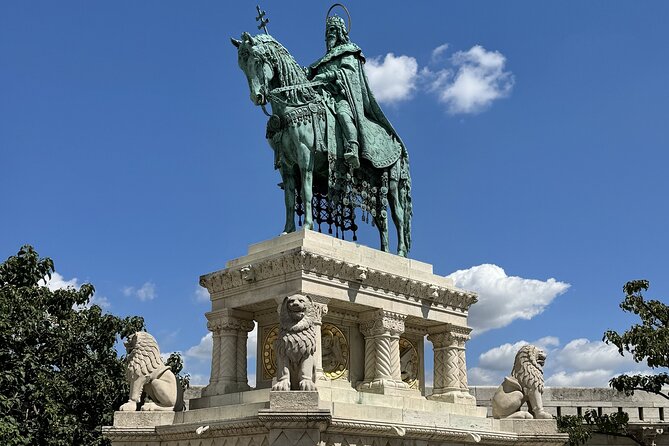
Matthias Church and Fisherman’s Bastion: power plus panorama
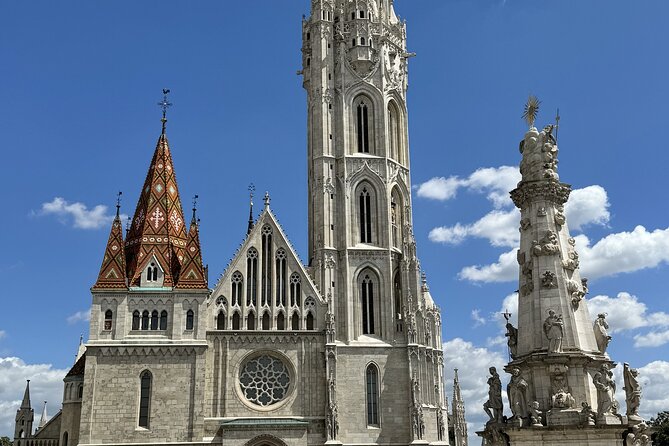
Next up is Matthias Church, where the tour gives you the foundation story and points out architectural details. Even if you’ve seen photos, you’ll notice more when someone points to the specific features the building is known for.
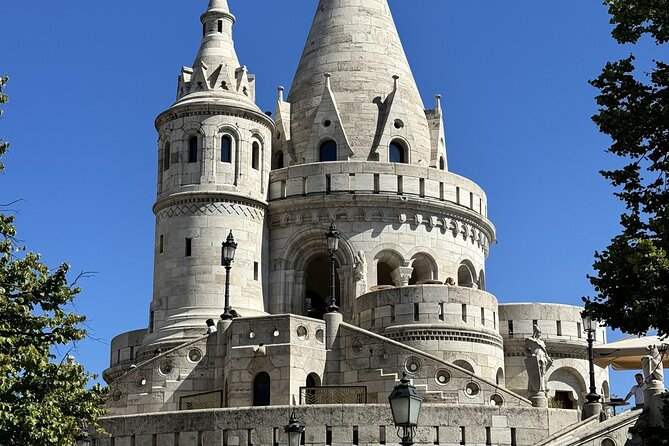
Then you reach Fisherman’s Bastion, and this is where Budapest turns dramatic. The tour focuses on:
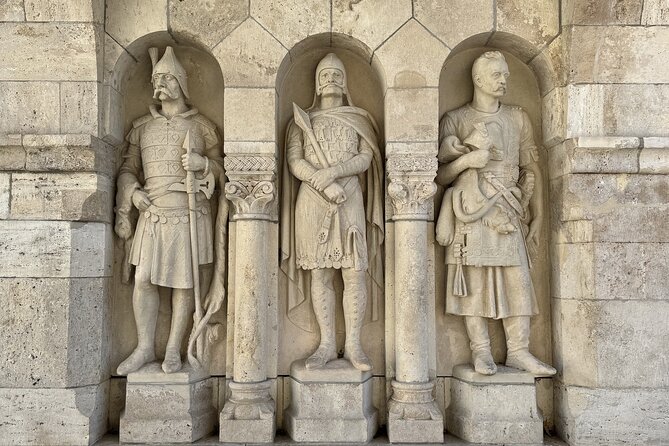
- interesting statues along the way
- the meaning of the double cross and how it connects to Hungarians
- intriguing legends attached to the site
- and, yes, that big panoramic look back toward Pest
You’ll get a short break for photos, which is exactly what you want on a viewpoint. Don’t rush it. Take a few frames from the same spot too—castle districts are full of tiny angles, and small shifts can change what you’re seeing.
If you’re the type who likes to understand before you photograph, this is a strong section. If you’re only in it for postcard views, you still won’t feel shortchanged.
Pope Innocent XI, the National Archives, and WWII scars you can still read
This stretch moves from the churchyard into the dense symbolism zone.
You’ll stop at the Statue of Pope Innocent XI, with connections to Pope Sylvester II and the coronation statue of King Matthias. The guide also notes it as the oldest building of Hungary, which adds a clear sense of “you are standing in time.”
Then comes the National Archives of Hungary, where the tour points out architectural wonders you might miss if you walked past. You’ll also hear about the Vienna gate, and the Golden signatures by Uri street—details that sound small until someone explains what they’re doing there. Nearby statues also come with their own tales, so you keep getting context instead of just looking at stone.
The mood turns more reflective at the Church of Saint Mary Magdalene, especially because the tour connects a monument to Hungarian coronation tradition with visible reminders of WWII ruins. This is a good reminder that the castle district isn’t only about medieval pride. It also carries modern scars.
Setany promenade and the Labyrinth dungeon: siege-era stories and a Dracula thread
Now the route leans into 20th-century survival and siege memories.
At Arpad Toth Promenade (Setany), you’ll learn about the first flag after WWII, plus a row of cannons. There’s also a view of the Buda hills, and you’ll see the statue of Szekely Knight. The guide ties this section to a brief overview of WWII and the siege of Budapest, so the objects stop being random décor and start functioning like history markers.
The pace stays lively as you head to Statue of Mounted Andras Hadik, described as the most famous Hungarian knight. The tour also brings in local trends connected to the area and the mention of the oldest Hungarian confectionery, which is a fun local hook if you like following food stories through a city.
Then you reach the Labyrinth, explained as a natural cave used as a dungeon. This stop is where the tour turns slightly theatrical: you get the Dracula/Vlad the Impaler link that often comes up with underground caves in this region. You don’t need to be a horror fan to enjoy it, though. It’s more about how stories travel and how place names and legends get attached.
One consideration: caves and dungeons are usually not built for lingering. Take photos if you want, but also listen—this is one of those stops where the explanation helps you “see” what you’re standing above.






Independence War symbolism, Szent György Street, and the funicular moment
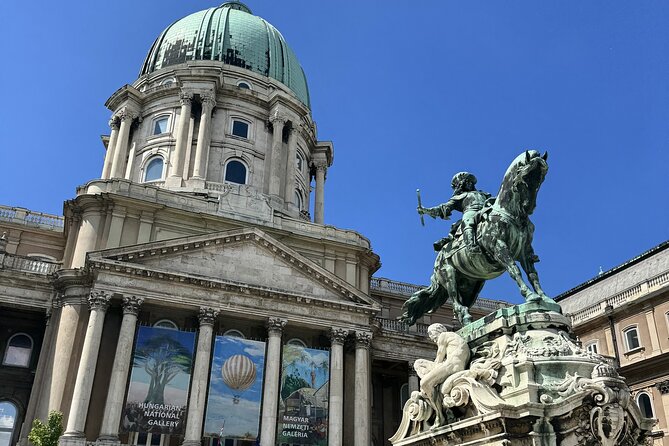
The next stop is the Statue of the Independence War, with background connected to the Hungarian revolution of 1848. The guide ties together symbolisms in a way that makes the statue feel like a map of ideas, not just a monument.
You’ll also hear about the House of Houdini at this point on the route. It’s an odd little bonus, and those surprises are often what you remember on walking tours.
Then comes Szent György Street, where the tour points out that it’s home to offices of the president and prime ministers. You’ll also see ruins of medieval castles nearby and get secret-story style context to tie what you see to what shaped power in Buda over centuries. Even when you can’t confirm every detail, the overall effect is a sharper understanding of why this hill matters.
Finally, you take in the Buda Hill Funicular area. The tour frames it as the second oldest funicular and notes the zero kilometer stone. It also connects the section to the oldest bridge of Hungary, which is a nice way to connect “you are standing here” to “this city was built to move people across water.”
Turul, King Matthias fountain, and the Lions Court facade stories
From the funicular zone, the tour moves into more national-symbol territory.
At the Turul Bird Statue, you’ll hear about the national bird of Hungary and the story behind the naming of the Hungarians. This is one of those sites where a short explanation can change your entire reading of the skyline. You’ll look at the bird differently after you understand why it appears where it does.
Then you reach the Fountain of King Matthias, which is described as the prettiest fountain of Budapest, plus a romantic-tragedy angle tied to the story behind it. If you like monuments with characters—yes, even tragic ones—this stop hits the right note.
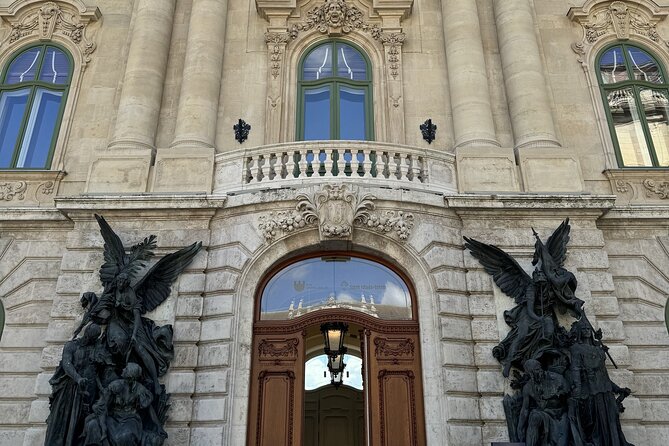
Next is the Lions Court – Buda Castle. The guide talks about mythical statues on the facade and explains what they represent, plus shares local trends tied to the courtyard. It’s not only about looking up at stonework; it’s about understanding why certain images get repeated in different parts of the castle district.
Right after, you pass the Royal Riding Hall. The tour focuses on the royal stable and includes interesting local trends. This is a “small but meaningful” stop. You don’t need to love horses to enjoy it—you just need curiosity about how royal life left physical traces.
Prince Eugene to S. Maria Mater Dei: the big liberator and the bridge connections
The tour then lands on Prince Eugene of Savoy’s Equestrian Statue. It’s described as the biggest statue in the castle district, and the explanation centers on him as a liberator of the Hungarians from the Ottomans. You’ll also get fun facts that make the statue feel less like a textbook image and more like a character in Budapest’s story.
From there, you visit S. Maria Mater Dei, with the statue of the Virgin Mother Mary and baby Jesus. The guide connects this stop to how bridges of Budapest relate to Hungarian monarchs. That bridge link is a clever way to keep the walk from becoming “one hill at a time.” It gently nudges you to think about the city as one system, not separate neighborhoods.
Castle Garden and Várkert Bazaar: unwind, then end at the bazaar’s doorstep
Near the end, you shift from statues and monuments to spaces with breathing room.
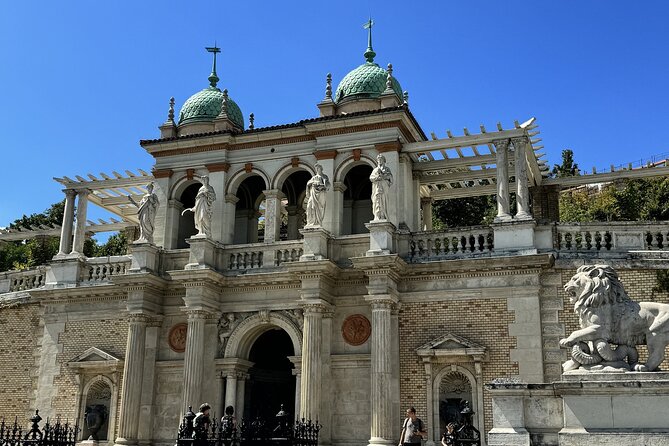
At Castle Garden, you’ll hear about the garden layout, the spiral staircase tower, and the Triton fountain. This is a nice palate cleanser. After the concentration of war stories and royal symbols, the garden section lets you reset and just enjoy the hill.
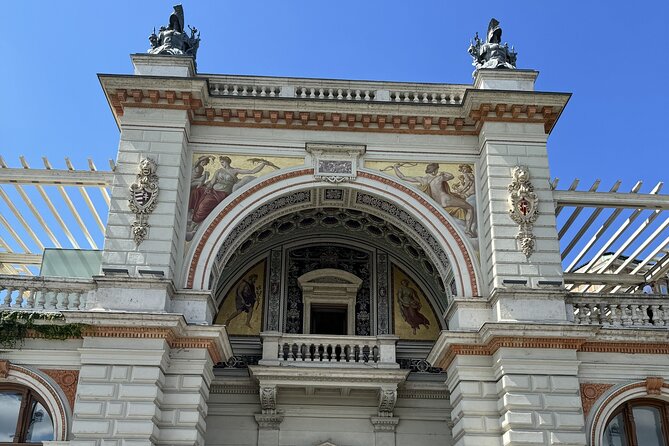
Then you reach the final area: Castle Garden Bazaar at the foot of the castle hill by Várkert Bazaar. The tour points out the architecture of the Várkert Bazar and the statues featured on the facade of the infrastructure. It’s a fitting ending. You go from high dramatic stone to a more open, elegant area where you can keep exploring on your own right after the walk.
If you want an easy next step, this location is a good place to transition from guided context to independent wandering—especially if your goal is to learn enough to navigate the district confidently.
The pacing and group size: what it feels like in real life
This is a short day walk, not a multi-hour march with no breaks. The tour includes frequent short stops, with typical time around 5 minutes at many sights, a bigger chunk for Fisherman’s Bastion and the Labyrinth, and a total walk time of roughly 2 hours 10 minutes.
That structure is ideal when your attention span wants variety. You’ll get enough time to look, enough time to take a photo, and enough time to understand why the place matters.
Group size also helps. With a cap of 45 travelers, it can still be a lively group, but it shouldn’t turn chaotic. You’ll be able to hear the guide and keep moving without constantly getting stuck behind slow walkers.
Who should book this tour (and who might skip it)
This one is a great fit if:
- You want a guided overview of the Castle District without spending all day
- You care about the symbolism behind statues and church features
- You like photo stops with a little structure
- You want an English guide with strong presentation (the name Antel comes up with very consistent praise)
You might skip or pair this with slower independent time if:
- You hate steep walking or uneven steps
- You prefer mostly indoor stops (this route is mainly outdoor sight stops and viewpoints)
Should you book the Gems of the Budapest Castle District Walking Tour?
Yes—if you’re doing Budapest for the first time and want to understand the castle district fast, this is a smart buy. The combination of a very low price, free admission ticket access at stops, and a guide whose English and humor clearly land well makes it one of the better-value ways to get context without turning the day into homework.
My deciding factor for you: if you want to walk from landmark to landmark and still know what you’re looking at—especially around wartime and revolution symbolism—this route is built for that.
If you go, bring comfortable shoes, expect stairs, and give yourself permission to take the photos when the guide pauses the group. Those viewpoint breaks are where the day pays you back.
FAQ
How long is the Gems of the Budapest Castle District Walking Tour?
It runs about 2 hours 10 minutes (approximately).
Where does the tour start and end?
It starts at the Holy Trinity Statue (Szentháromság u., 1014 Hungary) and ends at Castle Garden Bazaar near Várkert Bazar (Ybl Miklós tér 2-6, 1013 Hungary).
What time does it begin?
The start time listed is 3:00 pm.
How much does the tour cost?
The price is $3.61 per person.
Is the tour in English?
Yes, it is offered in English.
Do I need admission tickets for the stops?
The stops are listed as admission ticket free.
Is there a mobile ticket?
Yes, it includes a mobile ticket.
Is good weather required?
Yes. The experience requires good weather. If it’s canceled due to poor weather, you’ll be offered a different date or a full refund.