Budapest’s Jewish story hits hard and makes sense. This small-group Jewish Heritage tour is led by licensed local guide Edith, and it blends major sites with real talk about what Jewish life means in Hungary today.
I especially like the hands-on stop at Dohány Street Synagogue, including the synagogue building plus the Raoul Wallenberg Memorial Garden and the Jewish Cemetery. I also like that Edith doesn’t treat this as only past-tense history; the tour pushes discussion, so you leave with context, not just facts.
One thing to watch: the Dohány Street Synagogue entrance fee (€26 per person) is not included, so you’ll want to budget that extra cost upfront.
In This Review
- Key highlights you’ll care about
- Jewish Heritage in Budapest: why this 3-hour plan works
- Dohány Street Synagogue: the emotional anchor of the tour
- The Raoul Wallenberg Memorial Garden and Jewish Cemetery: what to look for
- Shoes on the Danube Bank: the short stop that lingers
- Memorial to the Victims of the German Invasion: history with an argument attached
- Group size, walking pace, and Edith’s impact
- Price and tickets: how to budget the real cost
- What this tour teaches you, beyond the monuments
- Who should book this Jewish Heritage tour
- Should you book? My call
- FAQ
- What’s the duration of the Jewish Heritage full tour?
- Where does the tour start and end?
- Is the Dohány Street Synagogue entrance fee included?
- What are the main stops on the tour?
- Is this tour offered in English?
- Do I get a mobile ticket?
- How large is the group?
- Is transportation included?
- FAQ
- What’s the cancellation policy if plans change?
- What if the weather is bad?
Key highlights you’ll care about
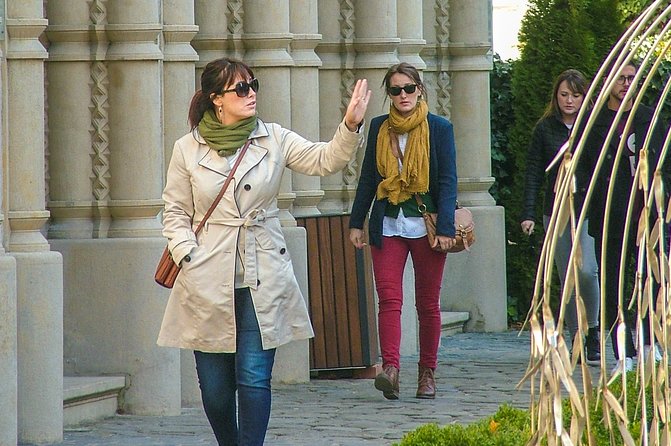
- Edith’s guiding style: personal, clear, and built for questions as you walk.
- Dohány Street Synagogue visit: second-largest in the world, plus the cemetery grounds.
- Raoul Wallenberg Memorial Garden: an emotional, reflective pause inside the same complex.
- Shoes on the Danube Bank: a short stop with a powerful memorial message.
- A controversial memorial stop: context and the ongoing public debate around it.
- A timed tour that leaves room: about 3 hours total, so you can keep exploring after.
Jewish Heritage in Budapest: why this 3-hour plan works
If you only have a few hours and still want something that feels real, this tour is well built. You cover three major parts of the story—community life, wartime atrocity, and the way memory is argued over in public space—without letting the day run long.
The biggest value here is the guide. Edith’s presence shows up in the way the tour flows: she sets the scene, then keeps the focus on meaning. The tour also encourages dialogue on what it means to be Jewish in Hungary today, not just what happened centuries ago.
Because the group is kept small (up to 13, and designed to feel more intimate), the pace stays human. You’re not stuck listening to a script with no room to ask what something means, especially when the subject turns heavy.
You can also read our reviews of more historical tours in Budapest



Dohány Street Synagogue: the emotional anchor of the tour
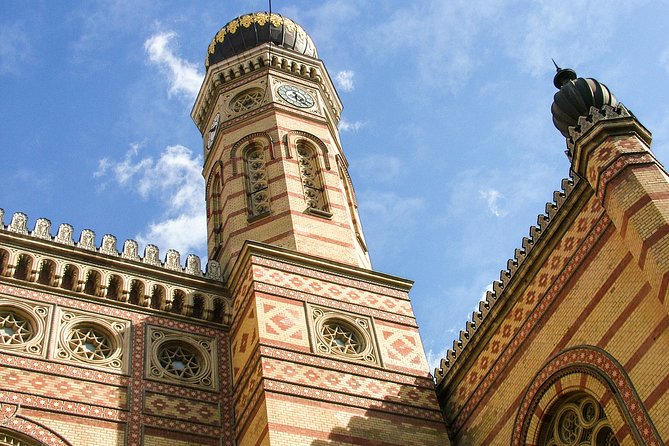
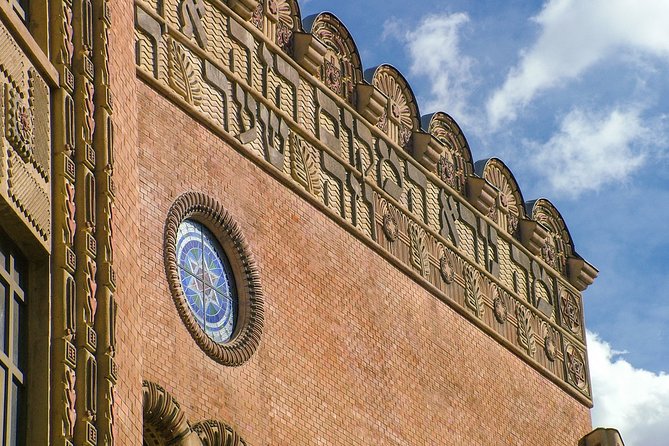
Stop one is Dohány Street Synagogue, and it’s a big deal for good reasons. The synagogue complex is the second largest synagogue in the world, and it’s located right in central Budapest—so you get world-famous architecture and major Jewish landmarks without a long commute.
You’ll spend about two hours here, and that time matters. This isn’t just a quick look at the exterior. The visit includes the synagogue building, the Raoul Wallenberg Memorial Garden, and the Jewish Cemetery grounds. That sequence helps your brain connect three layers: how the community worshiped and gathered, how it responded to the Nazi era, and how remembrance continues.
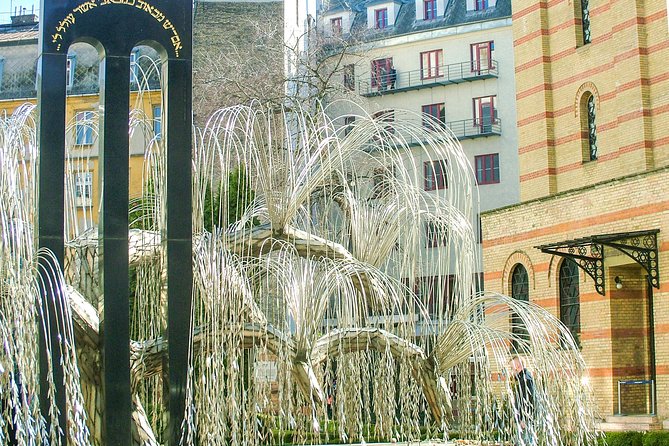
One unique detail worth knowing before you go: the complex includes the Emmanuel Tree, described as a moving monument, connected to Tony Curtis. It’s the kind of symbolic element you might miss if you only rely on signage, but with a guide you understand why it was created and what it tries to express.
You’ll also see another functioning synagogue with an outside visit. That small angle is useful because it keeps the place from becoming a museum-only stop. It reminds you that this is not only about what used to be here; it’s still part of living Jewish life.
And there’s more around it than pure history. Edith also brings in the idea that this quarter includes street art and night life. That doesn’t dilute the seriousness. Instead, it shows you the neighborhood as it exists now—layered, human, and not frozen in time.
Practical tip: plan for the synagogue portion to feel intense. Even with a good pace, it’s the kind of place where you’ll want a moment to look, breathe, and let what you learn settle.
The Raoul Wallenberg Memorial Garden and Jewish Cemetery: what to look for
Within the Dohány Street Synagogue stop, the Raoul Wallenberg Memorial Garden and the Jewish Cemetery are the quiet backbone of the experience. They change the temperature of the tour. The walk slows. Your attention shifts from grand architecture to names, memorial space, and the idea of individual lives caught in big events.
Wallenberg is central here because he represents rescue and moral courage during the Holocaust era. In a guided setting, that theme turns a memorial garden from a general space into something personal: you understand why it was built and how it fits into the larger Budapest Jewish story.
The cemetery grounds also matter because they show continuity. It’s easy to treat the Holocaust as the final chapter of a community, but cemeteries fight that misconception. They point to generations before the war—and to the long task of remembering afterward.
If you’re the type who likes to ask questions, this is where you’ll likely use that skill. Edith’s approach supports discussion, and these stops naturally create good questions about identity, memory, and how a city chooses to honor the past.
Shoes on the Danube Bank: the short stop that lingers
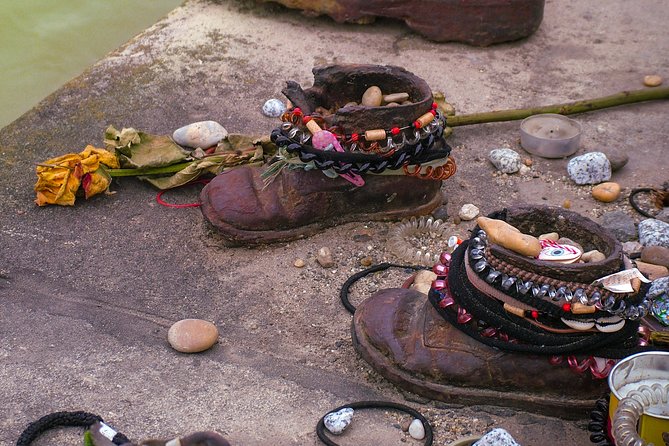
Next is Shoes on the Danube Bank. This is a quick stop—about 15 minutes—and it’s free. But don’t underestimate it. This memorial is designed to hit you fast, because it uses an everyday object (shoes) to represent an unimaginable violence.
What makes this stop work in a tour like this is its placement. After the synagogue complex, you’re already thinking in terms of community and survival. Then you move to the riverbank and shift to the brutal mechanism of persecution, in a place where the city still flows around the memory.
You don’t need a lot of time here to feel the impact, but you do need to give yourself permission to be quiet for a minute. If you race through it, you miss the point.
Practical tip: stand where you can see the memorial and the river line clearly. It’s the context that makes the memorial feel less symbolic and more real.
Memorial to the Victims of the German Invasion: history with an argument attached
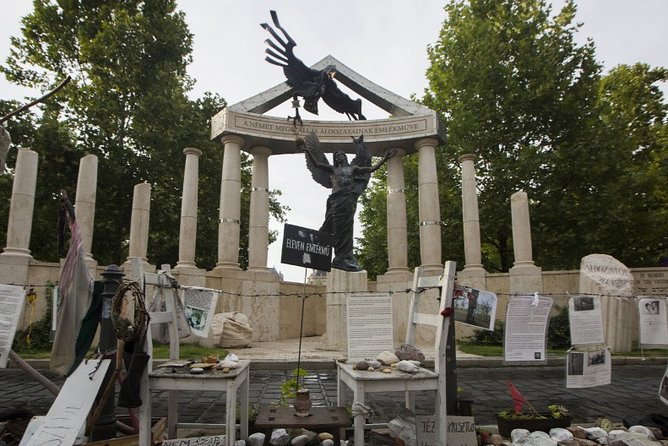
The third stop is Memorial to the Victims of the German Invasion. Like the Shoes memorial, it’s about 15 minutes and free, but it comes with extra emotional and political weight.
This memorial is described as one of the most controversial in Budapest, and it’s tied to public protests that have continued ever since it was established. It was erected at night, guarded by police, and that detail is not trivia—it explains why people argue about it. In a guided tour, those facts turn the memorial into a conversation starter: not only what it marks, but how the city negotiates guilt, blame, and remembrance.
Edith’s discussion-heavy approach helps here. Instead of treating controversy as an annoyance, the tour uses it as context. You get a sense of how memory can be contested even after the events are long over.
What to watch for: this stop might feel more uncomfortable than the synagogue, because it’s not only sadness. It includes friction—between interpretation, politics, and public emotion.
If your goal is to understand Budapest as a living city, not just a postcard of monuments, this is the piece that helps you see how people still carry the story.






Group size, walking pace, and Edith’s impact
A tour like this lives or dies by how it’s delivered. The good news: the format here is built for conversation. The tour is capped at a small group size (up to 13, and designed for maximum personalization around a smaller feel), so you can actually hear the guide and ask your own questions.
Edith is clearly the reason many people rate this so highly. Her style comes through in how she handles both the facts and the emotional tone. Many guides can describe dates and buildings. Edith also links those details to what life in Budapest has meant through time—including the Soviet influence mentioned in experiences connected to this tour.
Another practical benefit: the tour uses a short, efficient structure. It’s listed as about 3 hours total, and the stop times are tight enough that you don’t feel dragged. You’ll still have plenty of time after for other parts of the city.
One more practical detail: transportation is not included. In practice, you may use public transportation between parts of the route while still doing a lot on foot, which is a common way to keep the timing comfortable in central Budapest. Bring whatever ticket or payment method you need for the system you choose.
Price and tickets: how to budget the real cost
The tour price is $80.86 per person and it runs about 3 hours. That’s for the licensed guide and the overall routing between major sites.
But the big cost detail is the synagogue admission. The Dohány Street Synagogue entrance fee is listed as €26.00 per person and it is not included. That means your total day cost is basically the tour price plus that entry fee, plus any public transit you use (since transportation is not included).
Is it good value? For me, yes—because you’re paying for context. You’re not just buying entry into a famous building. You’re getting a structured visit that includes multiple layers inside the complex (synagogue building, memorial garden, cemetery) plus two additional major memorial stops. If you tried to self-guide, you’d likely spend extra time figuring out what you’re looking at and why it matters in the Hungarian Jewish story.
Also, the group size helps justify the price. If you’ve ever done a larger walking tour where you can’t ask questions, you know how quickly value drops. This one is designed to keep the experience personal.
Smart planning: if you’re visiting close to peak times, it’s wise to confirm your synagogue timing in advance so you don’t lose part of your two hours waiting.
What this tour teaches you, beyond the monuments
This tour’s real strength is that it treats Jewish heritage as something alive and evolving. Yes, you’ll face Holocaust-era memorials and controversial public memory. But you’ll also be pointed toward what’s happening now, and what identity can mean in Hungary today.
That matters because monuments can become dead objects if you don’t have someone to connect them to real people. Edith’s approach is built around connection—between the neighborhood’s past and its present, between architecture and identity, and between remembrance and the argument over interpretation.
You’ll also come away with better city navigation. The Jewish Quarter area can feel overwhelming on your first pass. Seeing the major sites in a guided sequence helps you understand the geography and why these locations were placed where they are.
And because the tour is designed to be short, you’re not forced into a full day of heavy stops. After three hours, you can shift to lighter exploring—cafes, streets, and the everyday rhythm around these historic places.
Who should book this Jewish Heritage tour
Book it if you want:
- a guided visit to Dohány Street Synagogue that includes the memorial garden and Jewish Cemetery grounds
- a short route that still covers the key memorial landmarks
- a guide who supports discussion about Jewish life in Hungary today
It’s also a good fit if you care about emotional impact and context. This route balances beauty and heartbreak: synagogue grandeur on one side, riverbank tragedy on the other, and a controversial memorial that shows memory in conflict.
You might look for something different if you dislike structured tours or you want long unbroken time inside a single site. The total time is about three hours, and each stop is paced tightly.
Should you book? My call
I’d recommend this tour if you want Budapest’s Jewish story in a manageable time frame and you value a strong guide. Edith’s impact—clear explanations, respectful pacing, and room for questions—is the difference between reading a plaque and truly understanding what you’re seeing.
Just budget for the €26 synagogue entrance fee, plan for free stops to take about 15 minutes each, and keep your expectations aligned with a well-paced three-hour plan. If you do that, you’ll leave with a sharper sense of Budapest—and with memories that don’t fade into generic “sightseeing.”
FAQ
What’s the duration of the Jewish Heritage full tour?
The tour is listed at about 3 hours.
Where does the tour start and end?
It starts at Budapest, Deák Ferenc tér, Hungary, and ends at Dohány Street Synagogue, Budapest, Dohány u. 2, 1074 Hungary.
Is the Dohány Street Synagogue entrance fee included?
No. The Dohány Street Synagogue admission fee is €26.00 per person and is not included.
What are the main stops on the tour?
The tour visits Dohány Street Synagogue (including the Raoul Wallenberg Memorial Garden and Jewish Cemetery), Shoes on the Danube Bank, and the Memorial to the Victims of the German Invasion.
Is this tour offered in English?
Yes, it’s offered in English.
Do I get a mobile ticket?
Yes, the tour includes a mobile ticket.
How large is the group?
The tour is described as max 10 travelers for a more personalized experience, and it also states a maximum of 13 travelers.
Is transportation included?
No. Transportation is not included, but the tour notes you’re near public transportation.
FAQ
What’s the cancellation policy if plans change?
Free cancellation is available. You can cancel up to 24 hours in advance for a full refund. If you cancel less than 24 hours before the start time, the amount paid is not refunded.
What if the weather is bad?
The experience requires good weather. If it’s canceled due to poor weather, you’ll be offered a different date or a full refund.