REVIEW · BUDAPEST
3 Hours Budapest Segway Grand City Tour Buda, Margaret and Pest
Book on Viator →Operated by Segway BP · Bookable on Viator
Budapest by Segway feels like a shortcut with style. I like the included Segway training so you’re not guessing, and I love how the route strings together the Danube, Buda Castle area, and Pest’s landmarks without endless walking. One thing to weigh: several major sights along the way have separate admission fees, so your final cost can climb if you want inside time.
This is set up for a private group, so you get steadier pacing and more chances to ask questions while you’re rolling. You’ll also get a photo/video add-on, which is handy in a city where the views happen fast—one bridge to another, one hilltop to the next. If weather is rough, the tour is sensitive to it, since good conditions are required for Segway riding.
In This Review
- Key things to know before you go
- Why a Segway tour is a smart way to see Budapest
- Start at Segway BP: training, helmets, and getting confident
- Erzsébet Bridge to Gellért Hill: Danube views without the hike
- Castle Garden and the Castle District viewpoints: “Buda edge” without the exhaustion
- Matthias Church and the Castle District Townhall: decide how much “inside” you want
- Crossing back into Pest: Chain Bridge to Margaret Island
- Shoes on the Danube Bank and the memorial stops: where the tour slows down on purpose
- St. Stephen’s Basilica and the Ferris Wheel: big icons at the city’s “end caps”
- The practical side: what’s included, what costs extra, and what it means for your budget
- Pacing and group size: why “private” feels different on a Segway
- Weather, comfort, and who should book
- Should you book the 3 Hours Budapest Segway Grand City Tour?
- FAQ
- How long is the Segway tour?
- What is the price per person?
- Is training provided for first-time Segway riders?
- What language is the tour offered in?
- Are monument or church entry tickets included?
- What happens if weather is poor?
Key things to know before you go
- Training time is built in, so you start the sightseeing portion feeling in control.
- Photo and video recording are included, which helps you document Budapest without juggling your phone.
- You cover Buda and Pest in one go, rather than committing to one side of the river for a whole day.
- The route includes major “view stops” at bridges and hill viewpoints, not just flat streets.
- Some stops are free, some are paid, so you can decide on the fly how much entry you want.
- Guides keep groups moving safely, including people who are new to Segways.
Why a Segway tour is a smart way to see Budapest
Budapest rewards you for moving—especially when you want both river views and city views from higher ground. A walking tour can do it, but you’d spend a lot of energy on stairs, sidewalks, and the in-between moments. A Segway tour cuts down the slog while keeping you close enough to actually notice details.
The value here is that the core experience is included: helmets, your own Segway, and the training time before you start. At $102.84 per person for a 3 to 3 hour 20 minute outing, you’re paying for transportation plus guidance plus time-efficient sight access—not just a driver who drops you at the curb.
The other big win is intimacy. Even when you’re covering “big name” spots, you’re stopping frequently, not sitting on a bus for stretches. That means more time looking at what’s in front of you—bridges, monuments, churches, and riverside memorials—without feeling rushed every minute.
You can also read our reviews of more city tours in Budapest



Start at Segway BP: training, helmets, and getting confident
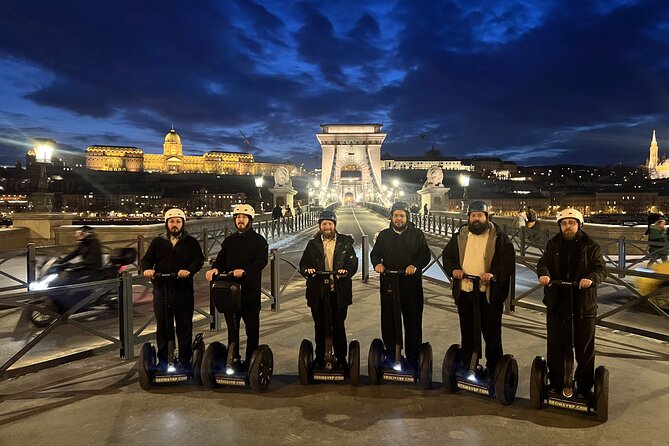
Your day kicks off at Segway BP in Haris köz (easy to reach by public transportation). Before you begin the sightseeing portion, there’s a practice block—enough for first-timers to get comfortable with steering, speed control, and basic balance.
This matters more than it sounds. Budapest’s main attractions come with slopes and stairs nearby, and the tour includes hill climbs by design. If you’re new, you’ll be glad training is not an afterthought—it’s part of the schedule. Guides like Daniel, Ernesto, and Alec are highlighted for patient instruction and ongoing attention to riders, including beginners who pick it up quickly.
You should also expect your comfort to depend on your willingness to follow safety cues. If you’re the kind of traveler who panics when something is moving under you, take that seriously before booking. Most travelers can participate, but you’ll still want to feel okay standing and balancing for a couple hours.
Erzsébet Bridge to Gellért Hill: Danube views without the hike
The tour’s early river stretch is classic Budapest framing. You glide to Erzsébet Bridge, a suspension bridge completed in 1964, linking Buda and Pest across the Danube. This is a great “get your bearings fast” segment because bridges in Budapest are not just crossings; they’re viewpoints, photo lines, and geography lessons all at once.
Next comes the Szent Gellért Monument on a hill with river views. The statue and surrounding structure are a quick stop, but the payoff is the perspective—looking out over the Danube and the city’s layout. Admission is not included here, so you’ll decide if you want inside access (the listed monument fee is around $10 per person). Even without entry, the hilltop placement is what makes this moment worthwhile.
Then you pass the Statue of Queen Elizabeth, a short landmark stop. Five minutes sounds tiny, but in a tour like this it’s useful: you get context for who’s remembered in Budapest public space, and you keep momentum toward the more panoramic Castle area.
Castle Garden and the Castle District viewpoints: “Buda edge” without the exhaustion
When the tour reaches the Castle side, it’s focusing on how Buda feels: stone, viewpoints, and the layered architecture of a hillside capital. Castle Garden is on the list, described as a renovated 19th-century complex with exhibition halls, theaters, gardens, and restaurants. Here, admission is free as a stop on the tour, so you can use it like a strolling breather.
After that, you head toward the river’s big visual anchors again via Clark Adam Square (Clark Adam ter), located in front of the chain-bridge area. This is a named spot for a reason: the square is tied to the British architect who designed the Chain Bridge. You get history with your photos, which is exactly what you want on a limited-time tour.
Then comes Széchenyi Chain Bridge, the oldest and biggest major bridge in the city. The stop is brief, but it’s one of those “Budapest-only” experiences. You see how the city actually connects across the water—Buda’s height and Pest’s wide streets—without walking the whole crossing.
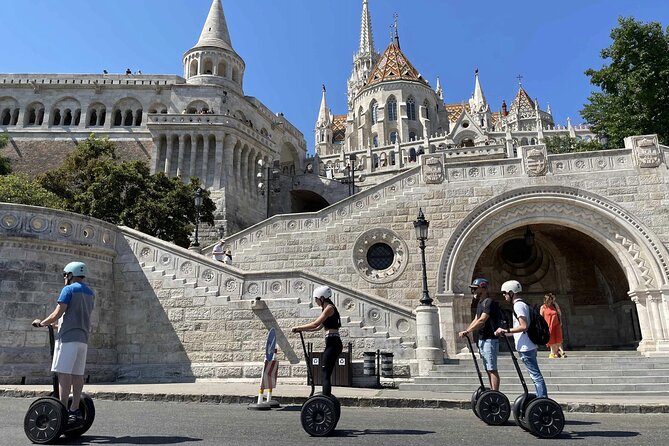
A standout for architecture lovers is Schulek Staircase, with the tour specifically tying Frigyes Schulek (the architect for Halászbastya’s staircase/castle area connections) to the broader restoration of the Church of Our Lady, known as the Church of St. Matthias. It’s quick, but it helps you connect names you might otherwise see on placards later.
Matthias Church and the Castle District Townhall: decide how much “inside” you want
The tour gives you a longer moment at Matthias Church (about 30 minutes) since it’s a major sight. The church is named for King Matthias, who married here, and it has an ecclesiastical art museum. Admission is not included (listed around $10), so if you’re more interested in views than interiors, you can stay mostly outside and still get plenty out of the stop.
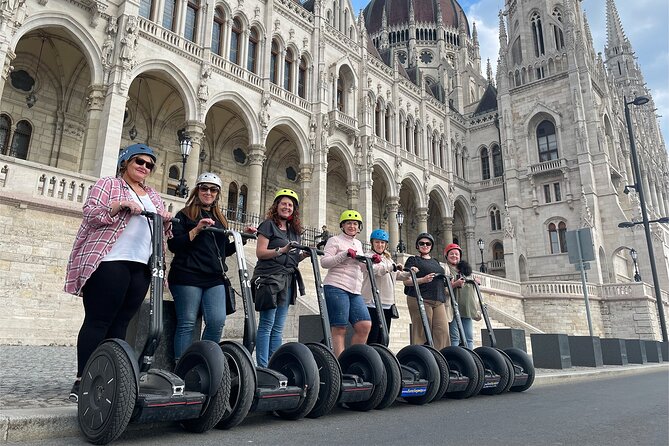
Then you reach Castle District Townhall, a short stop designed for payoff views: river, parliament, and city panorama. The tour’s format makes sense here—view stops work well because the “thing you came for” is visible immediately. If you want to linger, you can, but you also won’t feel like you missed the big picture because the time is structured.
One note for your expectations: Budapest castles and churches are gorgeous, but they also come with crowds and ticket lines on peak days. This kind of guided format helps you arrive with a plan. If you choose to add entry, be ready to spend a little of your Segway time on gates and waiting.
You can also read our reviews of more tours and experiences in Budapest






Crossing back into Pest: Chain Bridge to Margaret Island

Once you’re out of the Castle zone, the route swings into Pest’s classic river energy. Margit-sziget (Margaret Island) appears next—an island with a natural feel named after princes of Hungary who lived there in the 13th century. This is one of the reasons I like Segway tours for Budapest: you get both “city intensity” and “green reset” without switching days.
The tour also includes a bridge connecting Margaret Island with two sides of the city, which is helpful because it shows you how the island sits between the urban banks. Even when the stop is brief, it gives you a mental map you’ll use later.
A fun stop here is the Musical Well, noted as a UNESCO-protected heritage. It’s presented as a musical and dancing fountain show. Practically, that means your guide is timing the moment for you, so you don’t just pass by it. If you’re the sort of traveler who likes timing-dependent attractions, this is a good inclusion.
Then you hit Kossuth Lajos Square, right by the Parliament view corridor. From there you get to Budapest Parliament, a major landmark described as the third biggest building of parliament in the world. Admission is not included (listed around $10), and the stop length is about 10 minutes. For many people, the exterior views and river angles are the main draw, so you can often decide not to pay for the interior unless you’re very into formal building tours.
Shoes on the Danube Bank and the memorial stops: where the tour slows down on purpose
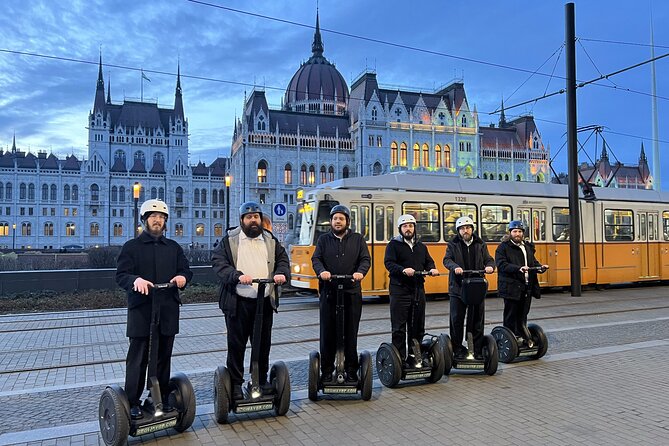
Some of Budapest’s most moving moments aren’t about architecture. Shoes on the Danube Bank is included as a memorial for Holocaust victims. The stop is short (about 5 minutes), but it’s the kind of place where you’ll want a minute to take it in. This is one of those tour choices that makes sense in a guided setting: you get a clear explanation instead of just seeing an outdoor memorial without context.
Next is Szabadság ter, Liberty Square, with historical background. Then you pass the Fat Policeman Statue, described as a watcher of Zrinyi utca. Those are quick stops, but they’re important because they add street-level Budapest flavor—signals and icons you’d otherwise miss.
These shorter moments also help keep energy balanced. A Segway tour is less physically demanding than walking, but it can still be mentally “busy.” Breaking up the bigger monuments with quick landmarks keeps the ride from feeling like you’re just collecting checkmarks.
St. Stephen’s Basilica and the Ferris Wheel: big icons at the city’s “end caps”
The route includes St. Stephen’s Basilica (Szent Istvan Bazilika). This is the biggest church in the city, and it’s tied to the first king (the tour notes the hand of the first king kept there). Admission isn’t included (listed around $10). You’ll have about 10 minutes at the stop, so again, think of this as view and orientation time first.
Then you reach the Ferris Wheel of Budapest, a very short stop (about 3 minutes). It’s mostly there to connect the modern landmark to the classic city setting. If you’re hoping for a full ride, this stop probably won’t give you that—but it’s a good marker of where the skyline and entertainment zones are.
You also get Carl Lutz Memorial, including a memorial tree noted in the tour materials alongside the Michael Jackson connection. It’s about 5 minutes—enough time to notice the symbolism and understand why it’s recognized—without pulling you off the broader route.
The practical side: what’s included, what costs extra, and what it means for your budget
Here’s how the money usually shakes out in a tour like this.
Included:
- Training time before the sightseeing
- Helmets
- A personal Segway
- Tour leader
- Photo and video recording
Not included (entry fees listed in the tour data):
- Buda Castle building: listed around $8 per person (with an extra note that entry can be about $5–$8)
- Szent Gellért Monument: listed around $10
- Matthias Church: listed around $10
- Budapest Parliament: listed around $10
- Szent Istvan Basilica: listed around $10
So is the tour “expensive”? It depends on how many inside entries you add. If you treat most stops as exterior viewing and context, you’ll likely keep spending under control while still getting the main sights. If you want multiple paid interiors—especially Parliament, basilica, and castle-related entry—your total climbs quickly.
For me, the best budgeting approach is simple: decide before you go which 1–2 paid entries actually matter to you. Everything else, you can enjoy from street level. Budapest is visual even when you don’t pay for entry.
Pacing and group size: why “private” feels different on a Segway
This is listed as a private activity for your group only. In a Segway format, that often means more flexibility with pace and fewer moments where you’re waiting for strangers to regroup. It also tends to reduce the common problem of guided tours where you’re rushed because the schedule has to fit everyone.
The guiding style seems to be a major part of why this tour rates so well. Names that come up for keeping things relaxed and safe include Daniel, Ernesto, Alec, Ahmed, and Alex. The consistent theme is active monitoring—especially for riders who are new—and answering questions without turning the tour into a lecture.
If you’re traveling solo, or you just don’t want the chaos of a large group, this is one of those experiences that can make Budapest feel friendlier. You’re not just moving fast; you’re moving with attention.
Weather, comfort, and who should book
A Segway tour is best when your body and the weather cooperate. This experience requires good weather, so if rain or wind is a factor in your travel week, plan for a backup day.
Comfort-wise, you should be fine if you can stand for short stretches and follow instructions. You’ll also want to wear practical shoes and dress for cool-to-mild walking weather, since you’ll be outside nearly the entire time.
This tour fits you if:
- You want lots of landmarks in one outing (Buda and Pest)
- You like city views more than museum-only days
- You want to reduce walking while still getting fresh air
- You’re new to Segways and want training included
It may not be ideal if:
- You strongly prefer long indoor museum time over short viewing stops
- You have concerns with balance or standing on moving platforms
- You want zero extra entry fees (because several big sights cost extra)
Should you book the 3 Hours Budapest Segway Grand City Tour?
Book it if you want an efficient, high-impact way to see Budapest’s “greatest hits” while still feeling close to the city. The combo of training included, frequent scenic stops, and guided context hits a sweet spot for first-time visitors and time-crunched trips.
Skip or reconsider if you already know you’re paying for multiple indoor ticketed attractions, because the extra costs can stack fast. Also, if weather isn’t reliable on your dates, build in flexibility; Segway days depend on conditions.
My take: this is a good value when you use it for what it’s best at—views, landmark context, and saving your legs for later—then add only the one or two interiors you truly care about.
FAQ
How long is the Segway tour?
The duration is listed as about 3 hours to 3 hours 20 minutes.
What is the price per person?
The price is $102.84 per person.
Is training provided for first-time Segway riders?
Yes. Training time is included before the sightseeing starts.
What language is the tour offered in?
The tour is offered in English.
Are monument or church entry tickets included?
No. Entry fees for places like Buda Castle, Matthias Church, Budapest Parliament, Szent Gellért Monument, and St. Stephen’s Basilica are not included.
What happens if weather is poor?
The experience requires good weather. If it’s canceled due to poor weather, you’ll be offered a different date or a full refund.