
REVIEW · BUDAPEST
Budapest: 3-Hour Walking Tour of Pest with a Historian
Book on GetYourGuide →Operated by Budapest Explorers · Bookable on GetYourGuide
Pest has a way of surprising you. This Pest-focused, 3-hour walk through Downtown Budapest mixes the big sights with the meaning behind them, led by a historian who actually encourages questions.
I love that you get St. Stephen’s Basilica with the entrance ticket included, so the tour isn’t just photo stops. I also like the small group size (up to 10), which makes it easy to ask follow-ups and get answers that fit your curiosity.
One possible drawback: it’s a lot of moving around in a short window, with walking plus a subway ride, so wear comfortable shoes and be ready for the city’s tempo.
In This Review
- Quick hits: what makes this Pest tour worth your time
- Starting at Erzsébet tér: a smart launch point for Pest
- Pest with a historian: how the stories actually land
- St. Stephen’s Basilica: more than a famous exterior
- Downtown Pest on foot: Danube views, classic architecture, and old streets
- Heroes’ Square: 1000 years of Hungary, mapped in one place
- Andrássy Avenue UNESCO walk: grand streets with a purpose
- Millennium Underground ride: feeling the city’s layers
- How the 3-hour pace feels (and why the group size matters)
- Value check: $57 for Pest’s core sights and included entry
- Who should book this Pest walking tour?
- Should you book?
- FAQ
- FAQ
- How long is the Budapest Pest walking tour?
- What is included in the tour price?
- What are the tour highlights?
- Where do I meet the guide?
- Is the tour in English?
- What is the group size?
- Do I need to buy a ticket for St. Stephen’s Basilica?
- Is there free cancellation?
- Is a subway ride part of the experience?
Quick hits: what makes this Pest tour worth your time
- St. Stephen’s Basilica ticket included so you see inside Budapest’s largest church
- Heroes’ Square in context with a focus on the figures that shaped Hungary
- Millennium Underground ride on the oldest subway on the continent, included with subway tickets
- Andrássy Avenue UNESCO walk plus views toward the Hungarian State Opera area
- Historian-led Q&A that links past events to how Budapest feels today
Starting at Erzsébet tér: a smart launch point for Pest
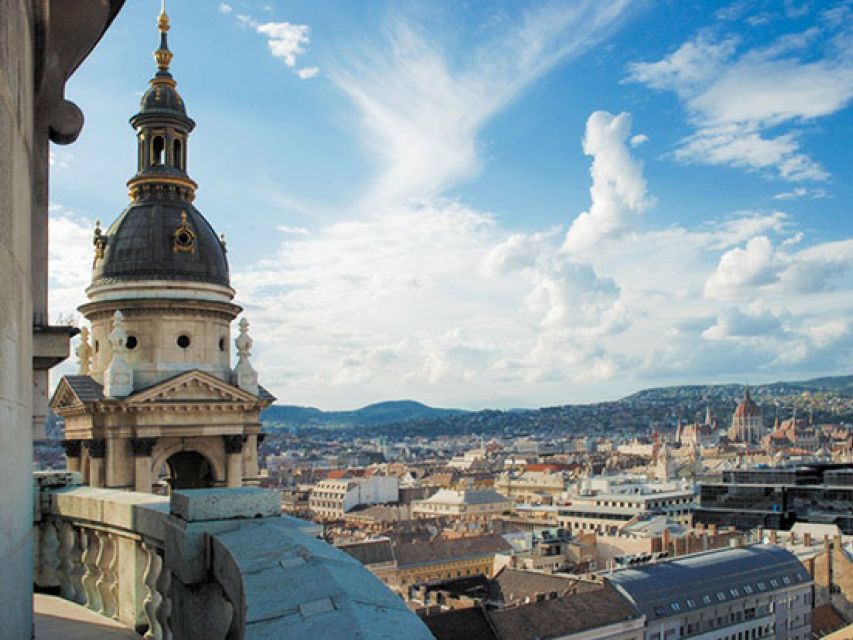
You meet in front of the Kempinski Hotel Corvinus Budapest, right by Erzsébet square, facing the Ferris wheel. It’s a good start because the area is easy to reach by public transport, including the M1, M2, and M3 lines (Deák Ferenc tér stop).
From there, you’re set up to do what I think most visitors want on Day 1: get your bearings fast and start connecting the dots between streets, landmarks, and history. Pest can feel like a patchwork at first, but with a guide at your side, it starts to click.
And because the group is limited to 10, you’re not just shuffling along. You can ask questions without the tour becoming a one-way lecture.
You can also read our reviews of more walking tours in Budapest



Pest with a historian: how the stories actually land
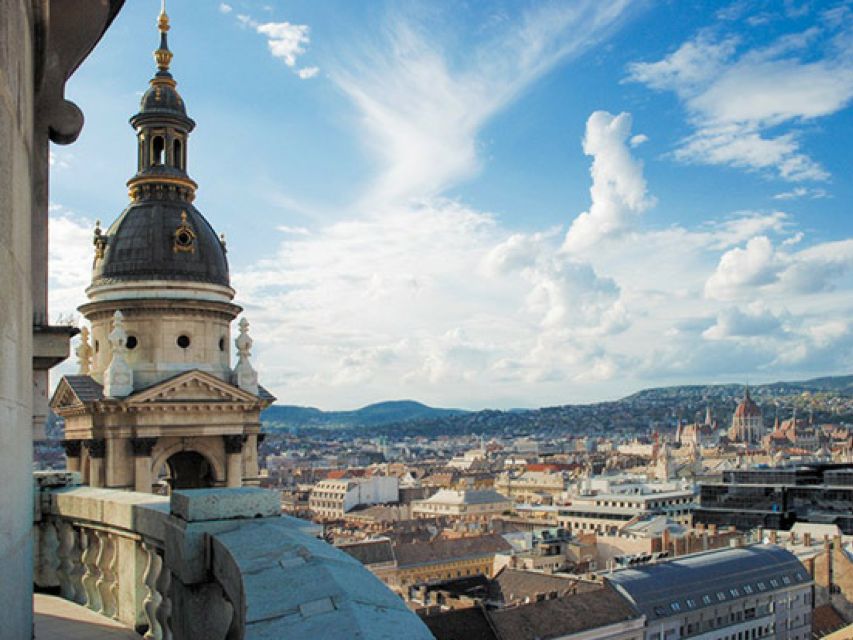
What I like most here is the way the guide frames Pest versus Buda. You’re not only hearing dates and rulers. You’re also getting a sense of mentality—how people in each side of the city have thought, worked, and built their lives, and how that shows up in everyday Budapest now.
You’ll also get a quick foundation early on, like a short overview of Hungarian history that makes later stops make more sense. That matters because Hungary’s story moves through multiple eras fast, and it’s easy to feel lost if you’re just seeing monuments without context.
The best part is the question-friendly style. Guides are comfortable entering current topics, too—so the tour doesn’t stop at the wall plaques. In past groups, guides like Judit, Barbara, Monica, Andrea, Raymond, and Greg were praised for being energetic storytellers and for turning history into something you can follow without falling asleep.
St. Stephen’s Basilica: more than a famous exterior
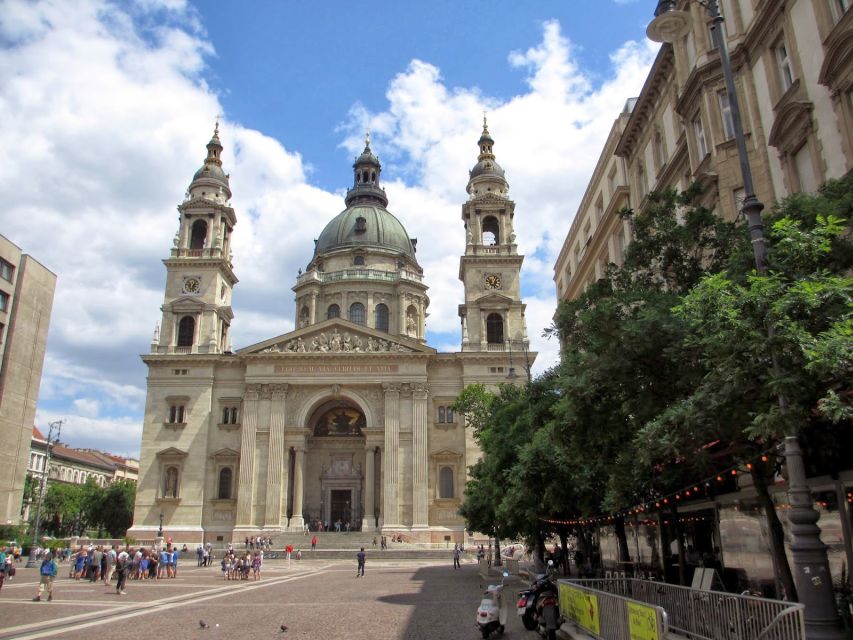
You’ll visit St. Stephen’s Basilica, and the entrance ticket is included. That’s a big deal for value and timing: you’re not stuck guessing whether you should budget extra for entry or whether you’ll have time.
Inside, the point isn’t just to admire the church. The guide helps you understand why St. Stephen’s Basilica carries so much national and cultural weight. It’s Budapest’s largest church, and the tour uses that scale to explain how public faith and national identity have worked together in Hungary over time.
Practical tip: this is one of the stops where people naturally slow down. If you’ve got questions, this is a good place to ask them, since you can see details while the guide is explaining what you’re looking at.
Downtown Pest on foot: Danube views, classic architecture, and old streets
Walking Pest is the whole point of the tour, and the mix of environments keeps it from feeling repetitive. You’ll spend time around the Danube promenade, which helps you understand why this city grew where it did. The river shapes the whole layout—what’s where, and why major buildings face certain directions.
You also pass through areas known for standout architecture, including the Art Nouveau splendor of Gresham Palace. The guide uses these buildings to talk about power and taste—how different eras left different “tells” in the streetscape. You’ll also see the historic Academy of Sciences area, which adds a science-and-scholarship angle to the day’s mix of politics and national identity.
One smaller street moment also makes the tour feel real: the cobblestones of Zrínyi street. It’s the kind of detail that reminds you you’re not in a museum corridor. You’re moving through a living city, where old materials still shape how neighborhoods feel underfoot.
Heroes’ Square: 1000 years of Hungary, mapped in one place
Heroes’ Square is where the tour turns from urban detail to national memory. You’ll explore the square and learn about some of Hungary’s most influential historical persons—framed as part of a longer story, not isolated biographies.
The guide’s job here is to connect the square’s symbolism to what those figures represent. That’s also why this stop works well even if you only have a half day. You can see a lot of history in one location, and the guide helps you interpret what you’re looking at instead of just admiring scale.
If you’re the type who likes to understand why people chose certain symbols, you’ll appreciate how the tour explains the “who” and the “why” behind the monument language.
You can also read our reviews of more tours and experiences in Budapest






Andrássy Avenue UNESCO walk: grand streets with a purpose
Then you’ll move along Andrássy Avenue, which is a UNESCO world heritage site. This isn’t just about walking a pretty boulevard. The guide treats it like a statement: a way of showing how Budapest wanted to present itself, and how urban design can reflect identity.
Along the way, you’ll get views that include the Hungarian State Opera area. That matters because it puts arts and culture on the same timeline as politics and national symbols. It’s a helpful reminder that history isn’t only laws and wars—it’s also what a city decides to build for its public life.
For me, this section is the sweet spot between big landmarks and human-scale walking. It feels ceremonial, but you still experience it like a street, not a set.
Millennium Underground ride: feeling the city’s layers
A highlight here is the ride on the Millennium Underground, described as the oldest subway on the continent. You’re not just taking transit; you’re using it as a historical lens.
The included subway ticket(s) make it smooth. You’ll learn what makes this line special, and how that early infrastructure changed everyday movement in Budapest.
This is also a nice break in the walking pattern. You get to sit for a moment, look out, and reset your legs before the next stretch of sightseeing. If you’re traveling solo or with another history buff, this stop is often the one that turns into conversation—because it’s so unusual for a modern visitor to step into older urban tech.
How the 3-hour pace feels (and why the group size matters)
This is a 3-hour walking tour, and it has enough stops to feel like a real day’s worth of orientation without eating your whole schedule. The pace is generally designed so you can cover major sights and still absorb the stories.
The small group limit (up to 10) is a big part of why it works. You’re less likely to feel like you’re being dragged through crowded sidewalks. You can also get more direct answers, and the guide can adjust if your questions steer toward something you care about.
If your travel style is: see the landmarks, then understand what they mean, this format suits you well. If you only want to snap photos and move on, you might find yourself wishing for more free time. But if you want a guided “why,” this tour is built for that.
Value check: $57 for Pest’s core sights and included entry
At $57 per person for a 3-hour tour, this isn’t priced like a quick photo walk. You’re paying for a historian guide plus a built-in set of costs that you’d otherwise handle yourself.
Included are:
- Entrance ticket to St. Stephen’s Basilica
- Subway ticket(s) for the underground ride
- The guided walking tour covering Downtown Pest landmarks
That combination adds up fast for visitors who don’t want to juggle tickets and logistics during a short stay. You also get the storytelling element—the part you cannot DIY from a guidebook unless you really know how to connect the eras.
If you’re visiting for the first time, this is one of the cleaner ways to get oriented while learning how Hungary’s past shows up in the streets you’ll keep returning to.
Who should book this Pest walking tour?
I’d book this if:
- You want a Pest-side orientation that goes past sightseeing checklists
- You like history explained in a way you can ask questions about
- You want a mix of major landmarks (Basilica, Heroes’ Square) and street-level details (cobblestones, promenades)
- You’d enjoy a transit moment that has a story attached (the Millennium Underground)
You might skip it if you dislike walking, or if you’re traveling only for architecture photos and nothing else. But for most people, the balance here is strong: landmarks with context, and context that stays tied to what you’re standing in front of.
Should you book?
Yes, if you want Pest to feel like a place with a timeline behind it. This tour’s best strength is the historian-led approach: it’s not only what you see, but how the guide connects it to Hungary’s past and how Budapest feels today.
If you’re short on time, you’ll come away with a clearer mental map of Downtown Pest, plus the confidence to explore the rest of the city on your own.
FAQ
FAQ
How long is the Budapest Pest walking tour?
It lasts 3 hours.
What is included in the tour price?
The tour includes a historian guide, entrance ticket to St. Stephen’s Basilica, subway ticket(s), and the walking tour.
What are the tour highlights?
The highlights include St. Stephen’s Basilica, Heroes’ Square, a ride on the Millennium Underground, and walking along Andrássy Avenue.
Where do I meet the guide?
The meeting point is in front of the Kempinski Hotel Corvinus Budapest, facing the Ferris wheel on Erzsébet square (Erzsébet tér 7, 1051).
Is the tour in English?
Yes, it’s a live tour guided in English.
What is the group size?
It’s a small group limited to 10 participants.
Do I need to buy a ticket for St. Stephen’s Basilica?
No. The entrance ticket to St. Stephen’s Basilica is included.
Is there free cancellation?
Yes. You can cancel up to 24 hours in advance for a full refund.
Is a subway ride part of the experience?
Yes. You’ll ride the Millennium Underground, and subway ticket(s) are included.