REVIEW · BUDAPEST
Budapest Jewish Heritage Tour
Book on Viator →Operated by György Rashad Salamon · Bookable on Viator
Budapest’s Jewish sites hit hard, fast. I love the Great/ Central Synagogue stop for its memorial-focused exhibits, and I love that the walk builds into the living street life of the Jewish Quarter instead of staying stuck in museums. The main catch: several key sites charge admission separately, so you’ll want a little extra budget on top of the tour price.
This is a private, English-guided half day with hotel pickup and a mix of walking plus public transport. The guide I’d expect to meet is György Rashad Salamon, and his approach tends to balance solemn history with human-scale details that make the places feel real, not like a checklist. You should go in with moderate stamina and ready shoes, because you’ll be moving for roughly four hours.
In This Review
- Key highlights and what makes them worth your time
- Meeting the past at Dohány Street Synagogue (Nagy Zsinagoga)
- The Hungarian Jewish Museum and Archives: small time, big meaning
- Walking District VII’s Jewish Quarter, where history shows up in everyday life
- Kazinczy Street Synagogue: a quieter look at Orthodox daily life
- Rumbach Street Synagogue under reconstruction: what to expect
- Shoes on the Danube Bank: short stop, heavy story
- How the timing and private format affect your experience
- What the tour price includes, and how to judge value
- Who this tour is best for (and who might want a different option)
- Should you book the Budapest Jewish Heritage tour?
- FAQ
- Is this tour private?
- What time does the Budapest Jewish Heritage tour start?
- Is hotel pickup included?
- Are admission tickets included?
- What transportation is used during the tour?
- Is food or drinks included?
- What should I know about fitness level?
Key highlights and what makes them worth your time
- Dohány Street Synagogue area, second largest in the world: memorials and exhibits give context beyond the architecture.
- Jewish Museum and Archives: a quick hit on Jewish material culture, including a standout Torah finial story.
- District VII Jewish Quarter walk: you’ll connect history to what you see now—shops, art, and the famous ruin bar vibe.
- Orthodox life at Kazinczy Street Synagogue: a smaller, peaceful stop that slows the pace down.
- Rumbach Street Synagogue timing: it may be limited because it’s under reconstruction.
- Shoes on the Danube Bank memorial: a short stop with heavy meaning and strong storytelling.
Meeting the past at Dohány Street Synagogue (Nagy Zsinagoga)
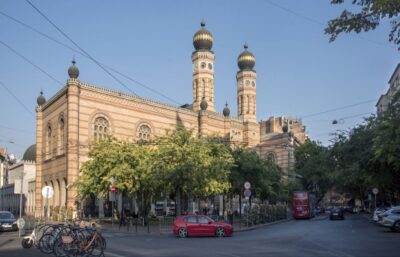
Your tour’s emotional tone sets early at the Great / Central Synagogue, also known as Dohány Street Synagogue (Nagy Zsinagóga). This is widely recognized as the world’s second largest synagogue, and even if you never read another line of history, the building and grounds give you a strong sense of why Jewish community life in Budapest mattered—culturally, spiritually, and politically.
What I like most here is that the visit is not only about ornate rooms. You’re directed toward exhibitions, memorials, and several specific areas that frame the Holocaust and its aftermath. Expect to spend about an hour here, and that’s long enough to take in the main exhibits without feeling rushed into a photo-only stop.
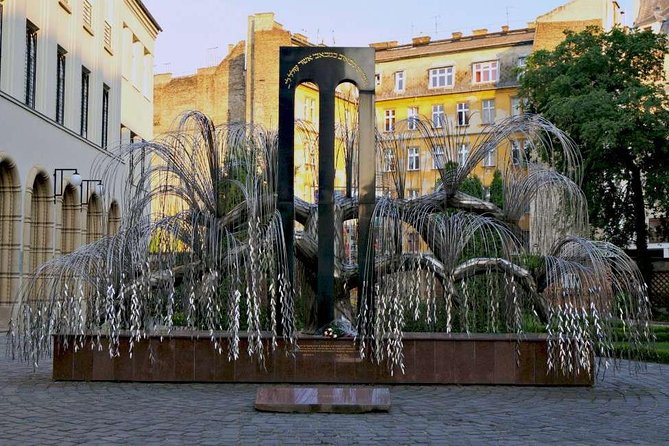
A few named highlights you’ll be looking for include the Holocaust Memorial, the Cemetery of Heroes, and the Tree of Life area with the Wallenberg Memorial Park. These labels matter because they guide your attention. Without a guide, it’s easy to wander and miss how each section connects to a broader story of rescue, loss, and memory.
One practical note: admission is not included for this stop. That’s common for major religious and museum spaces, but it does mean you should budget extra. If you’re trying to keep costs tight, plan to pay calmly and efficiently rather than hoping everything is folded into the tour price.
You can also read our reviews of more historical tours in Budapest



The Hungarian Jewish Museum and Archives: small time, big meaning
Next you’ll move to the Hungarian Jewish Museum and Archives for a shorter, focused visit—about 30 minutes. The point isn’t to beat you over the head with every artifact in the collection. It’s more like a concentrated “what to look for” moment.
This stop is especially good if you want the human texture of history: Jewish objects of daily life, community practice, and cultural continuity. One example the tour includes is a world’s oldest Torah finial with an amazing story attached to it. Even if you don’t know what a Torah finial does, you’ll come away seeing how small objects can carry big meaning.
Because the time here is short, this is also a place where questions are worth your while. If you’re the type who likes to ask what you’re looking at, you’ll get more out of it than a quick scan.
Admission is again not included, so you’ll likely pay for entry separately. Still, I think it’s a smart use of time. It gives you context for what you’ll later see in the district streets, synagogues, and memorial spaces.
Walking District VII’s Jewish Quarter, where history shows up in everyday life
After the synagogue-and-museum heaviness, the tour shifts into District VII and the Jewish Quarter. This is a World Heritage area, and the vibe is different from the quiet spaces you’ve just visited.
Here, you’re guided for about one hour through streets that combine past and present. The tour isn’t only about spotting plaques. You’ll connect what happened historically with what you can still see: local art, eclectic boutiques, avant-garde galleries, and the famous ruin bar culture that put parts of the quarter on the nightlife map.
If you’re hoping for a tour that stays readable and fun without turning serious history into background noise, this is where it works. The guide’s narration turns street scenes into context. Suddenly it’s not only where people lived—it’s how the community shaped Budapest’s cultural identity, and how the neighborhood became a place people want to visit today.
This part is also free of admission costs, which helps. And since you’re walking here, it’s a good time to slow down mentally. Look up at storefronts and side streets, then listen for how your guide connects the present to the long story of the Hungarian Jewish community.
Kazinczy Street Synagogue: a quieter look at Orthodox daily life
Then comes a smaller stop: the Kazinczy Street Synagogue. You’ll spend around 20 minutes, which is a nice length for a more intimate experience.
This is where the tour adds something different from big landmark sites. You’re shown the small Orthodox community and how their daily life habits and customs work. In other words, you’re not only learning history. You’re also learning how living tradition continues.
The payoff is in the pacing. After the crowds and scale of Dohány Street, the Kazinczy stop feels calmer and more human. It’s also a good reminder that synagogues aren’t just heritage buildings. For many people, they’re still active religious spaces.
As with several other stops, admission is not included here, so plan for another separate ticket cost if the synagogue asks for it.
Rumbach Street Synagogue under reconstruction: what to expect
The last synagogue stop is the Rumbach Street Synagogue on the edge of the Jewish Triangle. It’s scheduled for about 15 minutes, and there’s an important caveat: it’s under reconstruction right now.
That matters because it may affect what you can actually see up close. Even if the exterior and the story still come through, renovation can limit access to certain areas or reduce photo opportunities.
I’d treat this stop less like a “perfect visit” and more like a short historical marker. The value is the guide’s context—how this synagogue fits into the network of Jewish places in Budapest—rather than the promise of a fully open, showpiece interior.
Again, admission is not included.






Shoes on the Danube Bank: short stop, heavy story
The tour ends with one of Budapest’s most direct memorials: Shoes on the Danube Bank. It’s scheduled for about 15 minutes, and that time is honestly about right. You don’t need a long visit here; you need a good one.
This is where the meaning of the tour becomes unmistakable. The landmark tells the story of people who were killed and then forced into the riverfront during mass persecution. You’ll hear the background in a way that aims to make the tragedy feel specific—men, women, and children—rather than like an abstract statistic.
Even if you’ve seen photos online, I recommend you treat it as a pause. Stand there. Read what’s in front of you. Then listen to how your guide explains the memorial’s symbolism. It’s one of those places where silence can feel more respectful than talking.
This stop is free of admission, which is a small mercy after paying separate entry fees at other sites.
How the timing and private format affect your experience
This is a private tour/activity with only your group, sized up to 10 people per group. That changes the feel in a good way. You can ask questions without feeling like you’re interrupting a busload of strangers. You can also go at a pace that matches your group’s comfort with serious subject matter.
The duration is about four hours, starting at 2:30 pm. That afternoon timing is useful because it gives you a chance to grab lunch before you go, and it often makes walking in Budapest more comfortable than later in the day when shadows and crowds can shift.
Transport is a mix of walking and public transport, and the tour includes transportation tickets. The included hotel pickup helps too, especially if you’re staying a bit away from the core sights. It reduces the small stress of figuring out where to meet.
One more thing I’d plan for: a mix of big sites (synagogues) and neighborhood sidewalks means you’ll want shoes you can trust. Physical fitness should be moderate, not marathon-level, but you will be on your feet.
What the tour price includes, and how to judge value
The price is $272.20 per group (up to 10). For value math, the most optimistic case is if you have a full group: about $27 per person. If your group is smaller, the per-person cost rises—but the tour still includes key services that matter: a local guide, hotel pickup, transportation tickets, and a private format.
Here’s the tradeoff: admission fees are not included at several stops, and you pay those separately. That means the tour price buys the guided experience, routing, and context—not a museum pass.
In practical terms, you should treat this as paying for a guided narrative through important places: the structure of the day matters, because the sites themselves are spread across different types of spaces. A solo wanderer can visit the same areas, but it’s harder to assemble the connections between memorial sites, community spaces, and the present-day neighborhood.
If your priority is serious history told clearly, plus a look at how the district feels now, I think this format is a strong value. If you only want to see buildings quickly and you’re comfortable reading on your own, you might skip the guide. But if you want meaning attached to what you see, paying for a good guide tends to be money well spent.
Who this tour is best for (and who might want a different option)
This tour is ideal for you if:
- You want a private, English-speaking guide who can connect memorials to community life.
- You care about seeing major Jewish heritage sites and also getting street-level context in District VII.
- You prefer a serious, respectful tone without being stuck in a classroom.
It may be less ideal if:
- You hate paying multiple separate admission fees in a single afternoon.
- You want only quick photo stops and very light walking.
- You’re sensitive to heavy historical topics and would rather choose something gentler.
Should you book the Budapest Jewish Heritage tour?
I’d book it if you want a guided route that makes the day feel coherent: start at the big landmark synagogue and memorial grounds, add museum context, walk the Jewish Quarter so the story has a present-day frame, then finish at Shoes on the Danube where the meaning lands.
If you’re price sensitive, plan for those separate admission costs. If you’re flexible and you want your visit to feel understood—not just seen—this tour is a solid choice.
Your guide, György Rashad Salamon, comes through as a professional who can handle the emotional weight and still keep the pacing human. In a day like this, that balance is not a small detail. It’s the difference between reading history and feeling what it means.
FAQ
Is this tour private?
Yes. It’s a private tour/activity, and only your group will participate (up to 10 people).
What time does the Budapest Jewish Heritage tour start?
The start time is 2:30 pm, and the duration is about 4 hours.
Is hotel pickup included?
Yes. Hotel pickup is included.
Are admission tickets included?
No. Admission ticket costs are not included for several stops (like the Great / Central Synagogue and the Jewish Museum). Some stops are free, including the Jewish Quarter segment and Shoes on the Danube Bank.
What transportation is used during the tour?
It’s a mix of walking and public transport, and transportation tickets are included.
Is food or drinks included?
No. Food and drinks are not included.
What should I know about fitness level?
The tour requires moderate physical fitness, since it involves walking and moving between sites.