
REVIEW · BUDAPEST
Self Guided Tour In Budapest With 100 Captivating Audio Stories
Book on Viator →Operated by Trales Audio Guides · Bookable on Viator
Budapest turns into a choose-your-own-story city map. This self-guided audio tour strings 100 location-based stories together across iconic landmarks, so you can roam on your timetable instead of locking into a group pace. I like that it’s simple to use (web-based, no heavy downloads), and it also nudges you to stop where most guidebooks skim.
You’ll especially enjoy the freedom to start and stop anytime at any spot you’re ready to listen, then hop back into walking when you feel like it. I also like the planning support: a web app map plus the “one step” link to get the audio going fast. One thing to consider: you need your own smartphone with internet and headphones, and there’s no offline mode built in.
Here’s the practical way to think about it: this is best when you want variety and control, not when you want a human guide to answer questions on the spot.
In This Review
- Key highlights worth your time
- How the web-based audio guide works (and how to make it feel effortless)
- Price and value: what $3.62 buys you in real terms
- Buda Castle, bridges, and the Danube: your classic “start here” route
- Heroes’ Square, Margaret Island, and Gellért Hill: views with story context
- Central Market Hall, Andrássy Avenue, and the grand buildings you can read
- Stations: Nyugati and Keleti feel like landmarks, not just transport
- Squares and neighborhood stops that keep your route from feeling like a checklist
- Places with spiritual and cultural weight: Gül Baba’s Tomb and Margaret Island bridge breaks
- Leisure and shopping stops: Westend, Millenáris, and City Park
- Timing your day: how to fit 100 stories into 1–8 hours
- When this tour is a great fit (and when it’s not)
- Should you book this Budapest audio story tour?
Key highlights worth your time

- 100 audio stories placed at major sights across both Buda and Pest
- No downloads needed; you activate through a web link and use headphones you bring
- Flexible pacing: start/stop whenever you want, for 1 to 8 hours
- Big-name Budapest stops: Buda Castle, Heroes’ Square, Central Market Hall, St. Stephen’s Basilica, the Danube memorial Shoes on the Danube
- Real-life pacing tips from a past user: booking ahead can help you get past long lines at St. Stephen’s Basilica
- Trales Audio Guides provides the storytelling and soundscape experience
How the web-based audio guide works (and how to make it feel effortless)
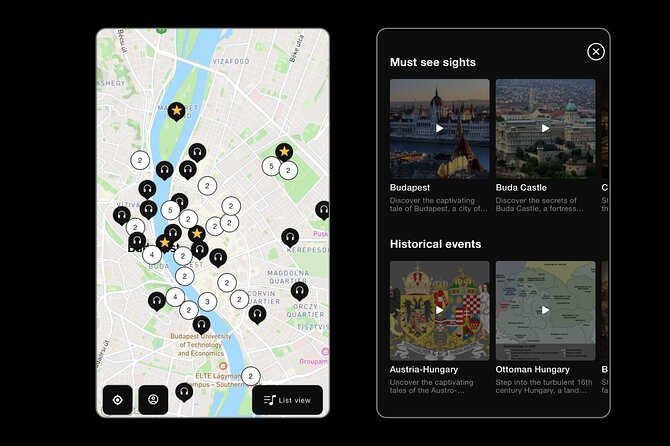
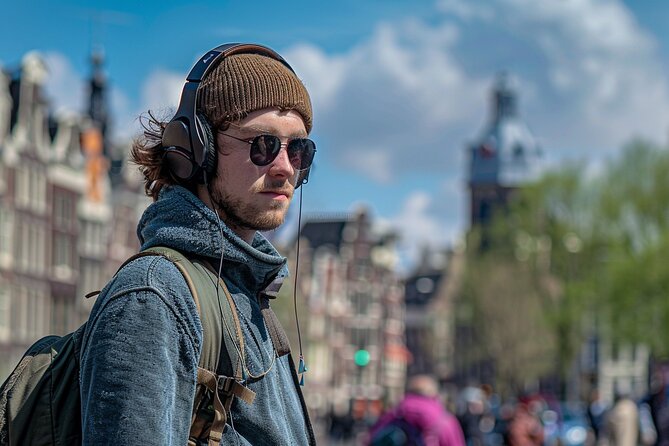
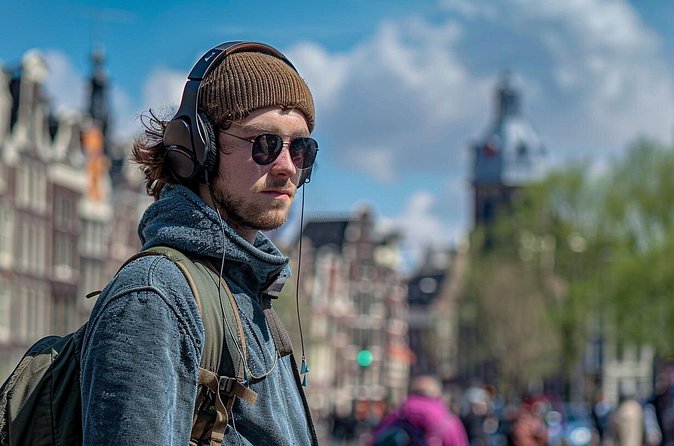
The core idea is refreshingly low-friction: you use your smartphone in a browser, then play audio through your own headphones. You don’t need to download an app or manage offline files. It’s a big deal in Budapest, where you’ll often want to switch between streets, viewpoints, and quick photo stops.
Your ticket is a mobile ticket, and you get a link to activate the audio guide with one step. Once you’re going, the tour is designed around outdoor “story stops” you can reach while walking. Each stop has a suggested listening time (many are around 10 minutes; a few go to 20).
Two practical tips to keep it smooth:
- Use headphones at a comfortable volume so you can still hear street sounds when needed.
- If your battery is touchy, aim to start the route on a full charge, since you’ll rely on internet for playback.
You can also read our reviews of more guided tours in Budapest



Price and value: what $3.62 buys you in real terms
At $3.62 per person, this is an “almost too cheap to be this useful” kind of add-on—if you actually use it for multiple stops. The time window is listed as about 1 to 8 hours, so your cost per hour can drop fast if you keep walking and listening.
Think of it like this: you’re paying for a planning and storytelling layer, not a ride, not a museum ticket, and not a guided explanation at every step. For that reason, it’s a great match if you already enjoy exploring on foot and you like learning while you walk.
Also, many listed stops are marked admission ticket free in the guide format. That doesn’t mean every landmark will be free to enter (some places still have their own entry rules), but it does signal that the experience is designed for viewpoint-style stops and exterior exploration.
Buda Castle, bridges, and the Danube: your classic “start here” route

If you want the most memorable concentration of Budapest in one go, start with the Buda side icons and work toward the river.
Stop 1: Buda Castle (about 20 minutes)
This is the big historical anchor: fortress walls, royal intrigue vibes, and the kind of setting that makes audio storytelling feel extra believable. The guide is outdoor self-guided, so you can pause as long as you want for views, then continue when you’re ready.
Chain Bridge lion statue story stop (about 10 minutes)
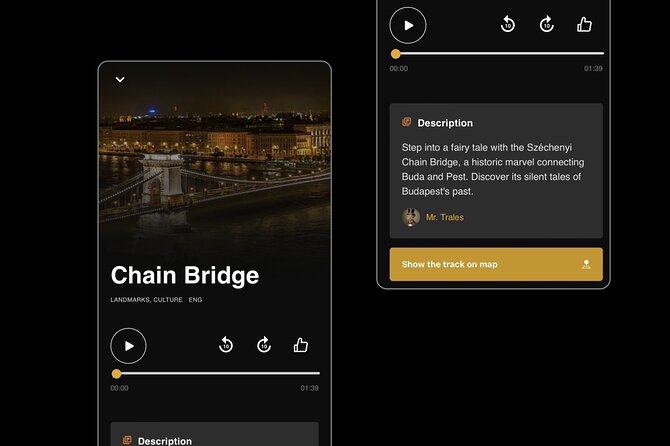
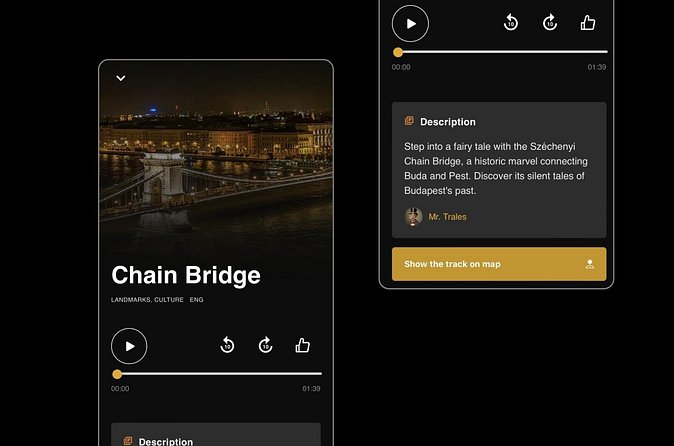
Crossing toward the city’s signature river crossing gets you into the “Budapest used to feel different” mood. The audio here focuses on the bridge’s silent past—short, scenic, and easy to fit between longer stops.
Budapest Parliament Building story stop (about 10 minutes)
Even if you only have a photo window, this is a strong stop because the building is so visually specific. The audio framing is about Hungary’s past and present, which helps you read the architecture instead of just seeing a landmark shape.
Fisherman’s Bastion (about 10 minutes)
This stop is built for views. Expect the audio to lean into folklore and fortress legend energy—perfect when you’re standing above the Danube trying to take it all in.
St. Stephen’s Basilica (about 10 minutes)
One past user used the online flow to get ahead of long lines for St. Stephen’s Basilica. That’s a smart move in practice. If you care about the tower too, leave time—or book it when you can—because it’s easy to run out of momentum after the main church visit.
Liberty Statue (about 10 minutes)
This is a “make the statue make sense” stop. The audio turns a huge landmark into a story you can repeat to friends later.
Danube River promenade (about 10 minutes)
This one helps you connect the dots. Rather than treating the river like a backdrop, the audio pushes you to notice the long timeline running along it.
Shoes on the Danube Bank (about 10 minutes)
This is the heavy-hitter memorial on the waterfront. It’s short in time, but it tends to land because it’s designed to make you stop and look, not rush past.
Liberty Bridge (about 10 minutes) and Erzsébet Bridge (about 10 minutes)
These bridge stops work well as punctuation between longer listening blocks. Audio here is focused on history and myth themes, so you’ll feel like you’re reading the river instead of just walking it.
Heroes’ Square, Margaret Island, and Gellért Hill: views with story context
On your “west-to-east sightseeing walk,” the city gives you big public spaces and strong viewpoints. This part of the route is especially good for first-time visitors who want landmarks that look good in photos and also make sense in history terms.
Heroes’ Square (about 10 minutes)
You’ll get a stop focused on the Millennium Monument and the surrounding framing buildings (Museum of Fine Arts and the Palace of Art). It’s a quick listen that helps you understand what you’re actually looking at.
Margaret Island (about 20 minutes)
This is where the tour slows you down a bit. The story angle is the mix of history and nature, and the listening time fits a relaxed walk break rather than a “two-minute stop and go” vibe.
Gellért Hill (about 10 minutes)
This is another viewpoint story. Expect a folklore-and-history tone that makes the hill feel like more than just elevation.
Citadella (about 10 minutes)
Paired with Gellért Hill, it turns the view into a place with military and fort history energy. If you like seeing Budapest from above, this is a solid pairing.
Gellért Hill Cave (about 10 minutes)
This one adds texture beneath your feet. If you’re tired of “big building” stories, it’s a nice change: underground, mysterious, and quick.
Central Market Hall, Andrássy Avenue, and the grand buildings you can read
Budapest’s best architecture isn’t only inside museums. It’s also in avenues, halls, and institutions you can see from the street—perfect for a self-guided audio format.
Central Market Hall (about 10 minutes)
This stop frames the Great Market Hall as a culture-and-cuisine hub and also ties it to planning and city design. It’s a good “fuel stop” in the middle of a sightseeing push: listen, look around, then eat or snack nearby if you feel like it.
Andrássy Avenue (about 10 minutes)
Audio here focuses on Neo-Renaissance elegance and “secrets” of the avenue. It’s one of those stretches where the building rhythm helps you understand why the street looks the way it does.
Franz Liszt Academy of Music (about 10 minutes)
If you like music history, you’ll like this stop. It’s short, but it makes the academy feel like a living institution rather than just a facade.
National Archives of Hungary (about 10 minutes)
This is history-forward, and the idea is simple: you’re near a place where stories were collected, preserved, and stored for a long time.
Great / Central Synagogue, also known as Nagy Zsinagóga (about 10 minutes)
You’re visiting Europe’s largest synagogue (as described in the guide). Even if you don’t spend hours inside, the audio helps you understand its scale and why it matters.
Semmelweis Museum of Medical History (about 10 minutes)
The stop is built around medical breakthroughs and the Semmelweis University setting. It’s a smart contrast to royal and military stories—you get a different kind of “Budapest shaped the world” theme.
National Széchényi Library (about 10 minutes)
This is the “culture and knowledge” story stop, tied to the Buda Castle area in the guide description. Libraries can be quiet places in life; this audio turns them into a narrative stop.
Metropolitan Ervin Szabó Library (about 10 minutes)
Another library, another mood. Expect a description that treats the building like a sanctuary of knowledge, not just an architectural backdrop.
Hungarian Academy of Sciences (about 10 minutes) and Corvinus University (about 10 minutes)
These add a modern-brain angle to your day. They’re quick stops, but they broaden the idea of what Budapest stands for: research, education, and public intellectual life.
You can also read our reviews of more tours and experiences in Budapest






Stations: Nyugati and Keleti feel like landmarks, not just transport
Two railway stops are included for a reason: Budapest’s stations aren’t just places to catch a train. They’re architectural scenes that you can enjoy without committing to a full day in transit.
Nyugati Railway Station Royal Waiting Room (about 10 minutes)
The guide points out the surprising elegance and notes it was designed by the creators of the Eiffel Tower. That kind of detail helps you look harder while you’re standing there.
Budapest-Keleti (about 10 minutes)
Keleti follows the same logic: a grand architectural stop with a story frame. If you like noticing design choices—arches, entrances, atmosphere—these are fun and easy to do between other sights.
Squares and neighborhood stops that keep your route from feeling like a checklist

The tour includes multiple city-center squares, which is useful because they break your day into manageable walking sections and give you natural pause points for listening.
Here are the square-style stops to watch for:
- Vörösmarty Square (about 10 minutes): a quick “how the area changed over time” story
- Kossuth Lajos Square (about 10 minutes): the heart of Budapest with hidden tales
- Deák Ferenc Square (about 10 minutes): a transport hub and city pulse point
- Batthyány Square (about 10 minutes): power and legacy stories tied to the square area
- Liberty Square (about 10 minutes): an extra story stop linked to the Liberty Square area and the National Bank facade theme
- Újlipótváros (about 10 minutes): a neighborhood stop with modern charm and history mix
Bridges and river crossings already cover some of the symbolism, but these squares help you anchor where you are in the city. That matters because self-guided tours can sometimes feel like random stops. The square stops keep the city legible.
Places with spiritual and cultural weight: Gül Baba’s Tomb and Margaret Island bridge breaks

Not every stop needs to be huge to matter. A couple of the included stops bring a softer, more specific kind of history into the mix.
Gül Baba’s Tomb (Gul Baba Turbeje) (about 10 minutes)
The tone here is mystical and spiritual, on Mecset Street. It’s a good choice when you want a break from the main “grand landmark” rhythm.
Margaret Bridge (about 10 minutes) and Margaret Island (about 20 minutes)
These work like a double feature: one is a Danube crossing story, the other is a quieter island walk. If you want a lighter, scenic feeling after heavier history stops, this pair helps.
Leisure and shopping stops: Westend, Millenáris, and City Park
The tour isn’t only monuments. It also includes places that make Budapest feel like a real city, not just a museum.
Westend (about 10 minutes)
A rise-and-fall story stop tied to the iconic shopping center. It’s short, but it gives context to a modern Budapest building you’ll otherwise treat as just another mall.
Millenáris (about 10 minutes)
The audio focuses on Budapest’s velodrome track and the 412-meter track detail. If you’re into sports or you like industrial/architectural history, it’s a fun change.
Varosligeti Müjegpalya Es Csonakazoto (City Park ice rink area) (about 10 minutes)
You’ll get a seasonal story angle—ice rink magic between history and leisure. It’s an easy stop if you already plan to be in City Park.
City Park (about 10 minutes)
A larger stop framed around its size and charm (the guide notes 302 acres). Do this when you want green space break energy without dropping your listening routine.
Timing your day: how to fit 100 stories into 1–8 hours
You don’t need to hit everything. In fact, trying to do all 100 in one walk is a fast way to hate your own schedule.
Here’s a pacing approach that works well with the guide’s “10- and 20-minute” story blocks:
- Choose one big anchor (Buda Castle or Heroes’ Square).
- Pair it with one river or bridge block (Shoes on the Danube Bank or a Danube bridge).
- Add one culture stop (Central Market Hall, the Synagogue, or the Franz Liszt Academy).
- Then let the rest of your time fill itself with smaller 10-minute squares, library stops, and station stops.
Because you can start and stop at any time and any place, you can also “micro-skim” between cafes or photo moments. You’ll feel like you’re making progress even when your day gets busy.
When this tour is a great fit (and when it’s not)
This experience is ideal if you:
- Want to explore at your own pace
- Like architecture, landmarks, and story-based walking
- Prefer a low-cost add-on that helps you understand what you’re seeing
It’s less ideal if you:
- Don’t want to rely on your smartphone for internet access
- Have hearing needs that require accommodations (the guide is not recommended for travelers with hearing impairment)
One more practical note: it’s private, so it’s only your group. That’s good for comfort, but it also means you won’t have a guide walking with you if you get stuck.
Also keep in mind the booking terms: this experience is non-refundable and cannot be changed, so it’s worth planning your weather and timing before you lock it in.
Should you book this Budapest audio story tour?
I’d book it if you’re the type who enjoys wandering and you want your sightseeing to come with story context—especially across both Buda and Pest. At $3.62, it’s one of the cheapest ways to get structured learning without paying for a full guided day. And the best practical payoff is that you can use it like a flexible route builder: pick a few high-impact stops, and you’ll still feel like you did something meaningful.
Skip it if you’re not comfortable using your phone on the go, or if you need a human guide. If you’re excited to mix famous landmarks with quieter “story stops,” this one fits Budapest perfectly.