REVIEW · BUDAPEST
Born Under The Red Star – The History of Communism in Hungary – Private Tour
Book on Viator →Operated by Budapest Urban Walks · Bookable on Viator
History here hits close to home. This private 3-hour walk through Budapest connects Hungary’s communist era to the streets you still see today, with stops like the House of Terror and 1956 memory, plus pickup to keep things easy.
I especially like the small, human touches: you’ll get coffee/tea and a retro soda at a Communist-themed bar, along with maps and recommendations so the story doesn’t end when the tour does. One possible drawback is that the route is tight and time-bound, so if you want extra focus on day-to-day life under communism, you’ll want to communicate that to your guide from the start.
In This Review
- Key Points to Know Before You Go
- Turning Budapest Streets Into a Real-Time History Lesson
- Pickup, Timing, and the Value of a Private 3-Hour Route
- Soviet Heroic Memorial: WWII Memory and the Message It Sends
- House of Terror Museum: Where the Regimes Get Personal
- St. Stephen’s Basilica and the Big Contrast of Power and Faith
- Szabadság tér: Liberty Square’s Two Monuments, Two Stories
- Memorial to the 1956 Revolution: Resistance as a National Memory
- Hungarian Parliament Building: Power in Stone, and Why It’s the Last Stop
- Price and What’s Actually Included (and What You Should Budget For)
- Communist-Themed Bar and the Retro Soda Stop: Fun With Purpose
- Who This Tour Fits Best (and Who Might Want Something Different)
- Smart Tips to Get More Out of Every Stop
- Should You Book Born Under The Red Star?
- FAQ
- How long is the Born Under The Red Star private tour in Budapest?
- Is hotel or apartment pickup included?
- What sites does the tour include?
- Are museum or church tickets included?
- What’s included during the tour besides the guide?
- Is this tour suitable if I have limited mobility?
Key Points to Know Before You Go
- Soviet, fascist, and communist history in one walking loop with major memorial sites placed close together
- House of Terror Museum is the emotional center, focused on what people suffered in the regimes
- A drink stop that fits the theme (retro soda in a Communist-themed bar) rather than a random café break
- Liberty Square and 1956 memory show how Hungary remembers both Soviet liberation and resistance
- Some important entrances may cost extra depending on what you choose inside churches and monuments
Turning Budapest Streets Into a Real-Time History Lesson
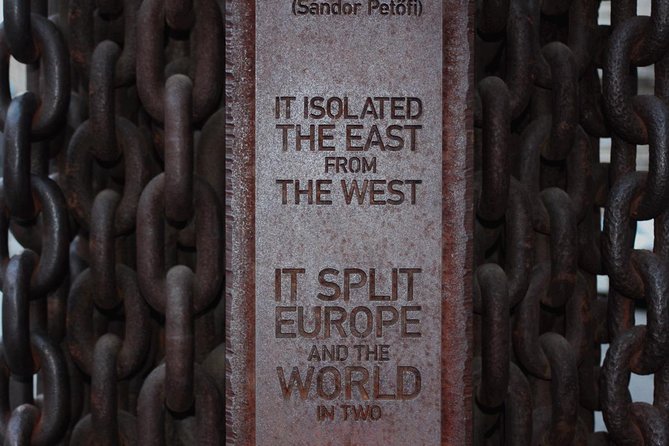
Budapest can look elegant and calm, but the city also stores political trauma in plain sight. This tour’s format is what makes it work: you don’t just read about ideology, you walk past the physical reminders and let each stop explain the next.
The “history of communism in Hungary” angle is the thread, but you’ll also see the broader 20th-century machinery that shaped the era. Expect a guided storyline that moves from WWII memory to authoritarian control, then to resistance and post-war symbolism.
Because it’s private, the pacing feels less like a conveyor belt. Your guide can steer small moments toward what you care about most, especially if you ask good questions at the beginning.
You can also read our reviews of more private tours in Budapest



Pickup, Timing, and the Value of a Private 3-Hour Route
At about 3 hours, this is a “doable and focused” kind of tour. You’re not spending a full day, but you’re also not stuck with a quick hit-and-run photo stop. For $108.14 per person, the value is in the included extras and the guidance through places that can be hard to interpret on your own.
You get hotel/apartment pickup, which matters in Budapest. It saves you from timing buses and trams while also keeping your head in the right place for the subject matter. Since the tour is offered in English and you receive a mobile ticket, it’s built to be low-stress once you’re meeting your guide.
What’s included is also worth noticing:
- pickup
- a retro soda at a Communist-themed bar
- maps and further recommendations
- coffee and/or tea
That kind of “support package” isn’t just comfort. It helps you follow up later, when you’re still trying to connect the dots after the tour ends.
Soviet Heroic Memorial: WWII Memory and the Message It Sends
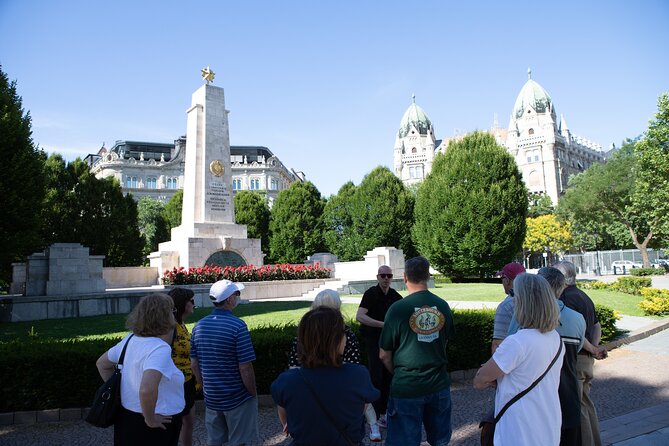
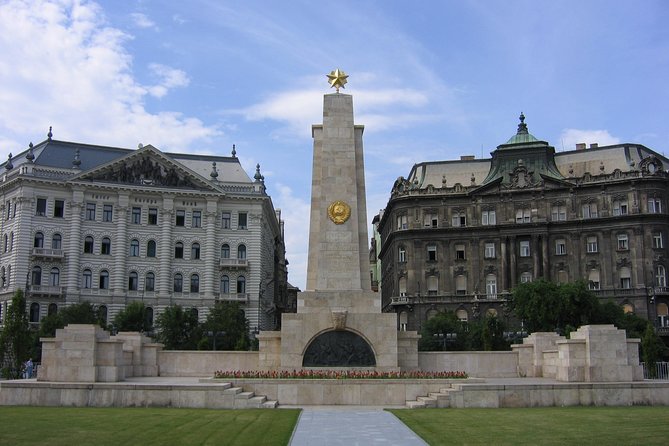
You start at the Soviet Heroic Memorial, marked by a white obelisk set in a maintained park. This is the kind of monument that looks simple until you ask what it’s actually commemorating. Here, it honors Russian military who served in WWII.
This first stop does a useful job: it reminds you that communist-era narratives didn’t begin with the dictatorship itself. They were layered on top of the war, with symbolism used to define who deserved gratitude—and who deserved blame.
It’s brief—about 15 minutes—and admission is free. That makes it a smart warm-up. You get your bearings, and you start learning the vocabulary of memory: liberation, sacrifice, occupation, and who gets to define each term.
House of Terror Museum: Where the Regimes Get Personal
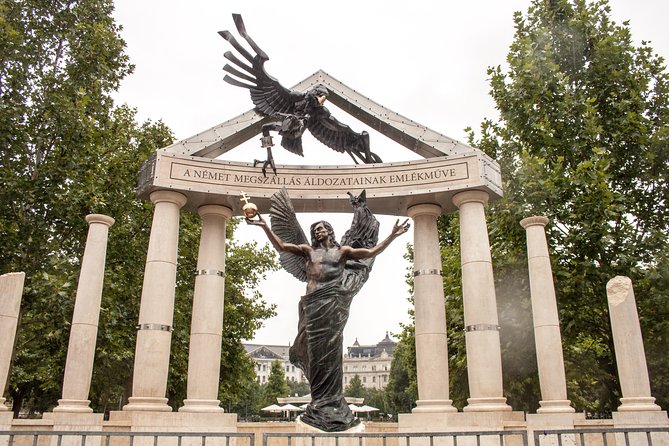
The emotional center of the tour is House of Terror Museum at Andrássy út 60. This site focuses on exhibits connected to fascist and communist regimes in Hungary, and it also works as a memorial to victims.
This matters because the communism story here isn’t only political theory. It’s about detention, interrogation, torture, and killings—what the system did to real people. Even if you already know the broad timeline, this place changes the scale from abstract to personal.
Plan for about 15 minutes at this stop, and the tour indicates free admission for this museum stop. Still, I’d treat this as one of those sites where ticket details can be confusing in practice. If you’re planning on accessing specific sections or special exhibits, ask your guide on arrival what’s covered and what might require a separate ticket.
Guides also shape your experience here. One guide name that comes up is Julia, described as adding details from personal experience, which helps when the topic is heavy and difficult. If your guide brings that kind of clarity, you’ll likely leave with a steadier understanding of what happened and why it mattered.
St. Stephen’s Basilica and the Big Contrast of Power and Faith
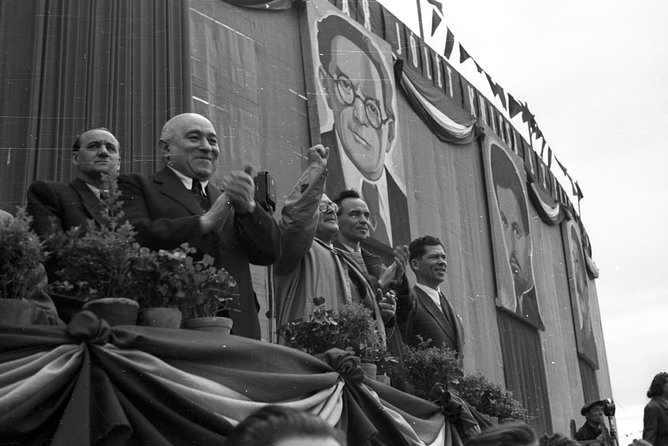
After the House of Terror, the walk takes you to St. Stephen’s Basilica (Szent István Bazilika). It’s a Roman Catholic basilica named for Stephen, the first King of Hungary, and the basilica is famous for housing his right hand in a reliquary.
The site adds contrast on purpose. When you’ve just been inside a museum about regimes that controlled people through fear, it’s striking to look at a major religious symbol tied to Hungarian identity.
The tour keeps this stop to about 15 minutes, but admission is not included. You can still enjoy the exterior and the sense of the place quickly, yet if you want dome views or interior access options, budget extra time and money.
This is also a practical “watch out” moment. One mismatch has shown up in real-world expectations: some wording around free admission can be unclear, and a paid ticket may cover only a specific part, like the dome. If you want full value from your visit, ask your guide what exactly you’re walking into and what tickets cover.
You can also read our reviews of more historical tours in Budapest





Szabadság tér: Liberty Square’s Two Monuments, Two Stories
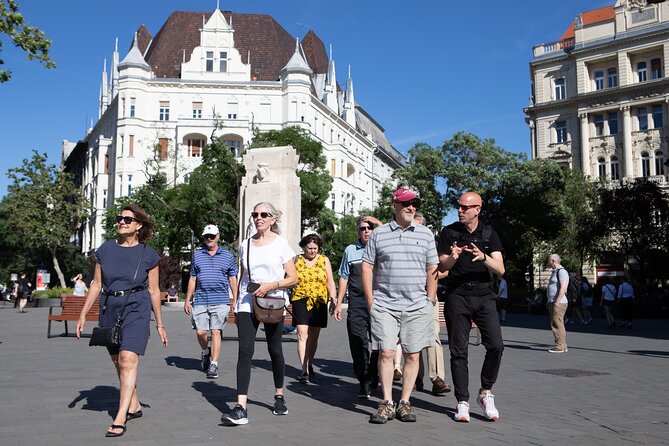
Next comes Szabadság tér, Liberty Square, a public square in the Lipótváros neighborhood. This is one of Budapest’s most layered stops, because the square is famous for controversial memorials that hold different meanings side by side.
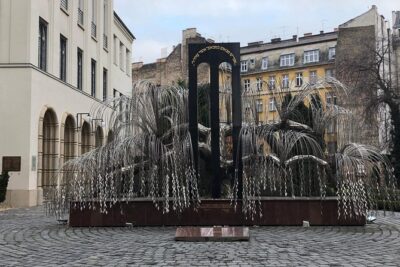
You’ll see memorials commemorating Hungarian Jewish victims of the Holocaust and Soviet soldiers who liberated Budapest from Nazi occupation in 1945. That pairing can feel emotionally complex, because it forces you to confront how different kinds of suffering and different liberation narratives are remembered in the same place.
This stop lasts about 25 minutes, which is long enough to slow down and actually look at the symbolism rather than just pass through. On the west side of the square, you also get the United States Embassy and the historicist-style headquarters of the Hungarian National Bank—useful visual anchors for understanding how modern Hungary sits inside this older political world.
The tour’s value here is interpretation. Your guide can help you read what you’re seeing: not just what the monuments say, but what they imply about who gets recognized, and which parts of history are emphasized.
Memorial to the 1956 Revolution: Resistance as a National Memory
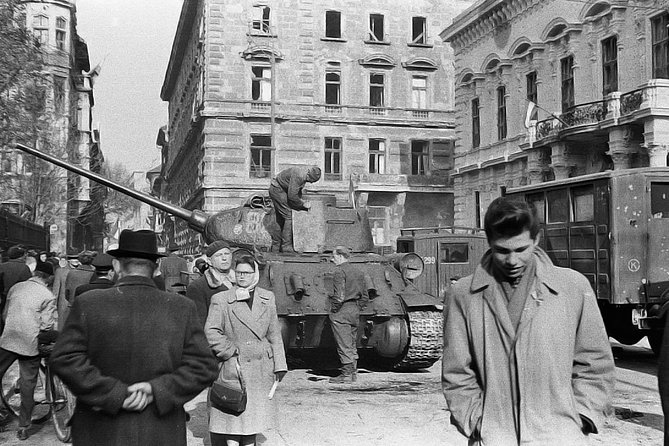
Then you shift to the Memorial to the 1956 Hungarian Revolution and War of Independence. This is a dedicated memorial to the heroes of the uprising against the communist regime.
The 1956 story is essential for anyone trying to understand communism in Hungary without reducing it to dates and slogans. This memorial gives the rebellion a physical place to stand, and it highlights a key point: communism wasn’t only imposed. It was fought.
The stop is about 15 minutes and free, which makes it a perfect breather between bigger institutions and open squares. If the museum was about suffering, this one is about refusal—how people tried to reclaim control of their own lives.
Hungarian Parliament Building: Power in Stone, and Why It’s the Last Stop
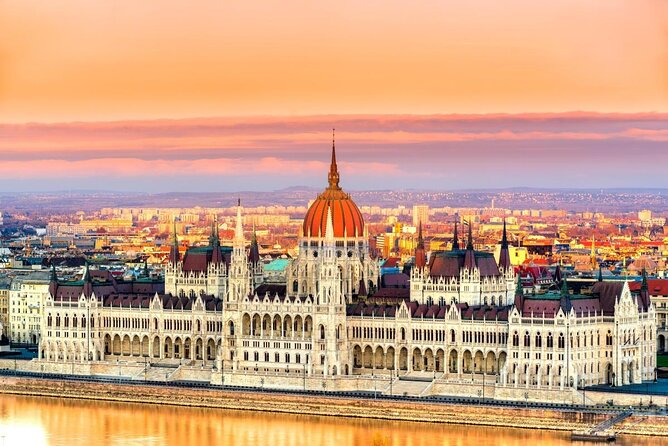
The final walk-by stop is the Hungarian Parliament Building, the seat of Hungary’s National Assembly. It’s also known as Országház and is one of Budapest’s most recognizable landmarks.
Admission is not included for this part of the tour, so think of this as a “finishing image” stop. You’re not there to tour inside; you’re there to see how a modern democratic institution sits at the end of a route that begins with WWII memory and moves through authoritarian control.
That contrast is the whole point. When you connect the dots between memorials, museums, and political architecture, you start to understand how regimes and anti-regimes use the built environment to shape national identity.
In past private tours, the guide’s flexibility also mattered. Norbert is one example of a guide described as friendly and flexible, which is exactly what you want when the day’s walking rhythm depends on weather, crowd flow, and how long you pause at each stop.
Price and What’s Actually Included (and What You Should Budget For)
Let’s talk value in plain terms. At $108.14 per person for roughly 3 hours, this isn’t a bargain-basement walk. It’s priced like a true guide-led experience with pickup and extras, which is what you’re paying for.
Included costs that help you:
- pickup from your address
- coffee and/or tea during the tour
- a retro soda stop at a Communist-themed bar
- maps and further recommendations
Not included:
- St. Stephen’s Basilica admission (as listed)
- Hungarian Parliament Building admission (as listed)
And one more practical reality: for sites with different ticket options (like domes or special access), “free” can be less straightforward than it sounds. I’d treat this as a tour where you should ask one simple question early:
What part of each site entrance is covered today, and what costs extra?
If you do that, you’ll avoid the kind of disappointment that comes from assuming every entry is fully included.
Communist-Themed Bar and the Retro Soda Stop: Fun With Purpose
The retro soda stop is one of those small details that makes the tour feel like more than a checklist. It’s themed, yes, but it also functions as a reset. You get a drink, you catch your breath, and you can ask follow-up questions while you’re still in the story.
One guide might also factor in route timing with public transportation. A detail that comes up is a guide taking the subway to connect segments efficiently. That kind of practical navigation helps keep a private tour from feeling rushed or randomly long.
Just be clear about what’s included. The tour data says you get a retro soda there. If you’re ordering anything else, assume you’ll pay unless your guide confirms otherwise.
Who This Tour Fits Best (and Who Might Want Something Different)
This tour is a strong match if you:
- want a guided explanation of communist-era control and its effects in Hungary
- like history that connects to places you can stand in front of
- prefer a private setup where you can set your own questions and pace
It also works well for first-time visitors who don’t want to piece everything together alone. Budapest is full of history, and without context the story can feel like separate attractions instead of one connected political arc.
If you’re the type who wants extremely long, granular detail about what daily life under communism felt like—work, housing, censorship, and the “small rules” people lived with—then you should communicate that at the start. The tour is structured around major sites, and time may not stretch to cover every topic in the depth you might personally want.
Smart Tips to Get More Out of Every Stop
Wear comfortable walking shoes. Even though the time at each place is fairly short, you’re doing multiple city segments in one go.
Bring a short list of questions before you meet your guide. Something like:
- How did WWII memory feed into communist legitimacy?
- What did repression look like day to day?
- Why does Liberty Square remember Soviet soldiers next to Holocaust victims?
Also, keep ticket expectations flexible. For sites where admission options vary, ask early what you’re entering and what’s included.
Finally, keep the tone in mind. This isn’t only political history; the House of Terror is about real cruelty. If you’re sensitive to heavy topics, plan to take a slower breath during the museum stop rather than rushing to the next monument.
Should You Book Born Under The Red Star?
Book it if you want a focused, private introduction to Hungary’s communist story anchored to real Budapest sites. The combination of House of Terror, the 1956 memorial, and Liberty Square makes this more than a casual walk. Add pickup, maps, coffee/tea, and a retro soda, and you’ve got a package that saves time and helps you keep learning afterward.
Skip or consider a different format if you want a long, deeply personal exploration of daily communist life with lots of time for discussion, because this tour is built around key stops and a set route. If you do book, start the day by telling your guide how deep you want to go on personal life under the regime—and ask about which ticket options are covered.
If your goal is to understand the era with clarity and context, while still seeing the city in a smart 3-hour loop, this is a very solid choice.
FAQ
How long is the Born Under The Red Star private tour in Budapest?
It runs for about 3 hours.
Is hotel or apartment pickup included?
Yes. Your guide meets you at your requested address.
What sites does the tour include?
It includes the Soviet Heroic Memorial, the House of Terror Museum, St. Stephen’s Basilica, Szabadság tér (Liberty Square), the Memorial to the 1956 Hungarian Revolution, and the Hungarian Parliament Building.
Are museum or church tickets included?
House of Terror is listed as free admission. St. Stephen’s Basilica is listed as not included, and the Hungarian Parliament Building is also not included.
What’s included during the tour besides the guide?
You’ll get a retro soda in a Communist-themed bar, maps and further recommendations, and coffee and/or tea.
Is this tour suitable if I have limited mobility?
The tour calls for a moderate physical fitness level and is near public transportation, but it is also a walking-focused city experience, so comfortable walking shoes help. Good weather is required for the tour to run.