REVIEW · BUDAPEST
Historical and Cultural Guided Tour of Budapest
Book on Viator →Operated by György Rashad Salamon · Bookable on Viator
Budapest tells its story in stone and streets. This private full-day route is a smart way to see the big sights and connect them to Hungarian history with a guide who keeps the day moving. I like that it includes hotel pickup and a dedicated guide for your group, so you’re not just hopping between photos.
My second favorite part is how the tour balances famous icons with places that explain daily life and hard chapters. Stops like the Jewish Quarter and the Shoes on the Danube Bank give context, not just names, and guides such as György (and Rashad, in other guides’ experiences) are praised for clear, friendly English and making the city feel understandable.
The main drawback is simple: it’s a long day with a lot of walking. Also, entry tickets aren’t included for some key stops (notably the Jewish Quarter and Parliament interior), and you’ll want comfortable shoes and a little patience for transfers.
In This Review
- Key points worth knowing
- A One-Day Route That Covers Both Sides of Budapest
- Heroes’ Square and City Park: Hungarian roots and the spa giant
- Andrássy Avenue and the Hungarian State Opera House
- Jewish Quarter: synagogues, memory, and ruin-bar culture
- St. Stephen’s Basilica and the Holy Right Hand
- Parliament Building: outside views and a possible inside ticket
- Shoes on the Danube Bank and the meaning of memorials
- Buda Castle: medieval power on the river hill
- Fisherman’s Bastion: photos, panoramas, and a quick reset
- Price and Value: what $396.52 per group really buys
- Tips to Make the Full Day Work Smoothly
- Should you book this Budapest history-and-culture tour?
- FAQ
- How long is the Historical and Cultural Guided Tour of Budapest?
- What time does the tour start?
- Is this tour private, and what is the group size?
- Does the tour include hotel pickup?
- What language is the tour offered in?
- Do I receive a mobile ticket?
- Are entry fees included in the price?
- Is the Parliament interior visit included?
- Is food or drinks included?
- What level of physical fitness is needed?
Key points worth knowing
- Private guide, real pacing: you can tailor what you focus on without losing the core route
- Two city views in one day: Fisherman’s Bastion for panoramas and Buda Castle for medieval scale
- History with emotional weight: Holocaust Memorial area plus the Danube Shoes memorial
- Boulevard-to-palace mix: Andrássy Avenue, the Opera House, then the royal hilltop
- Most major sites are short stops: great for orientation, less time for slow wandering
- Entry fees vary by stop: most are free, but Jewish Quarter and Parliament interior are not included
A One-Day Route That Covers Both Sides of Budapest
This tour is built for people who want to get their bearings fast and leave with a clear picture of how Budapest became what it is today. You start on the Pest side with national monuments and grand avenues, then cross to Buda for castles and views. It’s not a casual stroll all day; it’s a guided sweep with enough time at each stop to understand what you’re looking at.
Because it’s private (up to 15 in your group) and guided the whole way, you spend less time guessing. That matters in Budapest, where the city is photogenic but the history is layered and easy to misread if you only rely on signs.
You should also expect a mix of short walking legs and transit. The pace is “full day” rather than “slow museum mode,” and the best strategy is to dress for movement and keep your energy steady.
You can also read our reviews of more guided tours in Budapest



Heroes’ Square and City Park: Hungarian roots and the spa giant
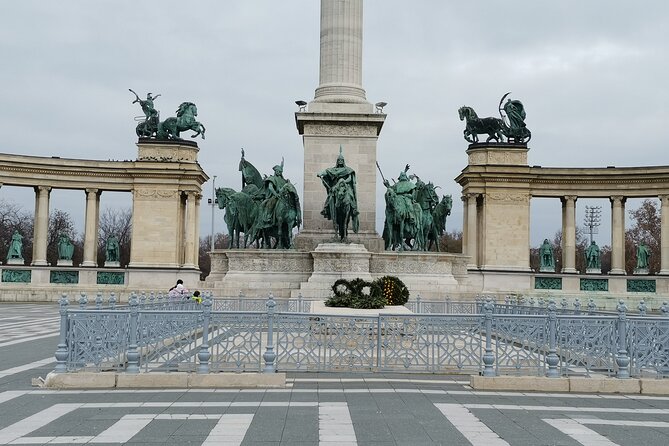
You kick off at Heroes’ Square, one of Budapest’s most recognizable landmarks, with its major statues tied to important figures in Hungarian history. The guide’s job here is to turn the sculpture into a timeline—so the square doesn’t feel like a random monument you quickly check off.
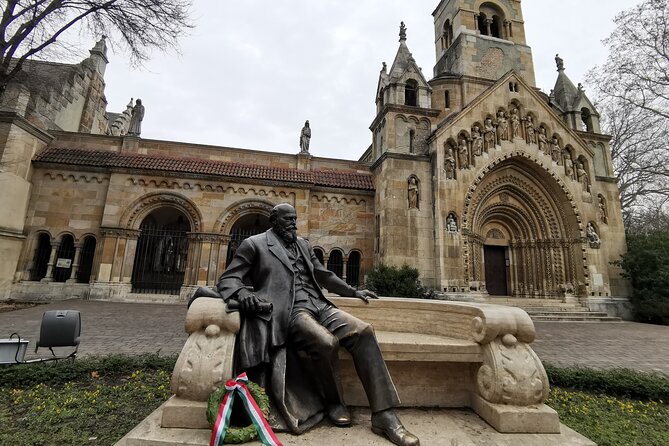
From there, you move into Budapest City Park, a classic green space with a reputation as one of the world’s early public parks. You’ll also pass Vajdahunyad Castle, which isn’t just one building—it’s a fantasy-style pastiche showing architectural evolution across different Hungarian styles and centuries. Even the short stop time works well because the guide can explain what you’re seeing.
One of the standout “how did I not know this?” moments in the park is the reference to the largest spa in Europe you’ll see during your walk. It’s the kind of detail that sticks because it connects Budapest’s grandeur to everyday life: health, thermal culture, and the city’s obsession with baths.
Practical note: park time can feel slower if it’s hot, but it’s also the easiest place to shake out your legs and get into the rhythm of the day.
Andrássy Avenue and the Hungarian State Opera House
Next comes Andrássy Avenue, often compared to the Champs-Élysées style boulevard: Neo-renaissance mansions, classic townhouses, and an endless parade of shops and restaurants. This stretch is where Budapest looks like an old European capital that knew it would matter.
The tour then focuses on the Hungarian State Opera House (Magyar Állami Operaház), framed as one of the most beautiful buildings on the avenue. Even if you’re not catching a performance, the exterior is worth it when a guide explains its place in the city’s cultural ambitions.
A good point here is what the guide does between stops: they connect architecture to politics, national identity, and the way elites shaped public culture. Without that context, it can be easy to admire the building and still miss why it’s important.
If you’re sensitive to crowds, this area can feel busy since it’s a central thoroughfare. The upside is that you’ll understand the “why” while you’re standing amid the activity.
Jewish Quarter: synagogues, memory, and ruin-bar culture
The Jewish Quarter is where the tour’s historical weight really lands. You explore the area that was once used as a ghetto, and the route is designed to show both major landmarks and the everyday traces that still shape the neighborhood.
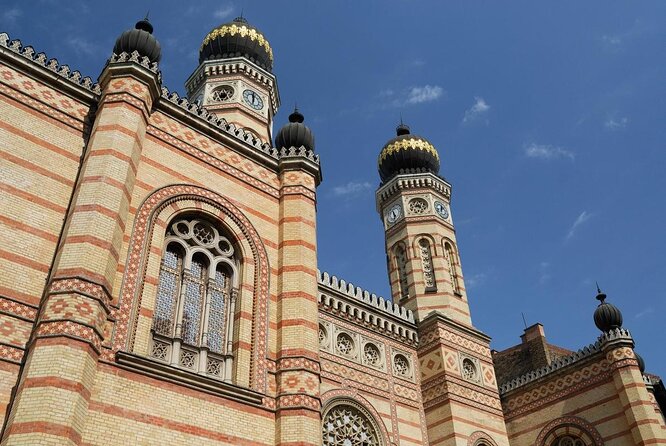
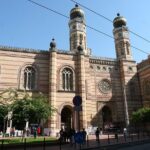
You’ll spend about an hour here, with references to the largest synagogue in Europe and the Holocaust Memorial. You’ll also hear about the area’s modern side, including ruin bars, which reflect how Budapest transformed trauma and survival into a distinct cultural scene.
This is one of the most praised parts of the day because it’s not treated like a checklist. The guide’s commentary gives you a framework for what you’re seeing—so the memorials don’t turn into just “somber stops.”
One consideration: since admission here is not included, you should plan for extra ticket costs and time to enter. Also, the Jewish Quarter can involve walking on uneven or older streets, so comfortable footwear matters more than usual.
St. Stephen’s Basilica and the Holy Right Hand
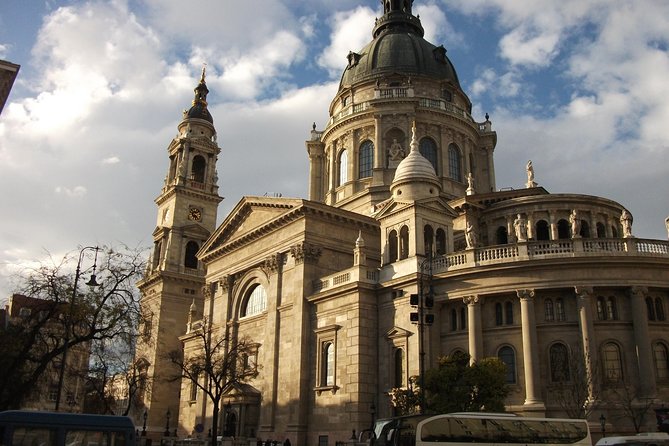
After the Jewish Quarter, you head to St. Stephen’s Basilica (Szent István Bazilika), the largest church in Budapest dedicated to Hungary’s first king. The tour includes time to see why this site is central to Hungarian religious and national identity.
A key highlight is the relic known as the Holy Right Hand—the mummified hand associated with St. Stephen. Even if you’re not deeply religious, the guide’s explanation helps you understand why this relic carries such cultural gravity and why it’s tied to ideas of kingship and legitimacy.
This stop is usually brief, but it’s timed well: you’re coming out of a heavy neighborhood history area, then moving into a different kind of national symbolism. The basilica offers a shift in tone while still staying anchored in identity and power.
You can also read our reviews of more historical tours in Budapest



Parliament Building: outside views and a possible inside ticket
Of course, the route includes the Hungarian Parliament Building. You’ll walk around it and learn about the parts of Hungary’s modern history connected to communist rule, dictatorship, and the 1956 revolution.
Here’s the practical twist: the tour notes that if you want to join an inside tour, you should book your ticket online in advance and send the start time to modify the schedule. In other words, the default experience is the exterior and surrounding history; an interior visit depends on your planning.
Admission to the Parliament interior is not included, and that affects value. If interior access is a priority for you, treat it like a separate timed booking and plan the rest of the day around it.
Even without going inside, the Parliament walk is still useful because it’s one of the most dramatic “control center” symbols in the city—where modern national politics are literally built into stone.
Shoes on the Danube Bank and the meaning of memorials
Next up is Shoes on the Danube Bank, a short stop with a big emotional impact. The guide explains the sad story behind the memorial, connecting the location to the violence and terror that occurred in the area during World War II.
Because the visit is only a few minutes, it works best when the guide keeps the context clear. This is exactly the kind of place where you don’t want to be rushing past half-remembered facts.
The Danube here is more than a pretty river. With the guide’s framing, it becomes a quiet witness—something you’ll understand better after the explanation rather than before it.
Buda Castle: medieval power on the river hill
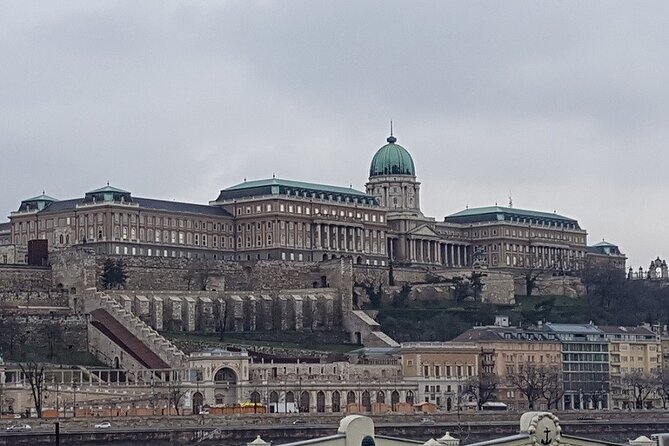
After crossing the Chain Bridge, you reach Buda Castle, the medieval residence of Hungarian kings from the 14th century. The best part of this stop is not just scale—it’s how you’ll start to see Budapest as two different stories built on two hills and a river between them.
You’ll spend about two hours in the castle area. That’s plenty of time to absorb the layout and let the guide explain what changed over centuries, and why royal space became civic space over time.
If you love history, this is where the day shifts from “major sights” to “how the city was organized.” And if you’re more into photos, you’ll get both: the castle grounds set you up for strong viewpoints, especially once you head toward Fisherman’s Bastion.
Fisherman’s Bastion: photos, panoramas, and a quick reset
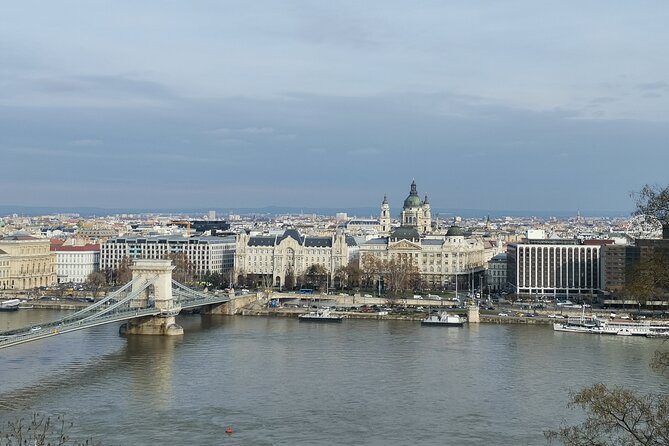
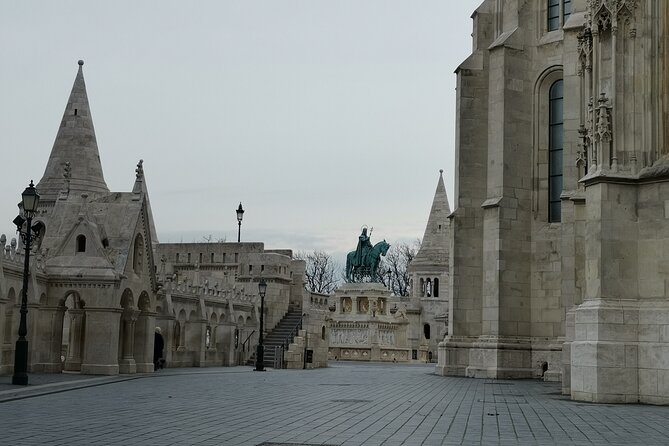
You finish this side of the day at Fisherman’s Bastion, with a short visit and a lot of payoff. The main reason to come here is the panoramic view—a dramatic angle of Pest’s skyline across the Danube.
Even if you only stay around 15 minutes, it’s a good time to slow down, regroup, and take photos without feeling rushed. The guide’s commentary often helps with orientation: which neighborhoods you’re seeing and how the geography shaped the city.
This is also a nice contrast to the memorial stops earlier. After heavy history, you get a breath of open air and a chance to enjoy Budapest’s visual drama.
Price and Value: what $396.52 per group really buys
The price is $396.52 per group (up to 15) for about 7 hours of guided time. That’s not a “cheap sightseeing” number, but it’s also not inflated for the amount of guidance you’re getting.
Here’s what you’re paying for:
- A private guide with full attention for your group
- A route that covers major landmarks across both sides of Budapest
- Time at iconic sites, plus cultural context you likely won’t get on your own
- Hotel pickup and a plan that mixes walking with transit
What’s not included:
- Food and drinks
- Entry fees for certain stops, including the Jewish Quarter area and the Hungarian Parliament interior option
So the value is highest if you care about understanding what you see, not just seeing it. If you’re mainly chasing photos and already know the history, you might find independent planning cheaper. But if you want context delivered clearly while you’re moving through the city, the group-private format is where the money starts to make sense.
Tips to Make the Full Day Work Smoothly
A few practical habits make this tour much easier.
First: wear comfortable shoes. The day includes a lot of ground covered, and some stops are short enough that you’ll feel every step if your feet aren’t ready. Bring a light layer too; weather changes around open squares and along the river.
Second: plan for ticket costs at the stops where entry isn’t included. If you’re considering the Parliament interior, handle it early and message the guide with your entry time so the schedule can adjust.
Third: keep water handy even though food and drinks aren’t included. You’re moving through parks, avenues, and historic hills, so you’ll be grateful for small breaks even if the official stop times are tight.
Finally: treat the day as a foundation. It’s excellent for getting your bearings fast and then choosing where you’ll return later for longer wandering.
Should you book this Budapest history-and-culture tour?
If you want a single day that covers the biggest sights—Heroes’ Square, Andrássy Avenue, the Opera House, the Jewish Quarter, St. Stephen’s Basilica, Parliament, Shoes on the Danube, Buda Castle, and Fisherman’s Bastion—this tour makes a lot of sense. It’s especially strong if your top goal is context: why these places matter and how Hungary’s story connects across centuries.
Book it if:
- You like guided explanations more than self-guided wandering
- You want a structured route that reduces decision fatigue
- You’re traveling with family and want a guide who can keep everyone comfortable and oriented
Think twice if:
- You hate walking and prefer slower pacing
- You’re fine paying extra for entry at certain stops (or you want only free sights)
- You plan to do a lot of your own exploring and won’t return to the details explained by the guide
Overall, it’s a solid way to turn Budapest from a photo reel into a place with meaning—one stop at a time.
FAQ
How long is the Historical and Cultural Guided Tour of Budapest?
It runs about 7 hours (approx.).
What time does the tour start?
The start time is 9:00 am.
Is this tour private, and what is the group size?
Yes. It’s a private tour/activity with only your group participating, up to 15 people.
Does the tour include hotel pickup?
Yes. Hotel pickup is included.
What language is the tour offered in?
The tour is offered in English.
Do I receive a mobile ticket?
Yes. A mobile ticket is provided.
Are entry fees included in the price?
Most stops list admission ticket free, but entry fees are not included in the overall price. Some stops (like the Jewish Quarter and Parliament interior) are not included.
Is the Parliament interior visit included?
The note says the Parliament inside tour requires booking your ticket online before and sharing the start time so the schedule can be modified. That inside entry is not included.
Is food or drinks included?
No. Food and drinks are not included.
What level of physical fitness is needed?
The tour is described as suitable for travelers with a moderate physical fitness level.