REVIEW · BUDAPEST
Historical and Cultural Walking Tour in Budapest
Book on Viator →Operated by György Rashad Salamon · Bookable on Viator
Budapest makes sense in 4 hours. This private guide-led walk strings together the city’s big sights with the day-to-day stories that explain why they matter. You get a personal guide, pickup, and a route that can flex as you like.
What I love most is how the tour works on two levels at once: landmark sightseeing plus local context you’d miss wandering alone. You’ll also get time at key places like Heroes’ Square, St. Stephen’s Basilica, and Buda Castle without feeling rushed.
One thing to consider: it’s a half-day on foot with moderate walking and lots of moving between neighborhoods. If you’re sensitive to uneven pavement, stairs, or city crowds outside, plan your comfort first.
In This Review
- Key Things You’ll Notice on This Budapest History Walk
- Where the Tour Starts and How You Get Oriented Fast
- Heroes’ Square: Statues That Explain Hungarian Identity
- City Park and Vajdahunyad Castle: A 1000-Year Architecture Lesson
- Széchenyi Baths Culture: Why Hungary Turns Water Into Life
- Andrássy Avenue: Budapest’s Answer to a Grand Boulevard
- The Hungarian State Opera House: Beauty With a Backstory
- St. Stephen’s Basilica and the Holy Right Hand Relic
- Liberty Square to the Hungarian Parliament: Politics Through Time
- Buda Castle and the Chain Bridge: Royal Views, Real Geometry
- Price and Value: What $277.64 Gets You (and When It Makes Sense)
- Who This Private Walk Is Best For
- Booking Notes That Affect Your Experience
- Should You Book This Budapest History Walk?
- FAQ
- FAQ
- How long is the walking tour?
- Where does the tour start?
- Does the tour include hotel pickup?
- What time does the tour start?
- Is this a private tour, and how many people are on it?
- Are the sights ticketed?
- Are food and drinks included?
- Are transportation tickets included?
- Is a mobile ticket provided?
- What’s the cancellation policy?
Key Things You’ll Notice on This Budapest History Walk

- Private pacing that can shift: your guide can tailor the flow based on what you’re most interested in.
- City Park’s “architecture collage”: Vajdahunyad Castle sits inside a park setting with major sightseeing stops.
- Bath culture stops in the middle of the walk: Széchenyi Baths enter the story even if you’re not going inside.
- Andrássy Avenue as a timeline: mansions, boutiques, and the State Opera House are explained as part of Budapest’s changing identity.
- St. Stephen’s Basilica isn’t just pretty: you’ll focus on the Holy Right Hand relic and why it’s meaningful.
- Crossing the Chain Bridge into Buda Castle: the view shift is part of the lesson, not just the photo op.
Where the Tour Starts and How You Get Oriented Fast
The meeting point is Deák Ferenc tér, a practical hub in Pest that’s easy to reach by public transport. Starting here is smart because Budapest’s layout can feel confusing on day one. Your guide sets the tone quickly, then pushes you outward to the iconic sites.
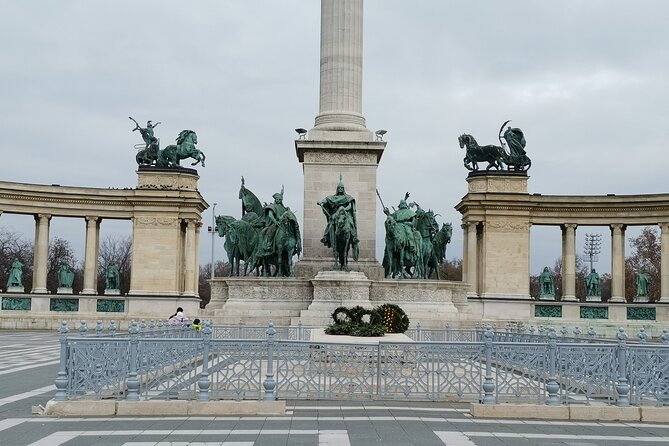
From the first stop, the tour favors “why it exists” over “what you already see.” At Heroes’ Square, the focus is on the statues and what they were meant to commemorate. The guide ties those figures to the roots of Hungarian identity, so the place feels like a story instead of a postcard.
If you like getting your bearings fast—directionally and historically—this is the kind of tour that helps. You spend the first segment laying the groundwork for everything you’ll see later.
You can also read our reviews of more walking tours in Budapest



Heroes’ Square: Statues That Explain Hungarian Identity
You’ll spend about 20 minutes at Heroes’ Square. The square is famous, yes, but the real value is how a guide connects the memorial message to Hungarian history and national pride. It’s not just names and dates; it’s the meaning behind the monument language.
If you’re the type who likes landmarks with a purpose, you’ll enjoy this stop. It also works well as an anchor point because after this, the tour keeps moving through layers of Budapest—from empire-era ambition to 20th-century politics to royal Buda.
The only downside is time: 20 minutes goes quickly. If Heroes’ Square is your favorite, you may want to come back later after the tour so you can linger on details at your pace.
City Park and Vajdahunyad Castle: A 1000-Year Architecture Lesson
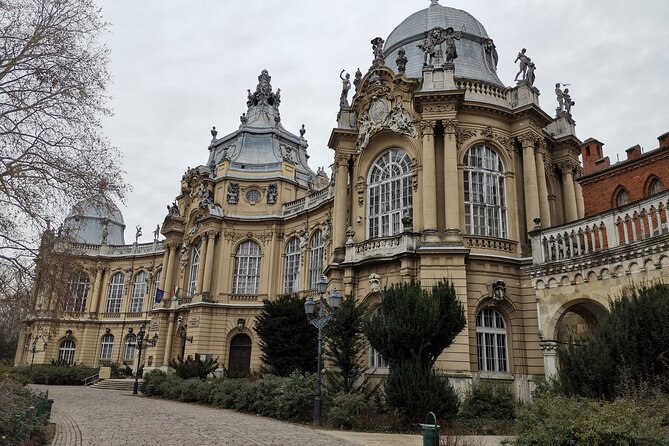
Next comes City Park (with about 45 minutes here), where the guide turns a relaxing green space into a history timeline. City Park is described as one of the early public parks designed for people to enjoy time outdoors. That matters because it frames how public life changed over time.
In the middle of the park, you’ll reach Vajdahunyad Castle, known for representing 1000 years of Hungarian architecture. The tour includes time to look inside, which is where this stop becomes more than scenery. Even if you’re not a museum person, the interior visit helps you see how the park’s “castle” concept works as a storytelling device.
Practical tip: this is a nice break in the walking rhythm, but it’s still part of the schedule. Wear shoes you’re happy to wear for a few hours straight.
Széchenyi Baths Culture: Why Hungary Turns Water Into Life
During the park walk, the route includes a stop to talk about bath culture, with Széchenyi Baths referenced as a major example. You get context on why thermal water has such a strong place in Hungarian daily life and leisure.
This is one of those side-threads that makes Budapest feel real. Even if you’re not booking a soak, you’ll understand why locals talk about baths like they’re part of the city’s social fabric.
Andrássy Avenue: Budapest’s Answer to a Grand Boulevard
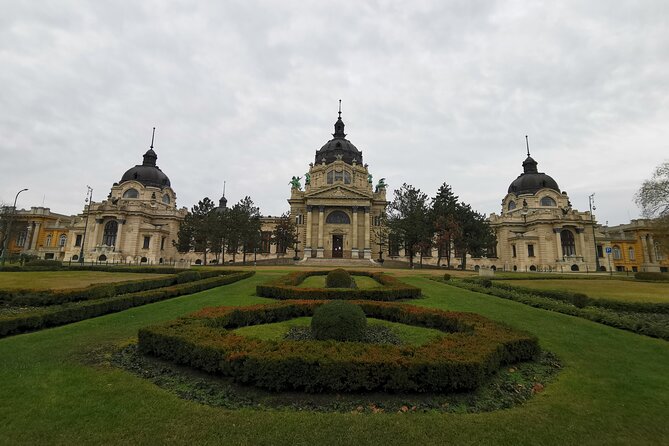
After the park, the tour heads along Andrássy Avenue, often called Budapest’s version of the Champs-Élysées. Expect about 30 minutes here. The avenue is lined with Neo-renaissance mansions and townhouses, and it’s also where you’ll notice how wealth, style, and public life overlap in Budapest.
What makes this stretch work on a guided tour is the way your guide reads the architecture like evidence. You’re not just passing buildings—you’re learning what kind of era they came from and what social signals they sent.
This stop can also be a bit of a visual “hit list,” so bring your attention. If you try to look at everything at once, the lesson can get lost.
You can also read our reviews of more historical tours in Budapest





The Hungarian State Opera House: Beauty With a Backstory
Next is the Hungarian State Opera House (Magyar Állami Operaház), with about 25 minutes. Even if you don’t plan to attend a performance, the building itself is a major piece of Budapest’s cultural identity.
Your guide explains the Opera House through its story—why it matters and how it fits into Budapest’s big cultural ambitions. This is a good pairing with Andrássy Avenue, because the avenue sets the stage and the Opera House gives it a focal point.
A practical consideration: the time here is limited. If you’re an opera fan who loves to look at interiors, you might still want to do separate research afterward to plan a future visit.
St. Stephen’s Basilica and the Holy Right Hand Relic
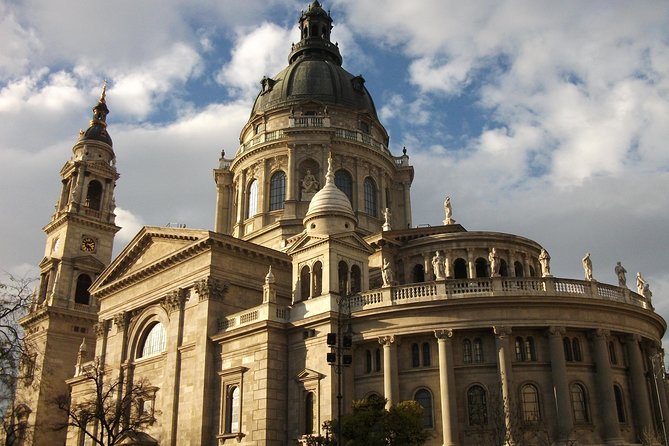
Then it’s time for one of Budapest’s most meaningful religious landmarks: St. Stephen’s Basilica (Szent Istvan Bazilika). You get about 15 minutes at this stop, and the focus is very specific.
The basilica is dedicated to Hungary’s first king, and it houses an essential relic: the Holy Right Hand, described as the mummified hand of St. Stephen. That detail changes the whole experience. You’re not looking at a church as an artwork only; you’re also looking at it as a living symbol tied to national origins.
If you like symbolism, this is one of the strongest parts of the tour. The drawback is that 15 minutes means you’ll probably see the key highlights rather than soak up every corner. Still, it’s a highly efficient introduction.
Liberty Square to the Hungarian Parliament: Politics Through Time
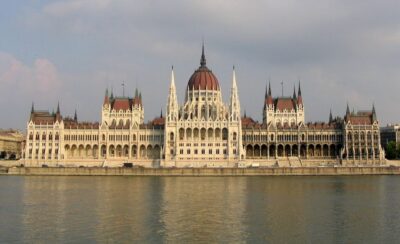
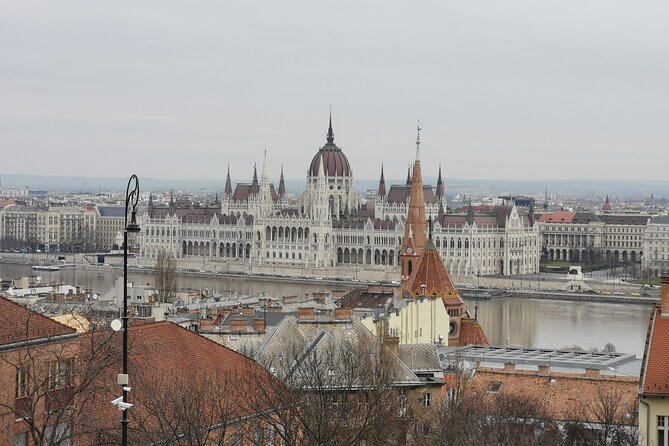
After St. Stephen’s Basilica, you cross Liberty Square and then head toward the Hungarian Parliament building. The tour uses this segment to talk through political life in different periods—dictatorship, communism, and democracy.
You don’t need to be a political history buff for this to land. Seeing the Parliament building in context gives the stories a physical place to live. It’s also a helpful mental bridge between the monarchy and national symbolism you just saw at the basilica, and the royal past you’ll revisit soon in Buda.
One practical note: this area can be busy at street level. Keep an eye on your guide so you don’t drift during photo stops.
Buda Castle and the Chain Bridge: Royal Views, Real Geometry
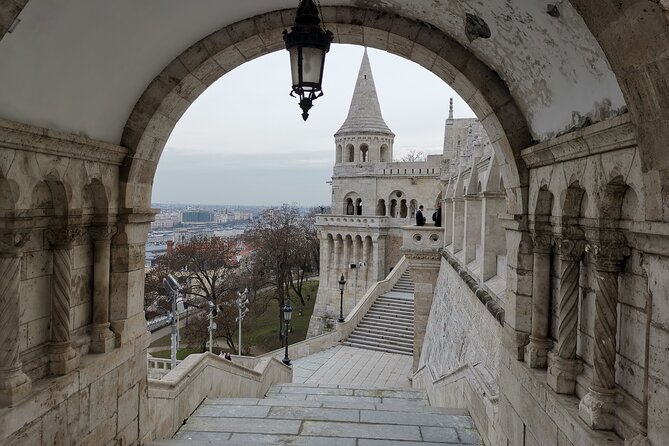
The final big chunk is in Buda Castle, with about 1 hour here. This is the medieval residency place of Hungarian Kings from the 14th century, so the guide uses it to bring together the earlier ideas about national identity and power.
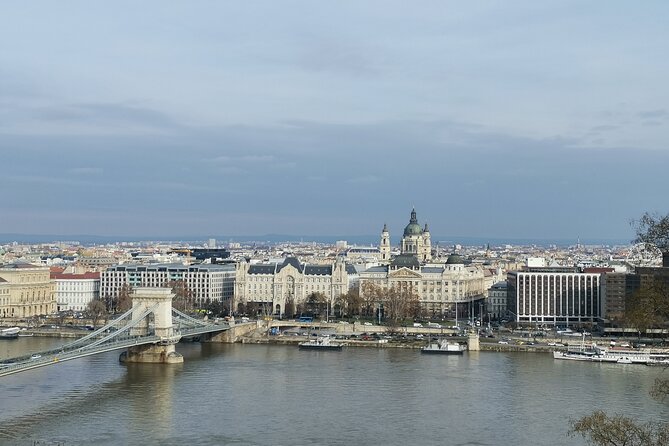
Before you fully settle into the castle area, you cross the famous Chain Bridge. That bridge crossing isn’t just scenic—it’s part of how you understand Budapest. The city shifts from Pest’s wide streets and monuments to Buda’s elevated castle presence, and the guide makes that change feel purposeful.
This is the stop where comfortable walking shoes matter the most. It’s a “see a lot and move a lot” segment, and the castle area can involve uneven ground and steps depending on what the guide prioritizes.
If you’re into city views, this is likely where your photos will happen. If you’re more into architecture, you’ll still get a lot out of the historical framing the guide provides.
Price and Value: What $277.64 Gets You (and When It Makes Sense)
The price is listed at $277.64 per group (up to 15), and the tour notes a maximum number of 10 travelers. Either way, the math is straightforward: this is priced for shared cost, not for solo bargain hunting.
If you travel as a full small group, the cost works out to roughly $28 per person at 10 people. If your group is smaller, you’re paying more per person, but you still get something you can’t buy with standard tickets: a guide who can explain what you’re seeing and keep the route flexible.
Value also comes from what’s included:
- Professional guide
- Hotel pickup
- Mobile ticket
- On-foot sightseeing with flexible itinerary
And what’s not included:
- Food and drinks
- Any transportation tickets
For most visitors, that means you’ll want a plan for water and a snack, especially since the tour is around 4 hours. Still, you’re not paying separately for access to the major highlighted stops as the tour is marked ticket free for the listed segments.
Who This Private Walk Is Best For
This fits best if you want a guided overview without wasting time trying to connect dots yourself. It’s ideal for:
- First-time visitors who want Pest and Buda’s key landmarks in one half-day
- People who like explanations tied to symbols—heroes, kings, relics, and political monuments
- Small groups who can share the per-group cost
If you hate walking for long stretches, you might feel the schedule more than you’d like. The tour is rated for moderate physical fitness, so it’s not an all-day ordeal—but it is movement.
Booking Notes That Affect Your Experience
The tour is private, and pickup is offered, which makes it easier to start without hunting down transit connections. It also has a mobile ticket, which is convenient when you’re moving from stop to stop.
The start time is 9:00 am, and that’s a good choice if you want to see major landmarks earlier in the day. You’ll also spend less time worrying about midday fatigue than you would on a later schedule.
Should You Book This Budapest History Walk?
I’d book it if you want a guided “big picture” Budapest day that still feels specific. The standout part is how the guide ties together architecture, national symbolism, and daily-life culture—like the bath references in City Park—so the city doesn’t feel like disconnected sightseeing stops.
Skip it only if you’re looking for a slow, open-ended wander or if you want lots of interior time at every building. This tour is efficient by design. It gives you the story behind the major sites, then sends you back with enough context to explore further on your own.
FAQ
FAQ
How long is the walking tour?
It runs for about 4 hours.
Where does the tour start?
The meeting point is Budapest, Deák Ferenc tér, Hungary.
Does the tour include hotel pickup?
Yes, hotel pickup is included.
What time does the tour start?
The start time listed is 9:00 am.
Is this a private tour, and how many people are on it?
It’s a private experience, with a maximum of 10 travelers.
Are the sights ticketed?
The listed stops are marked admission ticket free.
Are food and drinks included?
No, food and drinks are not included.
Are transportation tickets included?
No, transportation tickets are not included.
Is a mobile ticket provided?
Yes, it includes a mobile ticket.
What’s the cancellation policy?
You can cancel for a full refund up to 24 hours in advance. After that, the amount paid isn’t refunded.